


Meiosis and beyond - understanding the mechanistic and evolutionary processes shaping the germline genome
- PMID: 33615674
- PMCID: PMC8246768
- DOI: 10.1111/brv.12680
Meiosis and beyond - understanding the mechanistic and evolutionary processes shaping the germline genome
Abstract
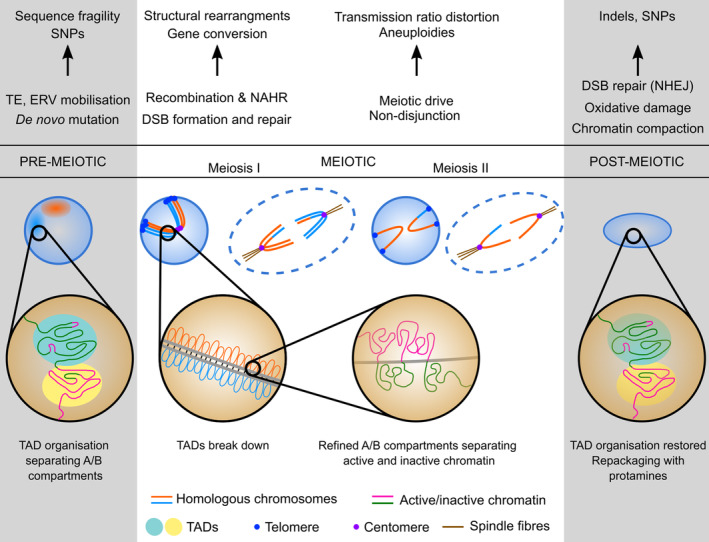
The separation of germ cell populations from the soma is part of the evolutionary transition to multicellularity. Only genetic information present in the germ cells will be inherited by future generations, and any molecular processes affecting the germline genome are therefore likely to be passed on. Despite its prevalence across taxonomic kingdoms, we are only starting to understand details of the underlying micro-evolutionary processes occurring at the germline genome level. These include segregation, recombination, mutation and selection and can occur at any stage during germline differentiation and mitotic germline proliferation to meiosis and post-meiotic gamete maturation. Selection acting on germ cells at any stage from the diploid germ cell to the haploid gametes may cause significant deviations from Mendelian inheritance and may be more widespread than previously assumed. The mechanisms that affect and potentially alter the genomic sequence and allele frequencies in the germline are pivotal to our understanding of heritability. With the rise of new sequencing technologies, we are now able to address some of these unanswered questions. In this review, we comment on the most recent developments in this field and identify current gaps in our knowledge.
Keywords: DNA repair; double-strand breaks; mutation hotspots; mutation rate; recombination; recombination hotspots; selection.
© 2021 The Authors. Biological Reviews published by John Wiley & Sons Ltd on behalf of Cambridge Philosophical Society.
Figures
References
-
- Acquaah, G. (2012). Mapping of genes. In Principles of Plant Genetics and Breeding (ed. Acquaah G.), pp. 402–423. John Wiley & Sons, Ltd, Chichester.
Publication types
MeSH terms
Grants and funding
LinkOut - more resources
Full Text Sources
Other Literature Sources
