


Functional connectivity between the amygdala and subgenual cingulate gyrus predicts the antidepressant effects of ketamine in patients with treatment-resistant depression
- PMID: 33615749
- PMCID: PMC8340826
- DOI: 10.1002/npr2.12165
Functional connectivity between the amygdala and subgenual cingulate gyrus predicts the antidepressant effects of ketamine in patients with treatment-resistant depression
Abstract
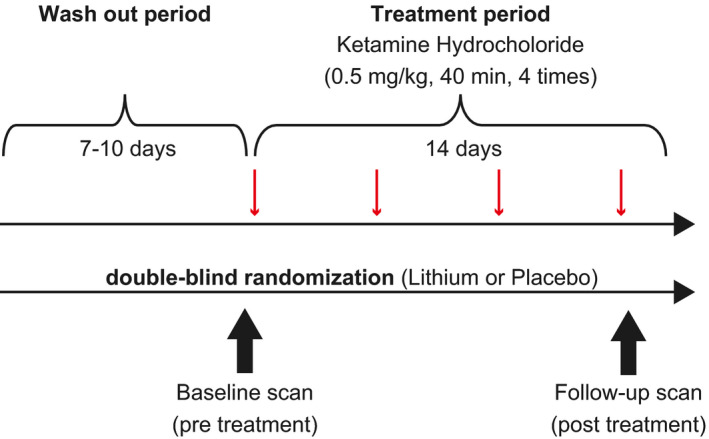
Aim: Approximately one-third of patients with major depressive disorder develop treatment-resistant depression. One-third of patients with treatment-resistant depression demonstrate resistance to ketamine, which is a novel antidepressant effective for this disorder. The objective of this study was to examine the utility of resting-state functional magnetic resonance imaging for the prediction of treatment response to ketamine in treatment-resistant depression.
Methods: An exploratory seed-based resting-state functional magnetic resonance imaging analysis was performed to examine baseline resting-state functional connectivity differences between ketamine responders and nonresponders before treatment with multiple intravenous ketamine infusions.
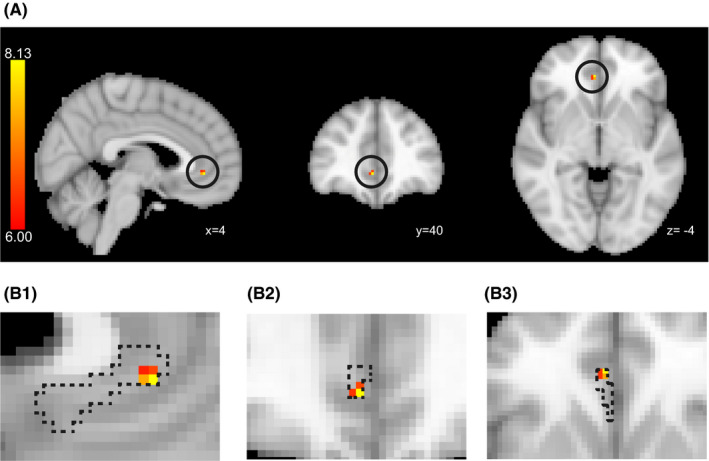
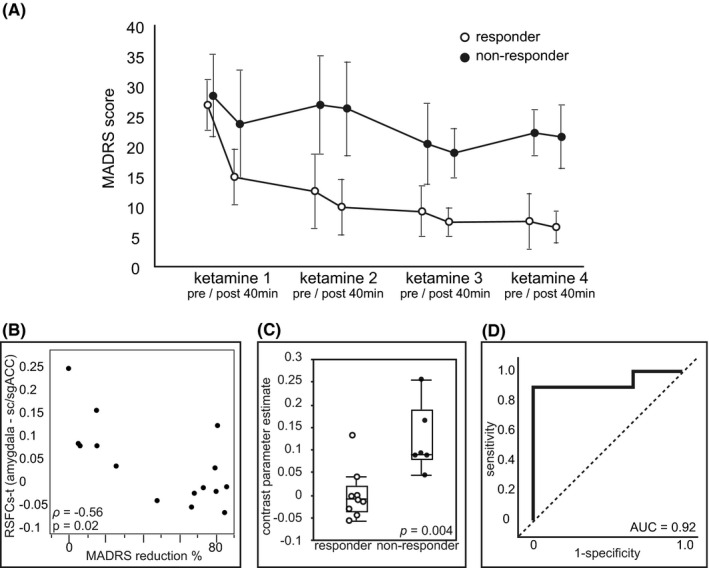
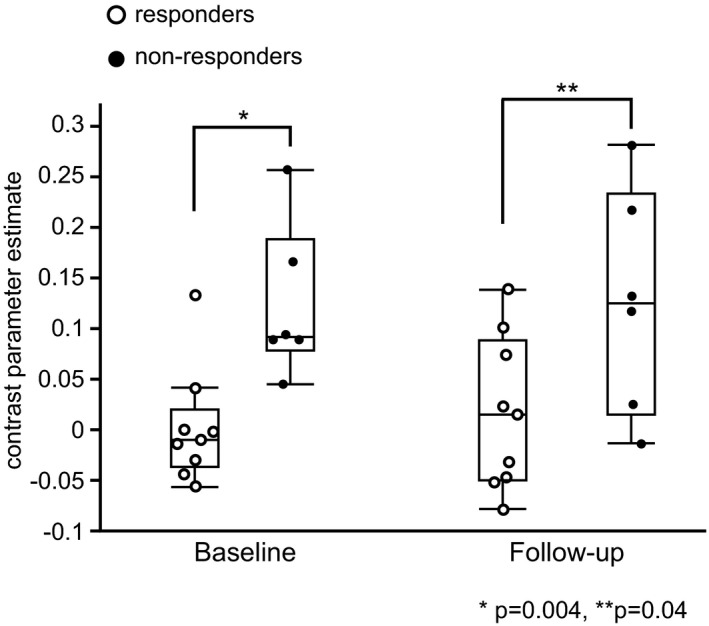
Results: Fifteen patients with treatment-resistant depression received multiple intravenous subanesthetic (0.5 mg/kg/40 minutes) ketamine infusions, and nine were identified as responders. The exploratory resting-state functional magnetic resonance imaging analysis identified a cluster of significant baseline resting-state functional connectivity differences associating ketamine response between the amygdala and subgenual anterior cingulate gyrus in the right hemisphere. Using anatomical region of interest analysis of the resting-state functional connectivity, ketamine response was predicted with 88.9% sensitivity and 100% specificity. The resting-state functional connectivity of significant group differences between responders and nonresponders retained throughout the treatment were considered a trait-like feature of heterogeneity in treatment-resistant depression.
Conclusion: This study suggests the possible clinical utility of resting-state functional magnetic resonance imaging for predicting the antidepressant effects of ketamine in treatment-resistant depression patients and implicated resting-state functional connectivity alterations to determine the trait-like pathophysiology underlying treatment response heterogeneity in treatment-resistant depression.
Keywords: functional connectivity; ketamine; resting-state functional MRI; treatment response prediction; treatment-resistant depression.
© 2021 The Authors. Neuropsychopharmacology Reports published by John Wiley & Sons Australia, Ltd on behalf of the Japanese Society of Neuropsychopharmacology.
Conflict of interest statement
The authors declare no conflict of interest.
Figures
References
-
- Rush AJ, Trivedi MH, Wisniewski SR, Nierenberg AA, Stewart JW, Warden D, et al. Acute and longer‐term outcomes in depressed outpatients requiring one or several treatment steps: a STAR*D report. Am J Psychiatry. 2006;163:1905–17. - PubMed
-
- Fava M, Davidson KG. Definition and epidemiology of treatment‐resistant depression. Psychiatr Clin North Am. 1996;19:179–200. - PubMed
-
- Perlman K, Benrimoh D, Israel S, Rollins C, Brown E, Tunteng JF, et al. A systematic meta‐review of predictors of antidepressant treatment outcome in major depressive disorder. J Affect Disord. 2019;15:503–15. - PubMed
-
- Papadimitropoulou K, Vossen C, Karabis A, Donatti C, Kubitz N. Comparative efficacy and tolerability of pharmacological and somatic interventions in adult patients with treatment‐resistant depression: a systematic review and network meta‐analysis. Curr Med Res Opin. 2017;33:701–11. - PubMed
-
- Molero P, Ramos‐Quiroga JA, Martin‐Santos R, Calvo‐Sánchez E, Gutiérrez‐Rojas L, Meana JJ. Antidepressant efficacy and tolerability of ketamine and esketamine: a critical review. CNS Drugs. 2018;32:411–20. - PubMed
MeSH terms
Substances
Associated data
- Actions
LinkOut - more resources
Full Text Sources
Other Literature Sources
