


Xenobiotic metabolism and transport in Caenorhabditis elegans
- PMID: 33616007
- PMCID: PMC7958427
- DOI: 10.1080/10937404.2021.1884921
Xenobiotic metabolism and transport in Caenorhabditis elegans
Abstract
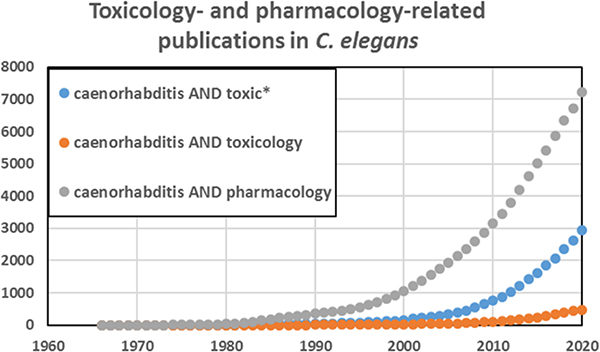
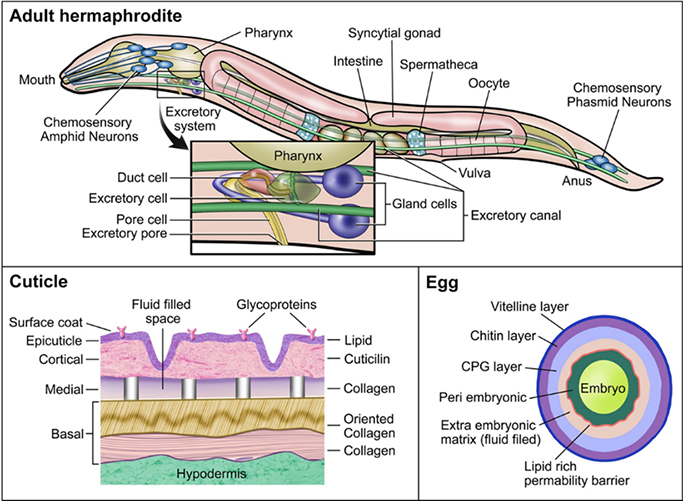
Caenorhabditis elegans has emerged as a major model in biomedical and environmental toxicology. Numerous papers on toxicology and pharmacology in C. elegans have been published, and this species has now been adopted by investigators in academic toxicology, pharmacology, and drug discovery labs. C. elegans has also attracted the interest of governmental regulatory agencies charged with evaluating the safety of chemicals. However, a major, fundamental aspect of toxicological science remains underdeveloped in C. elegans: xenobiotic metabolism and transport processes that are critical to understanding toxicokinetics and toxicodynamics, and extrapolation to other species. The aim of this review was to initially briefly describe the history and trajectory of the use of C. elegans in toxicological and pharmacological studies. Subsequently, physical barriers to chemical uptake and the role of the worm microbiome in xenobiotic transformation were described. Then a review of what is and is not known regarding the classic Phase I, Phase II, and Phase III processes was performed. In addition, the following were discussed (1) regulation of xenobiotic metabolism; (2) review of published toxicokinetics for specific chemicals; and (3) genetic diversity of these processes in C. elegans. Finally, worm xenobiotic transport and metabolism was placed in an evolutionary context; key areas for future research highlighted; and implications for extrapolating C. elegans toxicity results to other species discussed.
Keywords: Caenorhabditis elegans; evolutionary toxicology; genetic diversity; microbiome; nuclear hormone receptor; pharmacokinetics; toxicokinetics; xenobiotic metabolism; xenobiotic transport.
Figures
References
-
- 1996. Interconnections Between Human and Ecosystem Health. Edited by Di Giulio RT and Monosson E: Springer.
-
- (ASTM), American Society of Testing and Materials. 2001. Conducting Laboratory Soil Toxicity Tests with the Nematode Caenorhabditis elegans.
-
- Aarnio V, Heikkinen L, Peltonen J, Goldsteins G, Lakso M, and Wong G. 2014. Transcriptional profiling reveals differential expression of a neuropeptide-like protein and pseudogenes in aryl hydrocarbon receptor-1 mutant Caenorhabditis elegans. Comp Biochem Physiol Part D Genomics Proteomics 9:40–48. doi: 10.1016/j.cbd.2013.12.001. - DOI - PubMed
Publication types
MeSH terms
Substances
Grants and funding
LinkOut - more resources
Full Text Sources
Other Literature Sources
Medical
