


A global, regional, and national survey on burden and Quality of Care Index (QCI) of brain and other central nervous system cancers; global burden of disease systematic analysis 1990-2017
- PMID: 33617563
- PMCID: PMC7899371
- DOI: 10.1371/journal.pone.0247120
A global, regional, and national survey on burden and Quality of Care Index (QCI) of brain and other central nervous system cancers; global burden of disease systematic analysis 1990-2017
Abstract
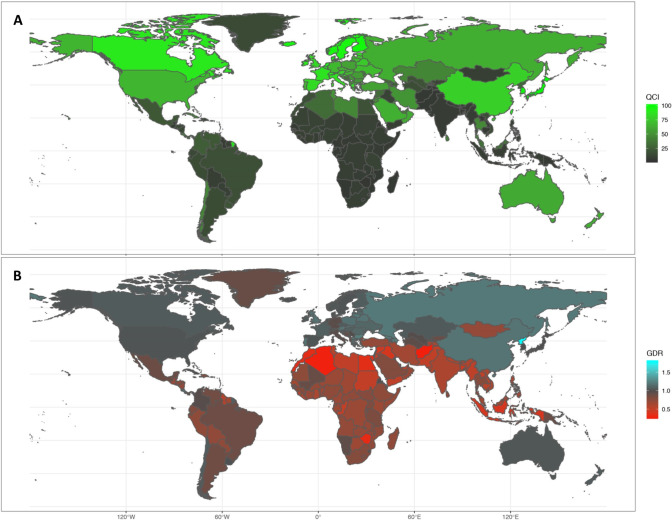
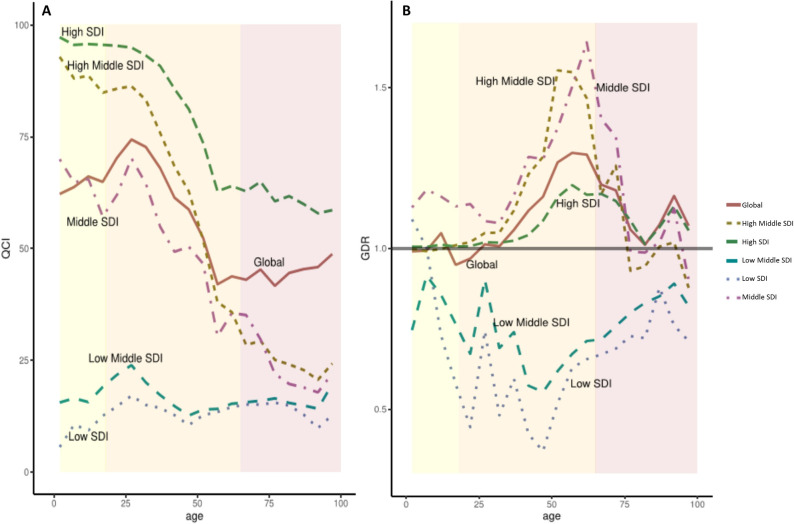
Primary brain and other central nervous system (CNS) cancers cause major burdens. In this study, we introduced a measure named the Quality of Care Index (QCI), which indirectly evaluates the quality of care given to patients with this group of cancers. Here we aimed to compare different geographic and socioeconomic patterns of CNS cancer care according to the novel measure introduced. In this regard, we acquired age-standardized primary epidemiologic measures were acquired from the Global Burden of Disease (GBD) study 1990-2017. The primary measures were combined to make four secondary indices which all of them indirectly show the quality of care given to patients. Principal Component Analysis (PCA) method was utilized to calculate the essential component named QCI. Further analyses were made based on QCI to assess the quality of care globally, regionally, and nationally (with a scale of 0-100 which higher values represent better quality of care). For 2017, the global calculated QCI was 55.0. QCI showed a desirable condition in higher socio-demographic index (SDI) quintiles. Oppositely, low SDI quintile countries (7.7) had critically worse care quality. Western Pacific Region with the highest (76.9) and African Region with the lowest QCIs (9.9) were the two WHO regions extremes. Singapore was the country with the maximum QCI of 100, followed by Japan (99.9) and South Korea (98.9). In contrast, Swaziland (2.5), Lesotho (3.5), and Vanuatu (3.9) were countries with the worse condition. While the quality of care for most regions was desirable, regions with economic constraints showed to have poor quality of care and require enforcements toward this lethal diagnosis.
Conflict of interest statement
The authors have declared that no competing interests exist.
Figures
References
-
- Patel AP, Fisher JL, Nichols E, Abd-Allah F, Abdela J, Abdelalim A, et al. Global, regional, and national burden of brain and other CNS cancer, 1990–2016: a systematic analysis for the Global Burden of Disease Study 2016. The Lancet Neurology. 2019;18(4):376–93. 10.1016/S1474-4422(18)30468-X - DOI - PMC - PubMed
MeSH terms
LinkOut - more resources
Full Text Sources
Other Literature Sources
