


Understanding the Prevalence and Associated Factors of Behavioral Intention of COVID-19 Vaccination Under Specific Scenarios Combining Effectiveness, Safety, and Cost in the Hong Kong Chinese General Population
- PMID: 33619928
- PMCID: PMC9808181
- DOI: 10.34172/ijhpm.2021.02
Understanding the Prevalence and Associated Factors of Behavioral Intention of COVID-19 Vaccination Under Specific Scenarios Combining Effectiveness, Safety, and Cost in the Hong Kong Chinese General Population
Abstract
Background: The prevalence of coronavirus disease 2019 (COVID-19) vaccination is very critical in controlling COVID-19. This study mainly aimed to (1) investigate behavioral intentions of COVID-19 vaccination under various specific scenarios, and (2) associated factors of the afore-mentioned vaccination intentions.
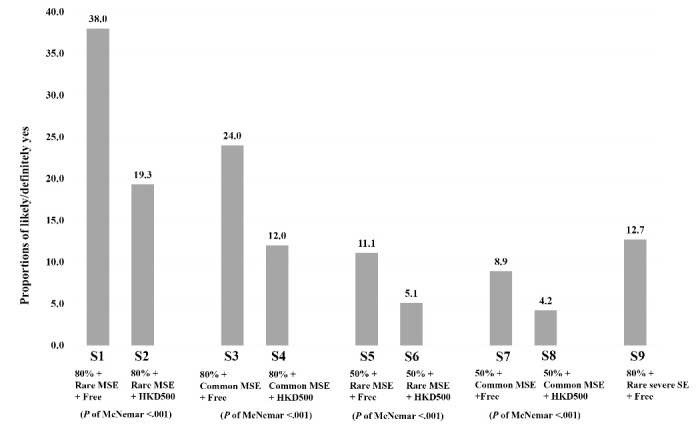
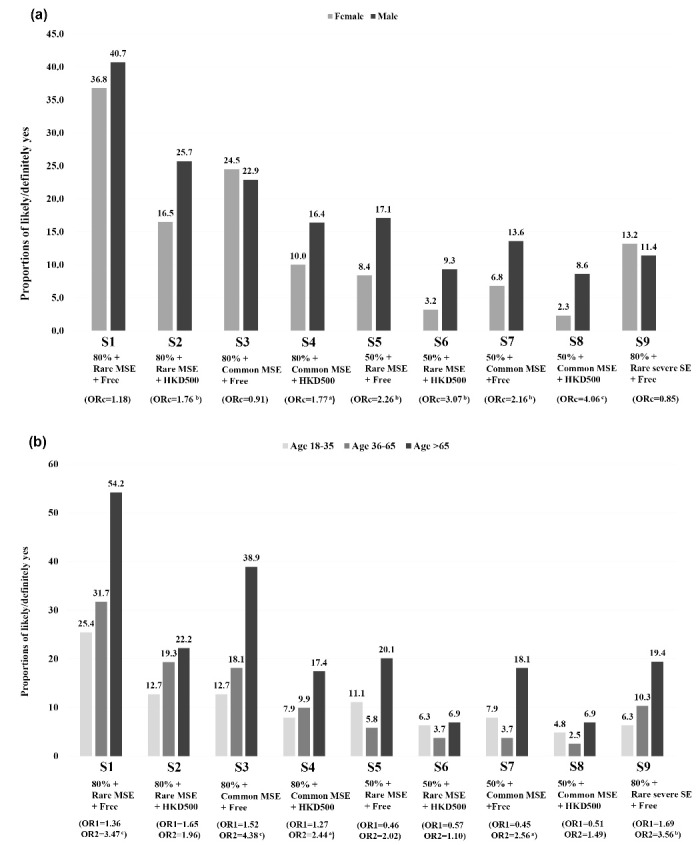
Methods: A random anonymous telephone survey interviewed 450 Chinese adults from September 16-30, 2020 in Hong Kong, China. Nine scenarios of behavioral intentions of COVID-19 vaccinations were measured combining effectiveness (80% versus 50%), safety (rare versus common mild side effect), and cost (free versus HK$ 500).
Results: The prevalence of behavioral intentions of COVID-19 vaccination under the 9 specific scenarios was very low and varied greatly (4.2% to 38.0%). The prospective countries of manufacture also influenced vaccination intention (eg, Japan: 55.8% vs China: 31.1%). Only 13.1% intended to take up COVID-19 vaccination at the soonest upon its availability. The attributes of effectiveness and side effect influenced vaccination intention most. Positively associated factors of behavioral intentions of COVID-19 vaccination included trust/satisfaction toward the government, exposure to positive social media information about COVID-19 vaccines, descriptive norms, perceived impact on the pandemic, perceived duration of protectiveness, and life satisfaction.
Conclusion: Intention of COVID-19 vaccination was low in the Hong Kong general population, especially among younger people, females, and single people. Health promotion is warranted to enhance the intention. The significant factors identified in this study may be considered when designing such health promotion. Future research is required to confirm the findings in other countries. Such studies should pay attention to the specific context of cost, safety, and effectiveness, which would lead to different responses in the level of behavioral intention of COVID-19 vaccination (BICV).
Keywords: Behavioral Intention; COVID-19 Vaccination; Cost; Effectiveness; Hong Kong; Safety.
© 2022 The Author(s); Published by Kerman University of Medical Sciences This is an open-access article distributed under the terms of the Creative Commons Attribution License (http://creativecommons.org/licenses/by/4.0), which permits unrestricted use, distribution, and reproduction in any medium, provided the original work is properly cited.
References
-
- World Health Organization (WHO). Coronavirus Disease (COVID-19) Weekly Epidemiological Update and Weekly Operational Update. WHO; 2020.
-
- Wares J, Krehbiel S. Herd Immunity Won’t Solve America’s COVID-19 Problem. The Coversation. June 16, 2020. https://theconversation.com/herd-immunity-wont-solve-americas-covid-19-p.... Accessed October 6, 2020.
-
- World Health Organization (WHO). Draft Landscape of COVID-19 Candidate Vaccines. WHO; 2020.
MeSH terms
Substances
LinkOut - more resources
Full Text Sources
Other Literature Sources
Medical