


Generating Mice with Diverse Microbial Experience
- PMID: 33621444
- PMCID: PMC7906426
- DOI: 10.1002/cpz1.53
Generating Mice with Diverse Microbial Experience
Erratum in
-
Group Correction Statement (Data Availability Statements).Curr Protoc. 2022 Aug;2(8):e552. doi: 10.1002/cpz1.552. Curr Protoc. 2022. PMID: 36005902 Free PMC article. No abstract available.
-
Group Correction Statement (Conflict of Interest Statements).Curr Protoc. 2022 Aug;2(8):e551. doi: 10.1002/cpz1.551. Curr Protoc. 2022. PMID: 36005903 Free PMC article. No abstract available.
Abstract
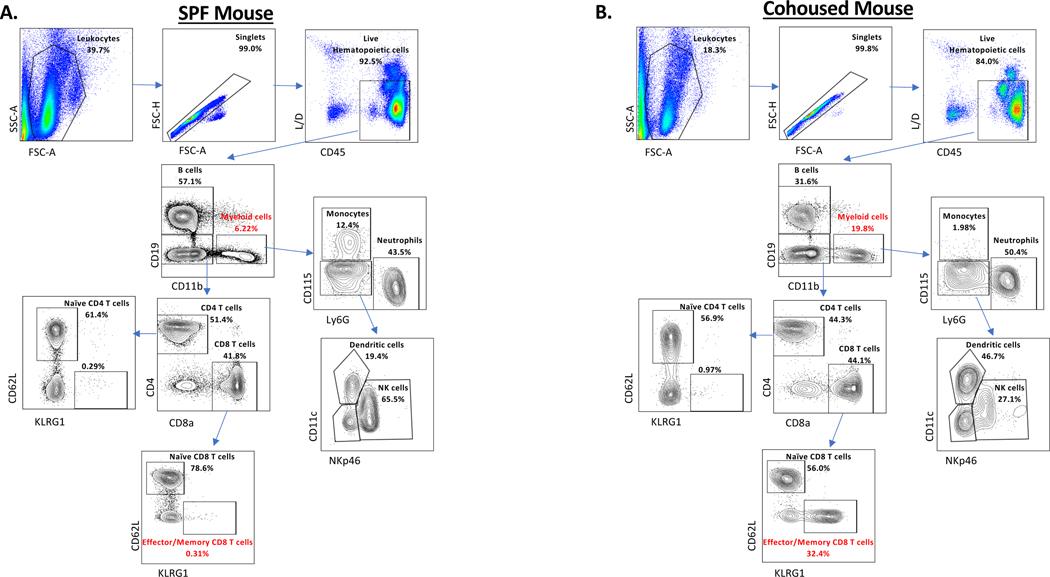
Laboratory strains of mice are typically housed in specific pathogen-free facilities to minimize exposure to microbes. This method encourages uniformity in responses to experimentally induced parameters and reduces loss of animals, allowing for the survival and study of immunodeficient mice. However, the restrictions also limit physiologic relevance to humans, who are exposed to numerous microbes from birth. Recent evidence from several groups has demonstrated that exposure of laboratory mice to commensal and pathogenic microbes normally found in wild or pet store mice can dramatically impact the cellular makeup and function of the immune system. This article outlines procedures for exposing laboratory strains of mice to the diverse array of microbes typically found in pet store mice. Suggested methods for characterization of the immune system following this exposure are also described. © 2021 Wiley Periodicals LLC. Basic Protocol 1: Cohousing laboratory strains of mice with pet store mice Support Protocol: Antibody staining of circulating immune cells and analysis by flow cytometry Basic Protocol 2: Exposure of laboratory strains of mice to fomite bedding.
Keywords: T cells; microbial diversity; microbiome; mouse model; serology.
© 2021 Wiley Periodicals LLC.
Figures
References
MeSH terms
Grants and funding
LinkOut - more resources
Full Text Sources
Other Literature Sources
Medical
