Digital rheumatology in the era of COVID-19: results of a national patient and physician survey
- PMID: 33622673
- PMCID: PMC7907631
- DOI: 10.1136/rmdopen-2020-001548
Digital rheumatology in the era of COVID-19: results of a national patient and physician survey
Abstract
Objective: To analyse the impact of the COVID-19 pandemic on rheumatic patients' and rheumatologists' usage, preferences and perception of digital health applications (DHAs).
Methods: A web-based national survey was developed by the Working Group Young Rheumatology of the German Society for Rheumatology and the German League against Rheumatism. The prospective survey was distributed via social media (Twitter, Instagram and Facebook), QR code and email. Descriptive statistics were calculated, and regression analyses were performed to show correlations.
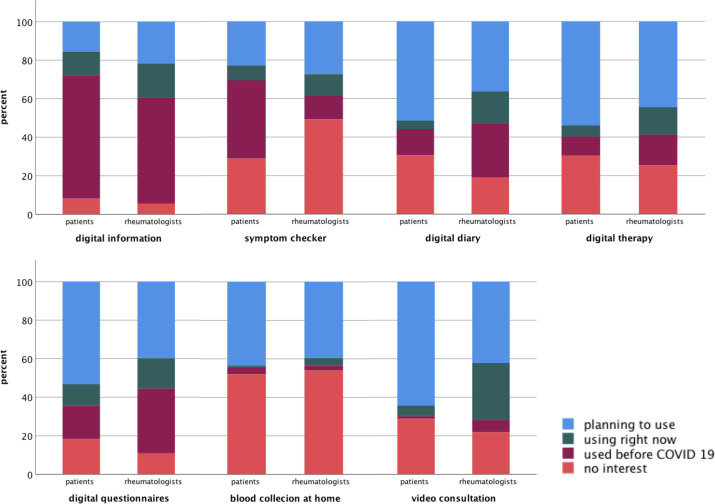
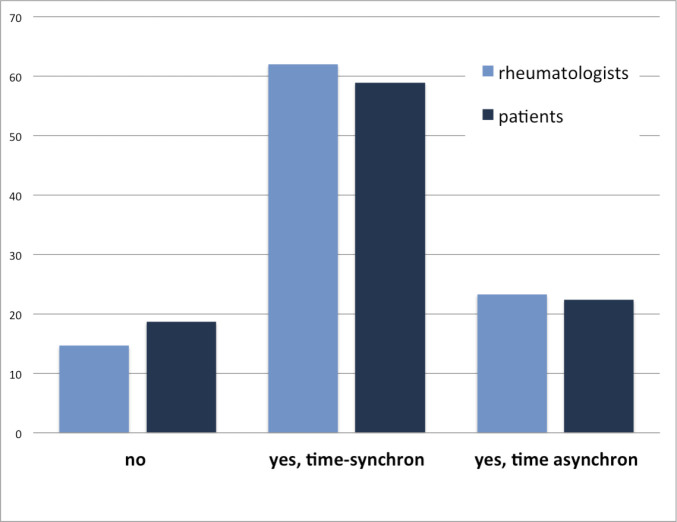
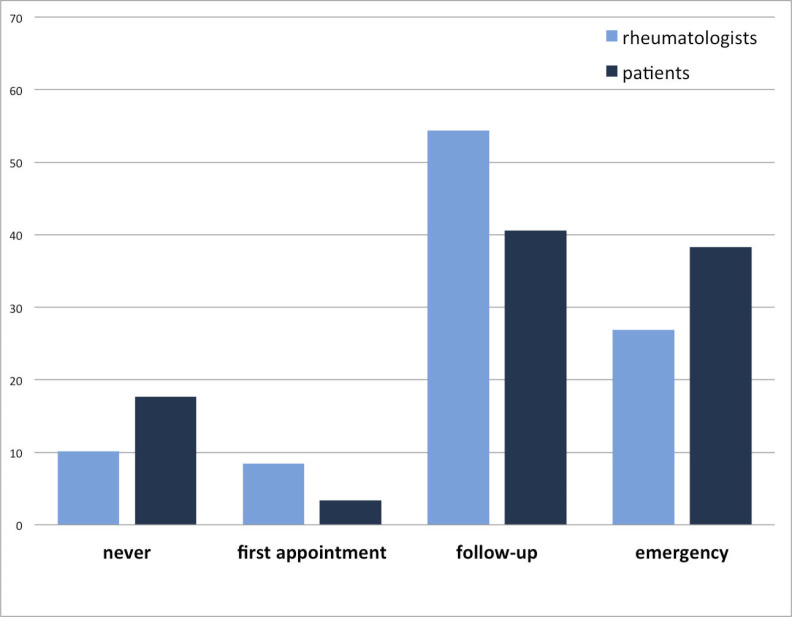
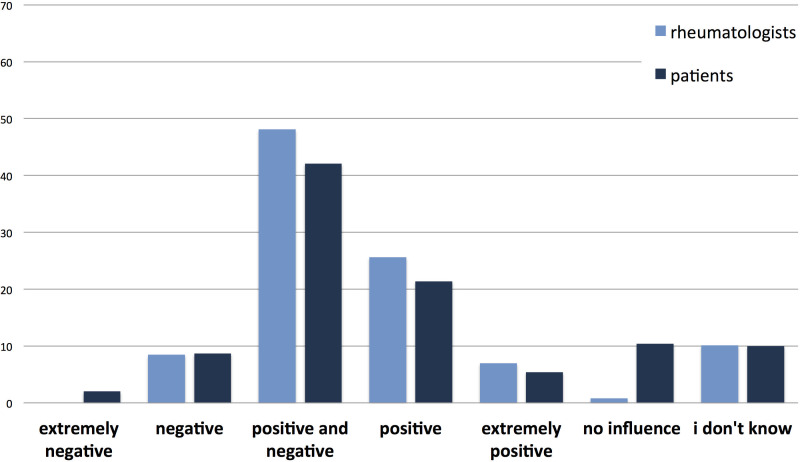
Results: We analysed the responses of 299 patients and 129 rheumatologists. Most patients (74%) and rheumatologists (76%) believed that DHAs are useful in the management of rheumatic and musculoskeletal diseases (RMDs) and felt confident in their own usage thereof (90%; 86%). 38% of patients and 71% of rheumatologists reported that their attitude had changed positively towards DHAs and that their usage had increased due to COVID-19 (29%; 48%). The majority in both groups agreed on implementing virtual visits for follow-up appointments in stable disease conditions. The most reported advantages of DHAs were usage independent of time and place (76.6%; 77.5%). The main barriers were a lack of information on suitable, available DHAs (58.5%; 41.9%), poor usability (42.1% of patients) and a lack of evidence supporting the effectiveness of DHAs (23.2% of rheumatologists). Only a minority (<10% in both groups) believed that digitalisation has a negative impact on the patient-doctor relationship.
Conclusion: The COVID-19 pandemic instigated an increase in patients' and rheumatologists' acceptance and usage of DHAs, possibly introducing a permanent paradigm shift in the management of RMDs.
Keywords: COVID-19; epidemiology; health services research; patient reported outcome measures.
© Author(s) (or their employer(s)) 2021. Re-use permitted under CC BY-NC. No commercial re-use. See rights and permissions. Published by BMJ.
Conflict of interest statement
Competing interests: None declared.
Figures
References
-
- Dejaco C, Alunno A, Bijlsma JW, et al. Influence of COVID-19 pandemic on decisions for the management of people with inflammatory rheumatic and musculoskeletal diseases: a survey among EULAR countries. Ann Rheum Dis 2020. 10.1136/annrheumdis-2020-218697. [Epub ahead of print: 06 Nov 2020]. - DOI - PubMed
MeSH terms
LinkOut - more resources
Full Text Sources
Other Literature Sources
Medical