


Relative survival after aortic valve surgery in patients with bicuspid aortic valves
- PMID: 33622679
- PMCID: PMC8257557
- DOI: 10.1136/heartjnl-2020-318733
Relative survival after aortic valve surgery in patients with bicuspid aortic valves
Abstract
Objectives: The objective of this cohort study was to analyse long-term relative survival in patients with bicuspid aortic valve (BAV) who underwent aortic valve surgery.
Methods: We studied 865 patients with BAVs who participated in three prospective cohort studies of elective, open-heart, aortic valve surgery at the Karolinska University Hospital, Stockholm, Sweden, between 2007 and 2020. The expected survival for the age, sex and calendar year-matched general Swedish population was obtained from the Human Mortality Database. The Ederer II method was used to calculate relative survival, which was used as an estimate of cause-specific survival.
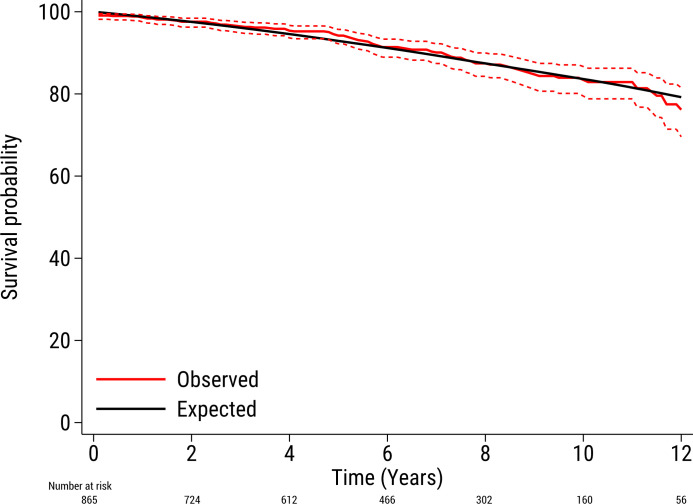
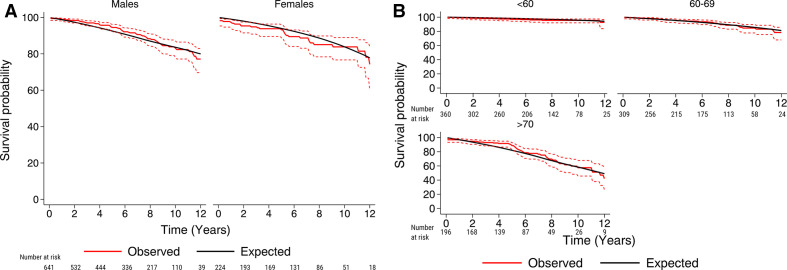
Results: No differences were found in the observed versus expected survival at 1, 5, 10 or 12 years: 99%, 94%, 83% and 76% vs 99%, 93%, 84% and 80%, respectively. The relative survival at 1, 5, 10 and 12 years was 100% (95% CI 99% to 100%), 101% (95% CI 99% to 103%), 99% (95% CI 95% to 103%) and 95% (95% CI 87% to 102%), respectively. The relative survival at the end of follow-up tended to be lower for women than men (86% vs 95%). The mean follow-up was 6.3 years (maximum 13.3 years).
Conclusions: The survival of patients with BAV following aortic valve surgery was excellent and similar to that of the general population. Our results suggest that the timing of surgery according to current guidelines is correct and provide robust long-term survival rates, as well as important information about the natural history of BAV in patients following aortic valve surgery.
Keywords: aortic valve insufficiency; aortic valve stenosis; congenital abnormalities; epidemiology; heart valve prosthesis.
© Author(s) (or their employer(s)) 2021. Re-use permitted under CC BY. Published by BMJ.
Conflict of interest statement
Competing interests: None declared.
Figures
References
Publication types
MeSH terms
LinkOut - more resources
Full Text Sources
Other Literature Sources
