. 2021 Feb 23;12(1):1256.
doi: 10.1038/s41467-021-21488-7.

A stable cathode-solid electrolyte composite for high-voltage, long-cycle-life solid-state sodium-ion batteries

Affiliations

A stable cathode-solid electrolyte composite for high-voltage, long-cycle-life solid-state sodium-ion batteries

Erik A Wu et al. Nat Commun. .

Abstract

Rechargeable solid-state sodium-ion batteries (SSSBs) hold great promise for safer and more energy-dense energy storage. However, the poor electrochemical stability between current sulfide-based solid electrolytes and high-voltage oxide cathodes has limited their long-term cycling performance and practicality. Here, we report the discovery of the ion conductor Na3-xY1-xZrxCl6 (NYZC) that is both electrochemically stable (up to 3.8 V vs. Na/Na+) and chemically compatible with oxide cathodes. Its high ionic conductivity of 6.6 × 10⁻⁵ S cm-1 at ambient temperature, several orders of magnitude higher than oxide coatings, is attributed to abundant Na vacancies and cooperative MCl6 rotation, resulting in an extremely low interfacial impedance. A SSSB comprising a NaCrO2 + NYZC composite cathode, Na3PS4 electrolyte, and Na-Sn anode exhibits an exceptional first-cycle Coulombic efficiency of 97.1% at room temperature and can cycle over 1000 cycles with 89.3% capacity retention at 40 °C. These findings highlight the immense potential of halides for SSSB applications.


Conflict of interest statement

R.S. and G.V. are employees of Shell International Exploration and Production Inc., USA and Shell Global Solutions International BV, Netherlands, respectively. A patent was filed for this work through the UCSD Office of Innovation and Commercialization. The remaining authors declare no competing interests.

Figures
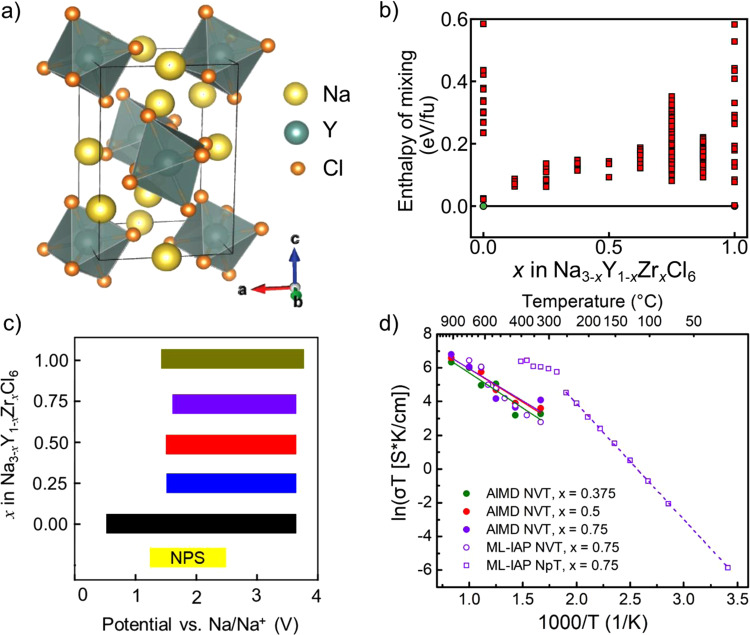
Fig. 1
Fig. 1. Effect of Zr dopants on properties of Na3YCl6.
a Crystal structure of Na3YCl6. b Stability of Na3-xY1-xZrxCl6 after incorporating Zr4+ into Na3YCl6. Each square marker indicates a symmetrically distinct ordering of Na and Y/Zr. c Electrochemical stability window of Na3-xY1-xZrxCl6 (0 ≤ x ≤ 1), with the window of Na3PS4 (NPS) shown as a reference. d Arrhenius plot for Na3-xY1-xZrxCl6 from AIMD simulations (at x = 0.375, 0.5, and 0.75; solid lines and markers) and ML-IAP MD simulations (at x = 0.75; dashed lines and open markers). AIMD simulations were carried out at T = 600–1000 K at 100 K intervals, using a supercell of 150 atoms for up to 200 ps, while the ML-IAP MD simulations were carried out at T = 350 K–650 K using a supercell of 592 atoms for up to 10 ns.
Fig. 2
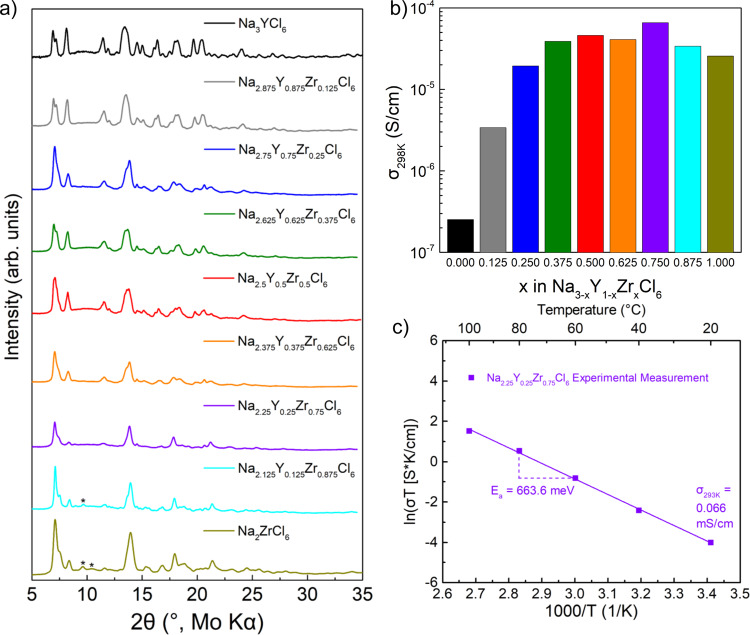
Fig. 2. Experimental Characterization of Na3-xY1-xZrxCl6.
a XRD of the Na3-xY1-xZrxCl6 compositions, obtained in x = 0.125 increments. Asterisks indicate the presence of new peaks. b The corresponding room temperature conductivity values. c Arrhenius plot of Na2.25Y0.25Zr0.75Cl6 from experimental measurements. The activation energy (low-temperature regime) and room temperature conductivity values are consistent with the MTP results.
Fig. 3
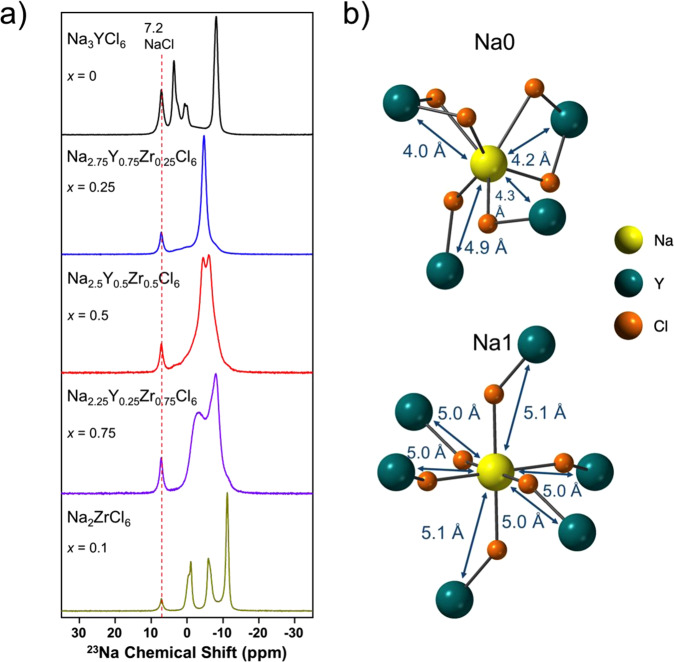
Fig. 3. 23Na single-pulse solid-state NMR spectra.
a Spectra collected on Na3-xY1-xZrxCl6 (x = 0, 0.25, 0.5, 0.75 and 1); the data were acquired at 18.8 T and at a MAS rate of 12 kHz and at a set temperature of 298 K. b Schematic of the Na0 and Na1 local environments in Na3YCl6.
Fig. 4
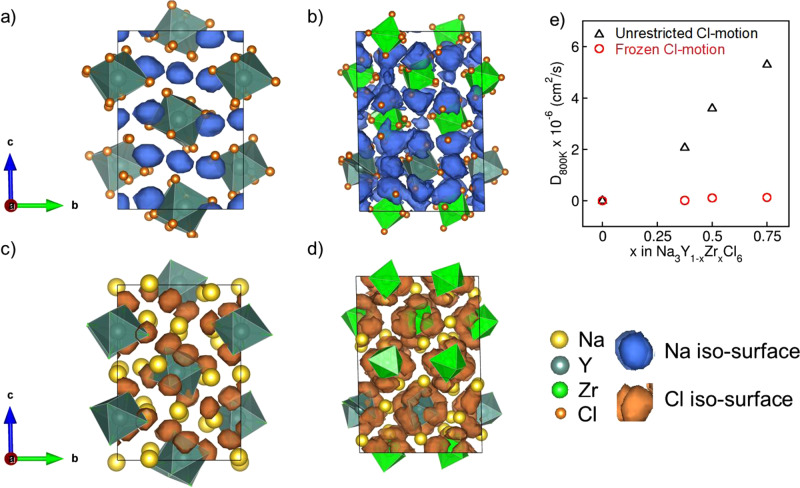
Fig. 4. Effect of octahedra rotation on Na+ diffusivity.
Plots of the probability density (isosurface value = 5 × 10⁻⁴) of a Na+ in Na3YCl6, b Na+ in Na2.25Y0.25Z0.75Cl6, c Cl in Na3YCl6 and d Cl in Na2.25Y0.25Z0.75Cl6, over 100 ps of AIMD simulations at 600 K. The motion of Na+ and Cl in Na3YCl6 are relatively localized, while macroscopic Na+ diffusion with (Zr/Y)Cl6 octahedral rotation are observed in Na2.25Y0.25Z0.75Cl6. e Na+ diffusivity at 800 K (D800K, in cm2/s) for varying Zr content in Na3−xY1−xZrxCl6, compared with a selective dynamics simulation with Cl ions frozen in space, which shows negligible Na+ diffusivity.
Fig. 5
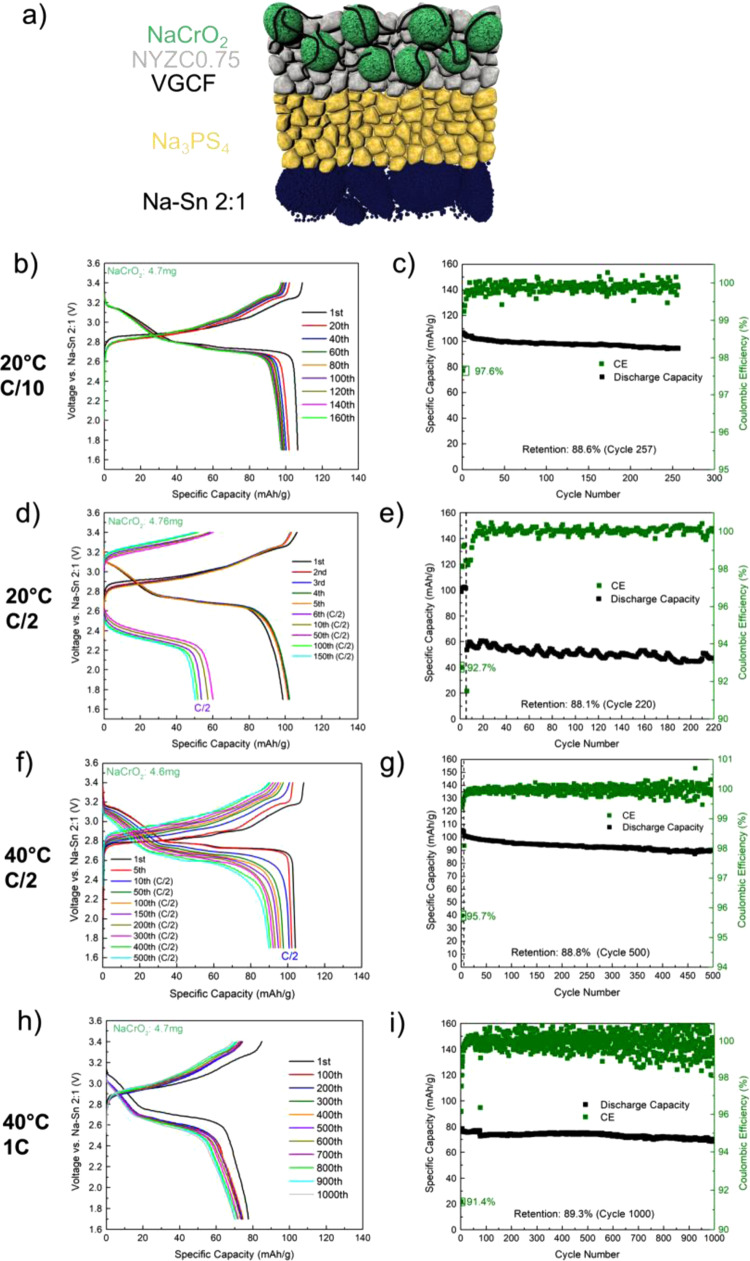
Fig. 5. Electrochemical performance of the NYZC0.75 SSSBs.
a Cell schematic. Voltage profile and specific capacity as a function of cycle number of this cell configuration, respectively, running at: bc 20 °C and C/10, de 20 °C and C/10 for the first 5 cycles and subsequent cycling at C/2, fg 40 °C and C/10 for the first 5 cycles and subsequent cycling at C/2, and hi 40 °C and 1 C. In each case, the NYZC0.75 cells exhibit long-term cycling stability, with 89.3% capacity retention at 1000 cycles for the 40 °C 1 C cell.
Fig. 6
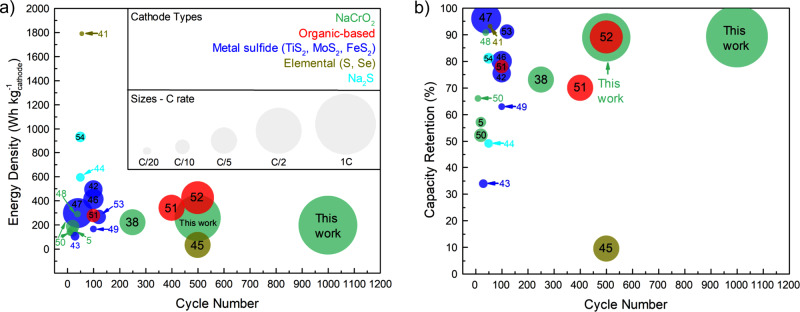
Fig. 6. Comparison of SSSB performance metrics.
a Gravimetric energy density (per mass of active material) plotted as a function of cycle number. b Capacity retention as a function of cycle number,,–. The cycling performance comparison highlights the compatibility and stability of the NaCrO2 + Na2.25Y0.25Zr0.75Cl6 + VGCF composite cathode.

References

    1. Kamaya N, et al. A lithium superionic conductor. Nat. Mater. 2011;10:682–686. doi: 10.1038/nmat3066. - DOI - PubMed
    1. Hayashi A, et al. A sodium-ion sulfide solid electrolyte with unprecedented conductivity at room temperature. Nat. Commun. 2019;10:1–6. doi: 10.1038/s41467-018-07882-8. - DOI - PMC - PubMed
    1. Richards WD, Miara LJ, Wang Y, Kim JC, Ceder G. Interface Stability in Solid-State Batteries. Chem. Mater. 2016;28:266–273. doi: 10.1021/acs.chemmater.5b04082. - DOI
    1. Kato Y, et al. High-power all-solid-state batteries using sulfide superionic conductors. Nat. Energy. 2016;1:1–7. doi: 10.1038/nenergy.2016.30. - DOI
    1. Banerjee A, et al. Na3SbS4: a solution processable sodium superionic conductor for all-solid-state sodium-ion batteries. Angew. Chem. Int. Ed. 2016;55:9634–9638. doi: 10.1002/anie.201604158. - DOI - PubMed