


Differences in the clinical characteristics and outcomes of COVID-19 patients in the epicenter and peripheral areas of the pandemic from China: a retrospective, large-sample, comparative analysis
- PMID: 33627072
- PMCID: PMC7903397
- DOI: 10.1186/s12879-020-05728-7
Differences in the clinical characteristics and outcomes of COVID-19 patients in the epicenter and peripheral areas of the pandemic from China: a retrospective, large-sample, comparative analysis
Abstract
Background: There is limited information on the difference in epidemiology, clinical characteristics and outcomes of the initial outbreak of the coronavirus disease (COVID-19) in Wuhan (the epicenter) and Sichuan (the peripheral area) in the early phase of the COVID-19 pandemic. This study was conducted to investigate the differences in the epidemiological and clinical characteristics of patients with COVID-19 between the epicenter and peripheral areas of pandemic and thereby generate information that would be potentially helpful in formulating clinical practice recommendations to tackle the COVID-19 pandemic.
Methods: The Sichuan & Wuhan Collaboration Research Group for COVID-19 established two retrospective cohorts that separately reflect the epicenter and peripheral area during the early pandemic. The epidemiology, clinical characteristics and outcomes of patients in the two groups were compared. Multivariate regression analyses were used to estimate the adjusted odds ratios (aOR) with regard to the outcomes.
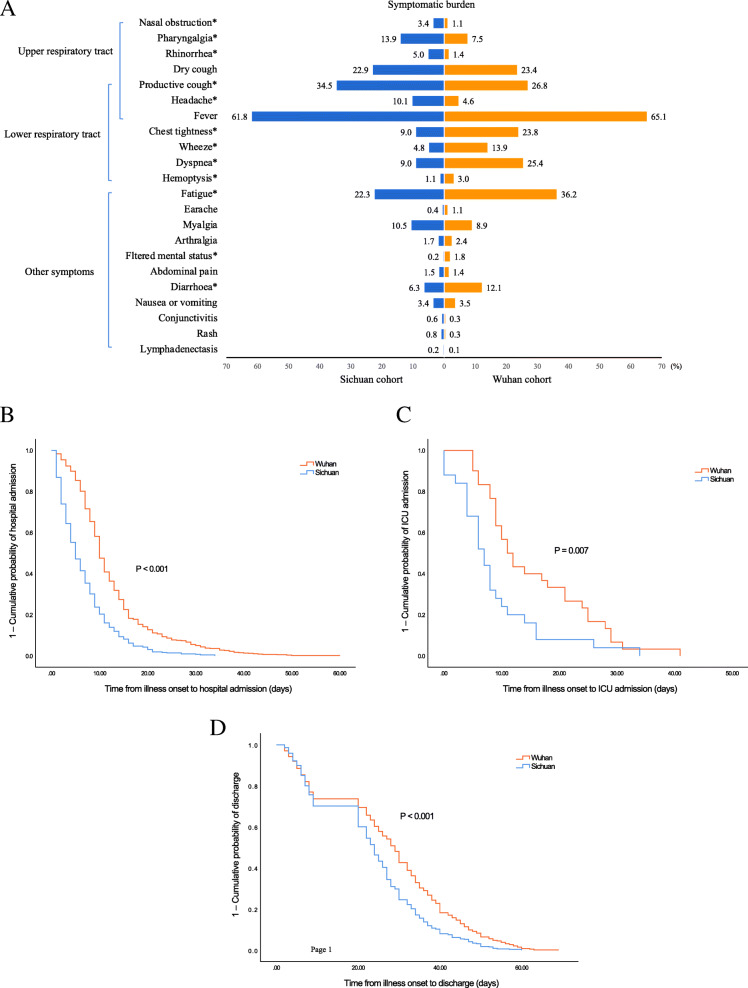
Results: The Wuhan (epicenter) cohort included 710 randomly selected patients, and the peripheral (Sichuan) cohort included 474 consecutive patients. A higher proportion of patients from the periphery had upper airway symptoms, whereas a lower proportion of patients in the epicenter had lower airway symptoms and comorbidities. Patients in the epicenter had a higher risk of death (aOR=7.64), intensive care unit (ICU) admission (aOR=1.66), delayed time from illness onset to hospital and ICU admission (aOR=6.29 and aOR=8.03, respectively), and prolonged duration of viral shedding (aOR=1.64).
Conclusions: The worse outcomes in the epicenter could be explained by the prolonged time from illness onset to hospital and ICU admission. This could potentially have been associated with elevated systemic inflammation secondary to organ dysfunction and prolonged duration of virus shedding independent of age and comorbidities. Thus, early supportive care could achieve better clinical outcomes.
Keywords: COVID-19; Case fatality; Comparative analysis; Epicenter; Pandemic; Peripheral area.
Conflict of interest statement
The authors declare that they have no competing interests.
Figures
References
-
- Chen N, Zhou M, Dong X, Qu J, Gong F, Han Y, Qiu Y, Wang J, Liu Y, Wei Y, et al. Epidemiological and clinical characteristics of 99 cases of 2019 novel coronavirus pneumonia in Wuhan, China: a descriptive study. Lancet. 2020;395(10223):507–513. doi: 10.1016/S0140-6736(20)30211-7. - DOI - PMC - PubMed
-
- Zeng Y, Li DJ, Zong ZY, Jiang Y. Sichuan Science and Technology Press. 2020. on behalf of Sichuan Medical Treatment Expert Group for Covid-19: The emergency prevention and control guidelines for Covid-19 in medical institutions of Sichuan province.
Publication types
MeSH terms
Grants and funding
LinkOut - more resources
Full Text Sources
Other Literature Sources
Medical
