


Prevalence and Trends of Congenital Anomalies Among Neonates at Jimma Medical Center, Jimma, Ethiopia: A Three-Year Retrospective Study
- PMID: 33628075
- PMCID: PMC7898197
- DOI: 10.2147/PHMT.S293285
Prevalence and Trends of Congenital Anomalies Among Neonates at Jimma Medical Center, Jimma, Ethiopia: A Three-Year Retrospective Study
Abstract
Introduction: Congenital anomalies are a major public health problem which is defined as structural or functional anomalies that occur during intrauterine life which can be detected prenatally, at birth, or sometimes may only be detected later in infancy. The impact of congenital anomalies is severe in middle- and low-income countries than in other developed and developing countries.
Objective: To assess the prevalence and trends of congenital anomalies among neonates admitted at Jimma Medical Center from 2017 to 2019.
Methods: A facility-based retrospective, descriptive crossectional study was conducted among neonates admitted at Jimma Medical Center from 2017-2019. Descriptive analysis (frequency and percentage) was calculated for the variables. The result was present in the table, text, and figure.
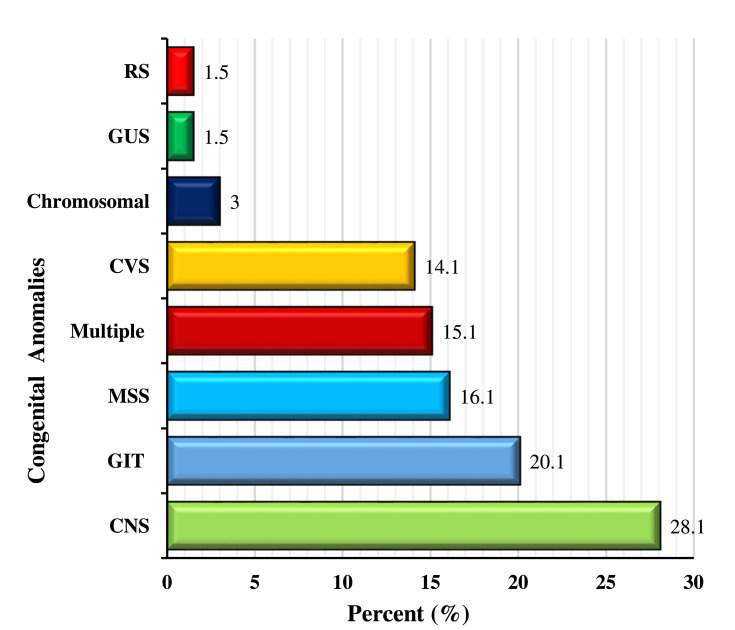
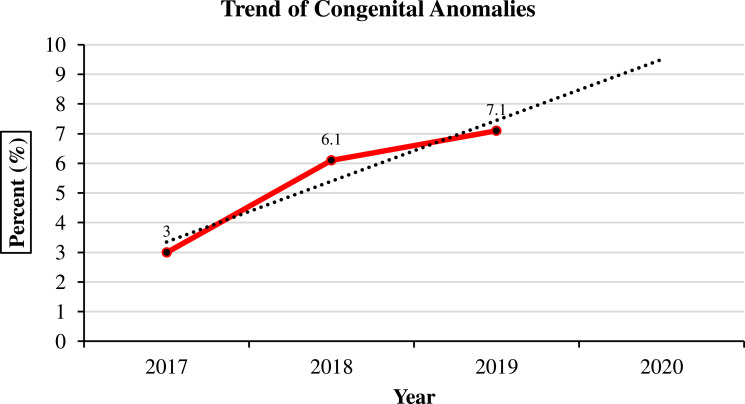
Results: From a total of 3346 admitted neonates, 199 (5.95%) neonates were diagnosed with congenital anomalies; of which 120 (60.3%), 146 (73.4%), 144 (72.4%) and 30 (15.1%) of neonates were males, urban dwellers, delivered with normal birth weight and had multiple congenital anomalies, respectively. Central nervous system was the most commonly affected body system 56 (28.1%), followed by the gastrointestinal tract 41 (20.1%) and musculoskeletal system 32 (16.1%). The proportion of congenital anomalies was significantly increasing over time.
Conclusion: The overall prevalence of congenital anomalies was high and increased from year to year. The proportions observed in the study indicated that a significant number of neonates were affected and suffered from the impacts of congenital anomalies which need immediate preventive actions such as iron folate supplementation during preconception and early pregnancy. Therefore, design strategies to create community awareness and prevention mechanism of congenital anomalies, and strengthening the care and rehabilitation services for affected patients are crucial.
Keywords: Ethiopia; Jimma Medical Center; congenital anomalies.
© 2021 Silesh et al.
Conflict of interest statement
The authors declare that they have no conflicts of interest in this work.
Figures
References
-
- World Health Organization (WHO). Congenital anomalies. WHO; 2016. Available from: https://www.who.int/en/news-room/fact-sheets/detail/congenital-anomalies. Accessed February12, 2021.
-
- Galina B, Tatiana C. Congenital anomaly in the structure of stillbirth and deaths of newborn children in chisinau: epidemiological study deleu raisa. Ovidius Univ Ann Econ Sci Ser. 2018;XVIII(2):251–256.
-
- Centers for Disease Control and Prevention. Congenital anomalies-birth defects surveillance toolkit. CDC; 2019. Available from: https://www.cdc.gov/ncbddd/birthdefects/surveillancemanual/facilitators-.... Accessed February12, 2021.
LinkOut - more resources
Full Text Sources
Other Literature Sources
