. 2021 Feb 3:2021:6683270.
doi: 10.1155/2021/6683270. eCollection 2021.

Amauroderma rugosum Protects PC12 Cells against 6-OHDA-Induced Neurotoxicity through Antioxidant and Antiapoptotic Effects

Affiliations

Amauroderma rugosum Protects PC12 Cells against 6-OHDA-Induced Neurotoxicity through Antioxidant and Antiapoptotic Effects

Jingjing Li et al. Oxid Med Cell Longev. .

Abstract

Amauroderma rugosum (AR) is a dietary mushroom in the Ganodermataceae family whose pharmacological activity and medicinal value have rarely been reported. In this study, the antioxidant capacity and neuroprotective effects of AR were investigated. The aqueous extract of AR was confirmed to contain phenolic compounds, polysaccharides, and triterpenes. The results of 2,2-diphenyl-1-picryl-hydrazyl-hydrate (DPPH) and total antioxidant capacity assays revealed that AR extract scavenged reactive oxygen species. Moreover, AR extract decreased the cytotoxicity, oxidative stress, mitochondrial dysfunction, and apoptosis of PC12 cells induced by 6-hydroxydopamine (6-OHDA). In addition, 6-OHDA upregulated the expressions of proapoptotic proteins and downregulated the Akt (protein kinase B)/mTOR- (mammalian target of rapamycin-) and MEK (mitogen-activated protein kinase kinase)/ERK- (extracellular signal-regulated kinases-) dependent signaling pathways. These effects of 6-OHDA were abolished or partially reversed by AR extract. Furthermore, the neuroprotective effects of AR in 6-OHDA-treated PC12 cells were significantly abolished by Akt and MEK inhibitor. Thus, AR extract possesses neuroprotective effects, probably through its antioxidant and antiapoptotic effects. These findings suggest the potential application of AR in the prevention or treatment of oxidative stress-related neurodegenerative diseases such as Parkinson's disease.


Conflict of interest statement

The authors declare no conflict of interest.

Figures
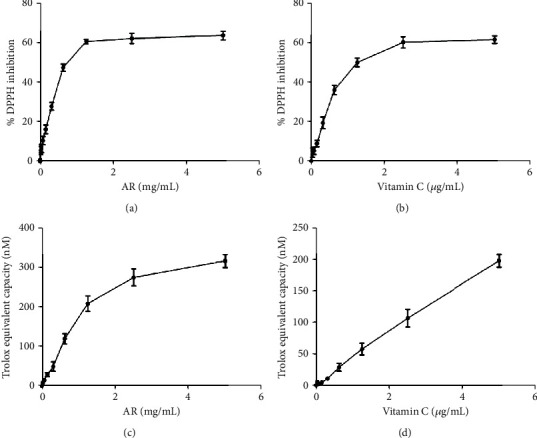
Figure 1
Figure 1
Antioxidant capacity of AR extract and vitamin C. The effects of different concentrations of (a) AR extract and (b) vitamin C on scavenging DPPH were studied. The antioxidant capacity is expressed as percentage DPPH inhibition. The effects of different concentrations of (c) AR extract or (d) vitamin C on total antioxidant capacity were also studied by measuring their ability to reduce Cu2+ to Cu+. The antioxidant effect is expressed as Trolox equivalent antioxidant capacity. Values are means ± SD of three independent experiments.
Figure 2
Figure 2
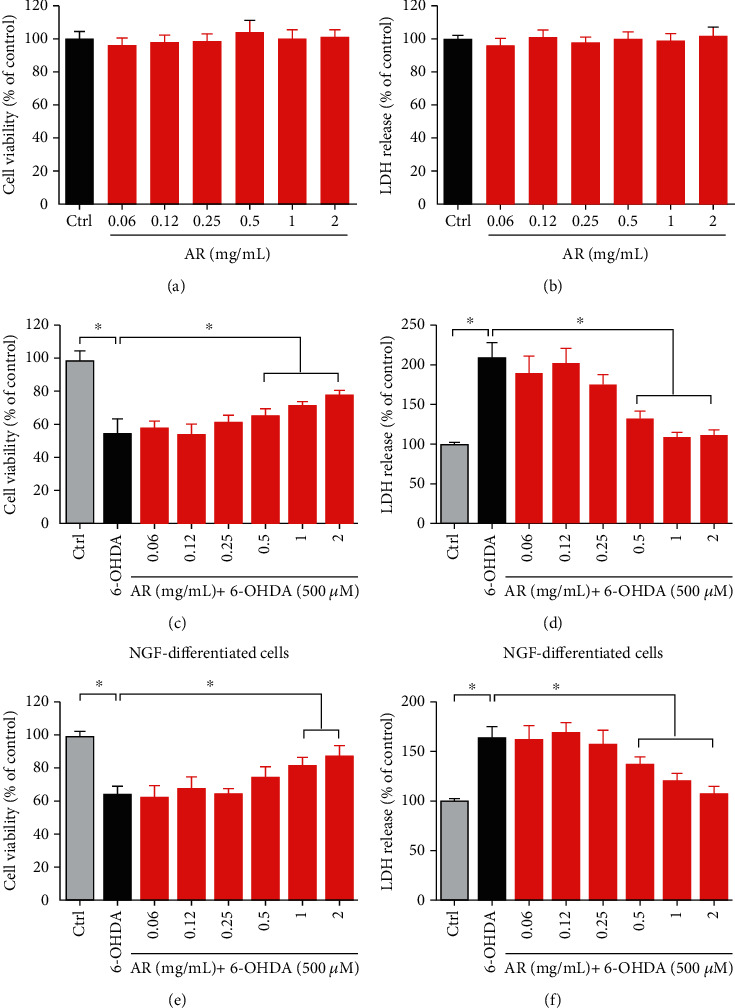
AR extract protects PC12 cells against 6-OHDA-induced cell cytotoxicity. PC12 cells were treated with various concentrations of AR extract (0.06–2 mg/mL) or vehicle (control) for 24 h. Then, (a) cell viability and (b) LDH release were examined with MTT and LDH assays, respectively. PC12 cells were then incubated with different concentrations of AR extract (0–2 mg/mL) for 2 h and subsequently treated with 500 μM 6-OHDA for 24 h. Cells without the treatment with AR extract and 6-OHDA served as controls. (c) Cell viability and (d) LDH release were again studied. (e, f) NGF-differentiated PC12 cells were treated with AR extract (0–2 mg/mL) for 2 h prior to treatment with 500 μM 6-OHDA for 24 h. Then, (e) cell viability and (f) LDH release were examined with MTT and LDH assays, respectively. Data are presented as a percentage of control group values (mean ± SD of three independent experiments). p < 0.05 indicates a statistically significant difference.
Figure 3
Figure 3
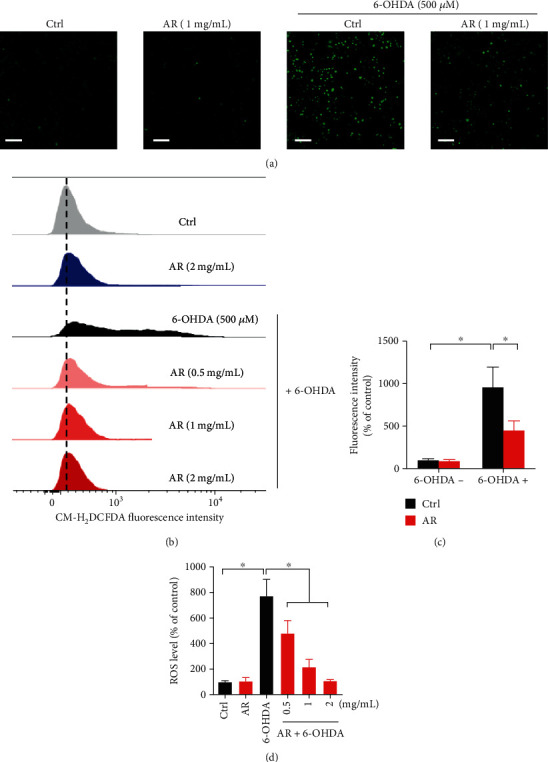
AR extract decreases 6-OHDA-induced ROS generation in PC12 cells. PC12 cells were pretreated with different concentrations of AR extract (0.5–2 mg/mL) or vehicle for 2 h and then treated with or without 500 μM 6-OHDA for 4 h. Cells without treatment with AR extract and 6-OHDA served as the control. (a) ROS generation in PC12 cells was detected by CM-H2DCFDA staining. ROS in the cells was indicated by the green signals. Scale bar: 200 μm. (b) Flow cytometry analysis of ROS levels in PC12 cells after CM-H2DCFDA staining. ROS levels in (c) microscopy images and (d) flow cytometry were quantified. Data are presented as a percentage of control group values (mean ± SD of three independent experiments). p < 0.05 indicates a statistically significant difference.
Figure 4
Figure 4
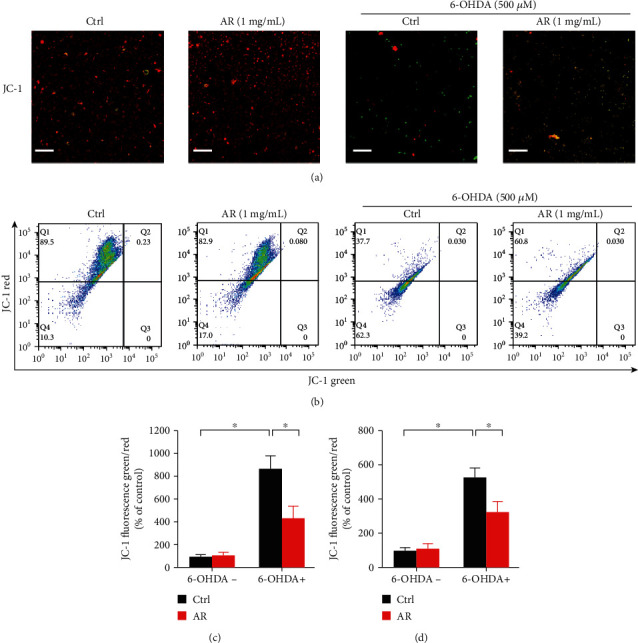
AR extract ameliorates 6-OHDA-induced loss of mitochondrial membrane potential in PC12 cells. PC12 cells were pretreated with 1 mg/mL AR extract or vehicle for 2 h and then treated with or without 500 μM 6-OHDA for 24 h. (a) Mitochondrial membrane potential in PC12 cells was detected with JC-1 staining. Red and green fluorescence signals indicated JC-1 aggregates and monomers, respectively. Scale bar: 200 μm. (b) Flow cytometry analysis of mitochondrial membrane potential in PC12 cells after JC-1 staining. The mitochondrial membrane potential in (c) microscopy image and (d) flow cytometry was quantified. Data are presented as a percentage of control group values (mean ± SD of three independent experiments). p < 0.05 indicates a statistically significant difference.
Figure 5
Figure 5
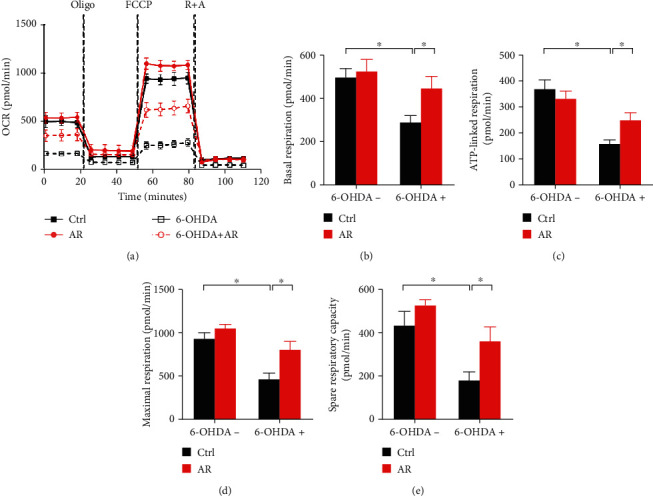
AR extract reduces 6-OHDA-induced mitochondrial respiratory dysfunction in PC12 cells. PC12 cells were pretreated with 1 mg/mL AR extract or vehicle for 2 h and then treated with or without 500 μM 6-OHDA for 24 h. (a) Mitochondrial oxygen consumption rate (OCR) in PC12 cells was monitored using a Seahorse metabolic analyzer. The response of PC12 cells after addition of 1 μM oligomycin (Oligo), 1 μM FCCP, and 1 μM rotenone plus 1 μM antimycin (R + A) was recorded. (b–e) Quantitative analysis of (b) basal respiration, (c) ATP-linked respiration, (d) maximal respiration, and (e) spare respiratory capacity in PC12 cells, respectively. The values represent the mean ± SD (n = 3). p < 0.05 indicates a statistically significant difference.
Figure 6
Figure 6
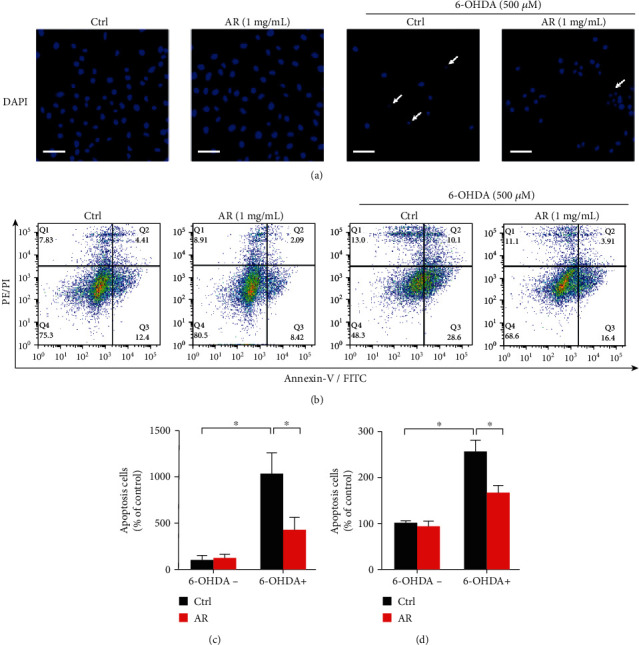
AR extract protects PC12 cells against 6-OHDA-induced apoptosis. PC12 cells were pretreated with 1 mg/mL AR extract or vehicle for 2 h and then treated with or without 500 μM 6-OHDA for 24 h. (a) Apoptotic cells were identified by DAPI staining. Blue signals indicate the nuclei of PC12 cells. White arrows indicate apoptotic cells. Scale bar: 50 μm. (b) Cells were double stained by annexin V and PI for 20 min and then analyzed by flow cytometry. The number of apoptotic cells in microscopy images (c) and flow cytometry (d) was quantified. Data are presented as a percentage of control group values (mean ± SD of three independent experiments). p < 0.05 indicates a statistically significant difference.
Figure 7
Figure 7
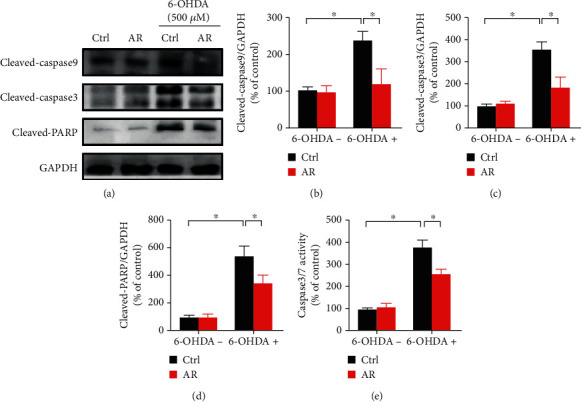
AR extract inhibits 6-OHDA-induced proapoptotic protein expression in PC12 cells. (a) PC12 cells were pretreated with 1 mg/mL AR extract or vehicle for 2 h and then treated with or without 500 μM 6-OHDA for 24 h. Protein expression levels of cleaved-caspase 9, cleaved-caspase 3, and cleaved-PARP in PC12 cells were examined by Western blot analysis. (b–d) Quantitative analysis of protein expression levels. (e) Caspase 3/7 activity in PC12 cells was measured with a biochemical assay kit. Data are presented as a percentage of control group values (mean ± SD of three independent experiments). p < 0.05 indicates a statistically significant difference.
Figure 8
Figure 8
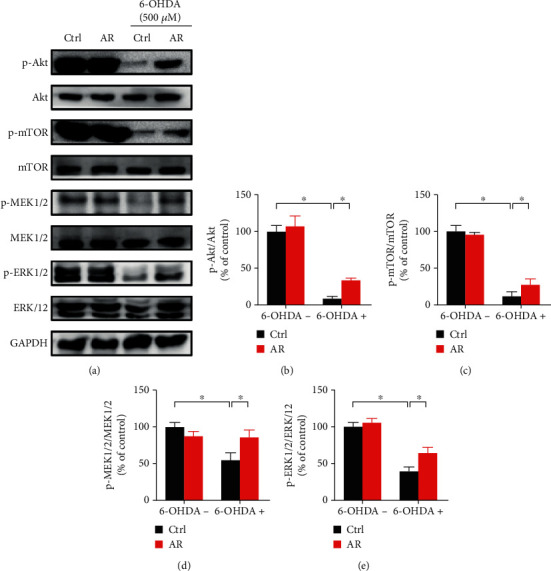
AR extract restores 6-OHDA-induced downregulation of the Akt/mTOR and MEK/ERK signaling pathway in PC12 cells. (a) PC12 cells were pretreated with 1 mg/mL AR extract or vehicle for 2 h and then treated with or without 500 μM 6-OHDA for 24 h. Protein expression levels of p-Akt, Akt, p-mTOR, mTOR, p-MEK1/2, MEK1/2, p-ERK1/2, and ERK1/2 in PC12 cells were examined by Western blot analysis. (b–e) Quantitative analysis of protein expression levels. Data are presented as a percentage of control group values (mean ± SD of three independent experiments). p < 0.05 indicates a statistically significant difference.
Figure 9
Figure 9
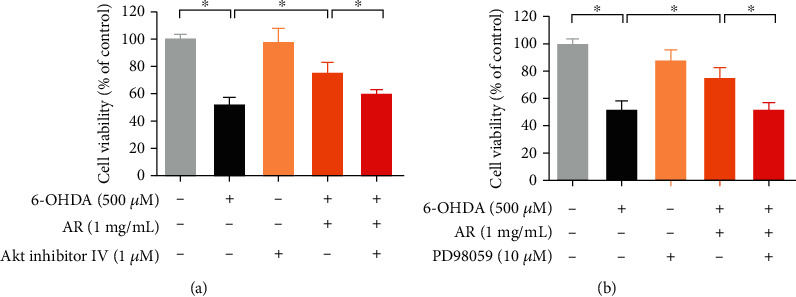
Akt inhibitor and MEK inhibitor abolish the neuroprotective effects of AR in 6-OHDA-treated PC12 cells. PC12 cells were pretreated with (a) 1 μM AKT inhibitor IV or (b) 10 μM MEK inhibitor (PD98059) for 30 min prior to incubation with 1 mg/mL AR for another 2 h, and then, the cells were exposed to 500 μM 6-OHDA for 24 h to induce cell damage. Then, cell viability was examined with MTT assays. Data are presented as a percentage of control group values (mean ± SD of three independent experiments). p < 0.05 indicates a statistically significant difference.
Figure 10
Figure 10
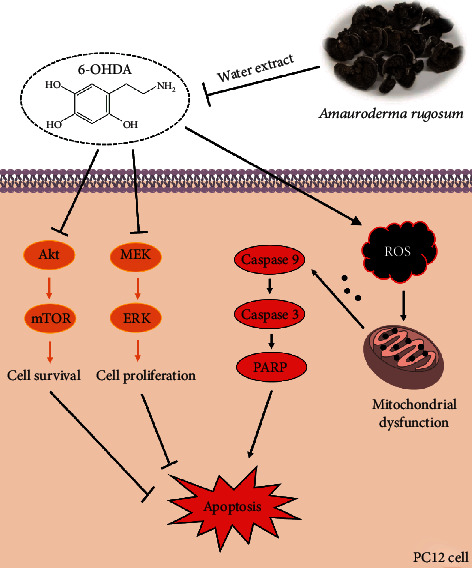
A schematic diagram illustrated the neuroprotective mechanisms of AR in PC12 cells.

References

    1. Zhou H., Shao M., Yang X., et al. Tetramethylpyrazine analogue T-006 exerts neuroprotective effects against 6-hydroxydopamine-induced Parkinson’s disease in vitro and in vivo. Oxidative Medicine and Cellular Longevity. 2019;2019:14. doi: 10.1155/2019/8169125.8169125 - DOI - PMC - PubMed
    1. Poewe W., Tanner C. M., Halliday G. M., et al. Parkinson disease. Nature Reviews. Disease Primers. 2017;3(1, article 17013) doi: 10.1038/nrdp.2017.13. - DOI - PubMed
    1. Ray N. J., Jenkinson N., Wang S., et al. Local field potential beta activity in the subthalamic nucleus of patients with Parkinson’s disease is associated with improvements in bradykinesia after dopamine and deep brain stimulation. Experimental Neurology. 2008;213(1):108–113. doi: 10.1016/j.expneurol.2008.05.008. - DOI - PubMed
    1. Hwang O. Role of oxidative stress in Parkinson’s disease. Experimental neurobiology. 2013;22(1):11–17. doi: 10.5607/en.2013.22.1.11. - DOI - PMC - PubMed
    1. Dias V., Junn E., Mouradian M. M. The role of oxidative stress in Parkinson’s disease. Journal of Parkinson's Disease. 2013;3(4):461–491. doi: 10.3233/JPD-130230. - DOI - PMC - PubMed

MeSH terms

Supplementary concepts