


The Role of Oxidative Stress and Antioxidants in Diabetic Wound Healing
- PMID: 33628388
- PMCID: PMC7884160
- DOI: 10.1155/2021/8852759
The Role of Oxidative Stress and Antioxidants in Diabetic Wound Healing
Abstract
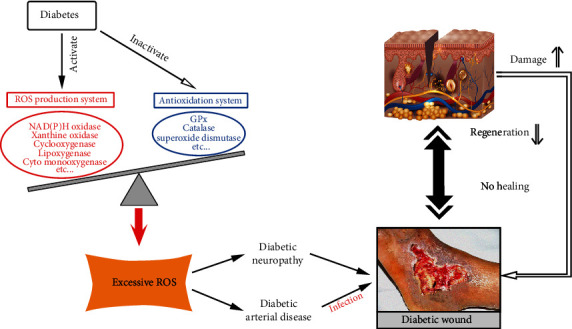
Foot ulcers are one of the most common and severe complication of diabetes mellitus with significant resultant morbidity and mortality. Multiple factors impair wound healing include skin injury, diabetic neuropathy, ischemia, infection, inadequate glycemic control, poor nutritional status, and severe morbidity. It is currently believed that oxidative stress plays a vital role in diabetic wound healing. An imbalance of free radicals and antioxidants in the body results in overproduction of reactive oxygen species which lead to cell, tissue damage, and delayed wound healing. Therefore, decreasing ROS levels through antioxidative systems may reduce oxidative stress-induced damage to improve healing. In this context, we provide an update on the role of oxidative stress and antioxidants in diabetic wound healing through following four perspectives. We then discuss several therapeutic strategies especially dietary bioactive compounds by targeting oxidative stress to improve wounds healing.
Copyright © 2021 Liling Deng et al.
Conflict of interest statement
The authors declare no conflicts of interest.
Figures
References
-
- Armstrong D. G., Swerdlow M. A., Armstrong A. A., Conte M. S., Padula W. V., Bus S. A. Five year mortality and direct costs of care for people with diabetic foot complications are comparable to cancer. Journal of Foot and Ankle Research. 2020;13(1):p. 16. doi: 10.1186/s13047-020-00383-2. - DOI - PMC - PubMed
Publication types
MeSH terms
Substances
Grants and funding
LinkOut - more resources
Full Text Sources
Other Literature Sources
Medical
