. 2021 Apr 1;7(4):525-533.
doi: 10.1001/jamaoncol.2020.7987.

Assessment of Clinical Benefit of Integrative Genomic Profiling in Advanced Solid Tumors

Affiliations

Assessment of Clinical Benefit of Integrative Genomic Profiling in Advanced Solid Tumors

Erin F Cobain et al. JAMA Oncol. .

Abstract

Importance: Use of next-generation sequencing (NGS) to identify clinically actionable genomic targets has been incorporated into routine clinical practice in the management of advanced solid tumors; however, the clinical utility of this testing remains uncertain.

Objective: To determine which patients derived the greatest degree of clinical benefit from NGS profiling.

Design, setting, and participants: Patients in this cohort study underwent fresh tumor biopsy and blood sample collection for genomic profiling of paired tumor and normal DNA (whole-exome or targeted-exome capture with analysis of 1700 genes) and tumor transcriptome (RNA) sequencing. Somatic and germline genomic alterations were annotated and classified according to degree of clinical actionability. Results were returned to treating oncologists. Data were collected from May 1, 2011, to February 28, 2018, and analyzed from May 1, 2011, to April 30, 2020.

Main outcomes and measures: Patients' subsequent therapy and treatment response were extracted from the medical record to determine clinical benefit rate from NGS-directed therapy at 6 months and exceptional responses lasting 12 months or longer.

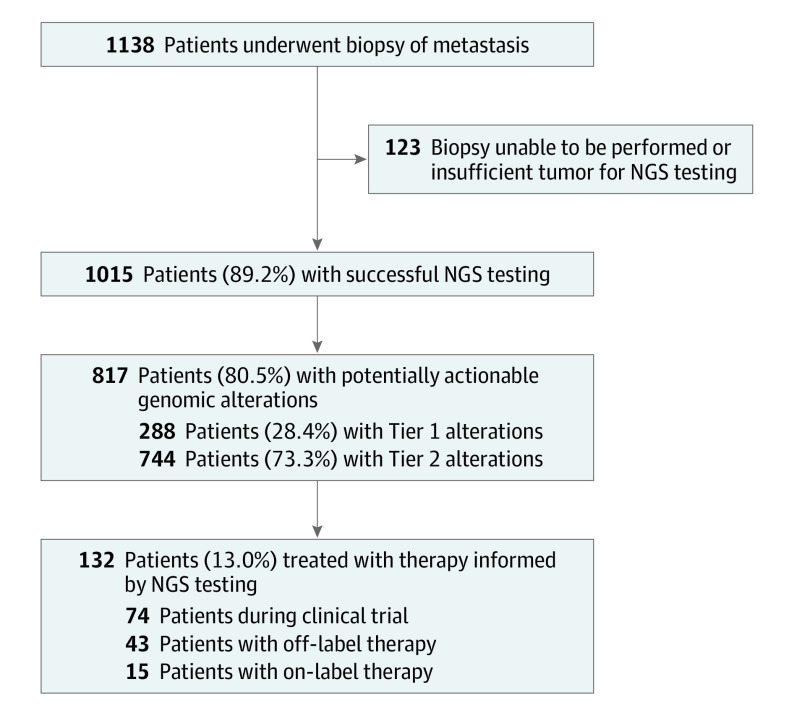
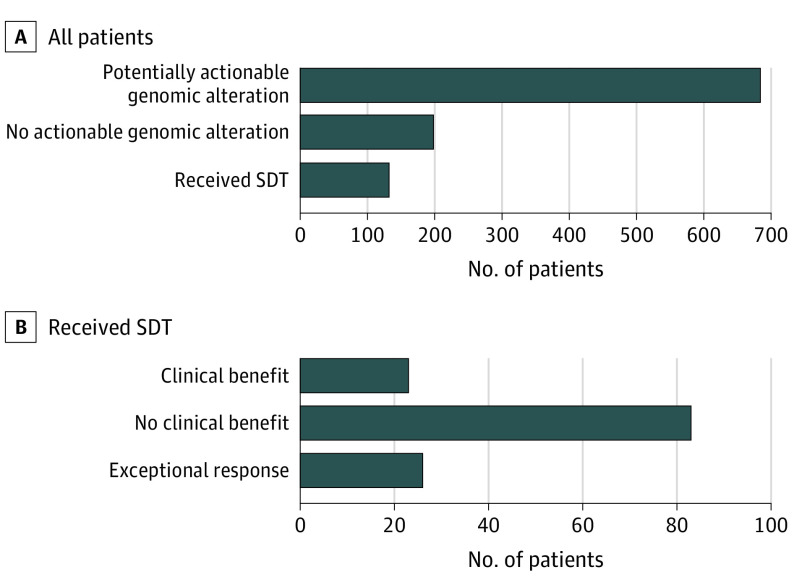
Results: During the study period, NGS was attempted on tumors from 1138 patients and was successful in 1015 (89.2%) (MET1000 cohort) (538 men [53.0%]; mean [SD] age, 57.7 [13.3] years). Potentially clinically actionable genomic alterations were discovered in 817 patients (80.5%). Of these, 132 patients (16.2%) received sequencing-directed therapy, and 49 had clinical benefit (37.1%). Exceptional responses were observed in 26 patients (19.7% of treated patients). Pathogenic germline variants (PGVs) were identified in 160 patients (15.8% of cohort), including 49 PGVs (4.8% of cohort) with therapeutic relevance. For 55 patients with carcinoma of unknown primary origin, NGS identified the primary site in 28 (50.9%), and sequencing-directed therapy in 13 patients resulted in clinical benefit in 7 instances (53.8%), including 5 exceptional responses.

Conclusions and relevance: The high rate of therapeutically relevant PGVs identified across diverse cancer types supports a recommendation for directed germline testing in all patients with advanced cancer. The high frequency of therapeutically relevant somatic and germline findings in patients with carcinoma of unknown primary origin and other rare cancers supports the use of comprehensive NGS profiling as a component of standard of care for these disease entities.


Conflict of interest statement

Conflict of Interest Disclosures: Dr Cobain reported receiving personal fees from AstraZeneca, Athenex, Inc, and Ayala Pharmaceuticals outside the submitted work. Dr Chugh reported receiving personal fees from Immune Design and Ipsen Pharma, grants from Epizyme, Inc, AADi, Novartis AG, Medivation, Inc, Advenchen Laboratories, LLC, Plexxikonn, SpringWorks Therapeutics, Mundipharma International, GSK Group, and Qilu Puget Sound Biotherapeutics Corporation, and nonfinancial support from Janssen Global Services, LLC, GSK Group, and SpringWorks Therapeutics outside the submitted work. Dr Worden reported receiving funding for clinical trials from Merck & Co, Eisai Inc, Bristol Myers Squibb, Cue Biopharma, Eli Lilly and Company, and Pfizer, Inc, serving on advisory boards for Merck & Co, Bristol Myers Squibb, Cue Biopharma, and Eli Lilly and Company, personal fees from Bayer AG, and a stipend for a lecture given at the Brazilian Society of Endocrinology and Metabology during the conduct of the study. Dr Smith reported receiving grants from Bristol Myers Squibb, Eli Lilly and Company, Medivation, Inc, Astellas Pharma Inc, Incyte, Novartis AG, Genentech, Inc, and OncoMed-Solutions outside the submitted work. Dr Schuetze reported receiving grants from the National Cancer Institute (NCI) during the conduct of the study and grants from Blueprint Medicines Corporation, Adaptimmune Therapeutics plc, GSK Group, Amgen, Inc, and Karyopharm outside the submitted work. Dr Sahai reported receiving institutional research grant funding from Agios, Inc, Bristol Myers Squibb, Celgene Corporation, Clovis Oncology, Debiopharm, FibroGen Inc, Incyte, Ipsen Pharma, MedImmune, LLC, Merck & Co, NCI, and Rafael Pharmaceuticals, Inc, and consulting for AstraZeneca, Halozyme, Inc, QED Therapeutics, Inc, Incyte, Ipsen Pharma, GSK Group, and Rafael Pharmaceuticals, Inc. Dr Alva reported receiving grants from Pfizer, Inc, Bristol Myers Squibb, Celgene Corporation, AstraZeneca, Prometheus Biosciences, and Astellas Pharma Inc, personal fees from Pfizer, Inc, Bristol Myers Squibb, and AstraZeneca, and nonfinancial support from the American Society of Clinical Oncology outside the submitted work. Dr Hayes reported receiving earnings from Inbiomotion stock options, personal fees for consulting and serving on advisory committees for Cepheid, Freenome Holdings, Inc, Artiman, Lexent Bio, Inc, Agendia, Epic Sciences, Salutogenic Innovations, LLC, and L-Nutra Inc, research support from Merrimack, Eli Lilly and Company, Menarini Silicon Biosystems, Puma Biotechnology, Inc, Pfizer, Inc, and AstraZeneca outside the submitted work, and royalties from licensed technology 08/01/14 licensed to Janssen R&D, LLC (Johnson & Johnson) and transferred to Menarini Silicon Biosystems. Dr Chinnaiyan reported serving on the scientific advisory board of Tempus, which has licensed the Mi-Oncoseq1700 panel and integrative sequencing approach from the University of Michigan; serving on the scientific advisory board of Ascentage; being cofounder and serving on the scientific advisory boards of Oncopia, LynxDx, and Esanik; and receiving support as a Howard Hughes Medical Institute Investigator, A. Alfred Taubman Scholar, and American Cancer Society professor. No other disclosures were reported.

Figures

Figure 1.
Figure 1.. CONSORT Diagram of Patients in the MET1000 Cohort
NGS indicates next-generation sequencing.
Figure 2.
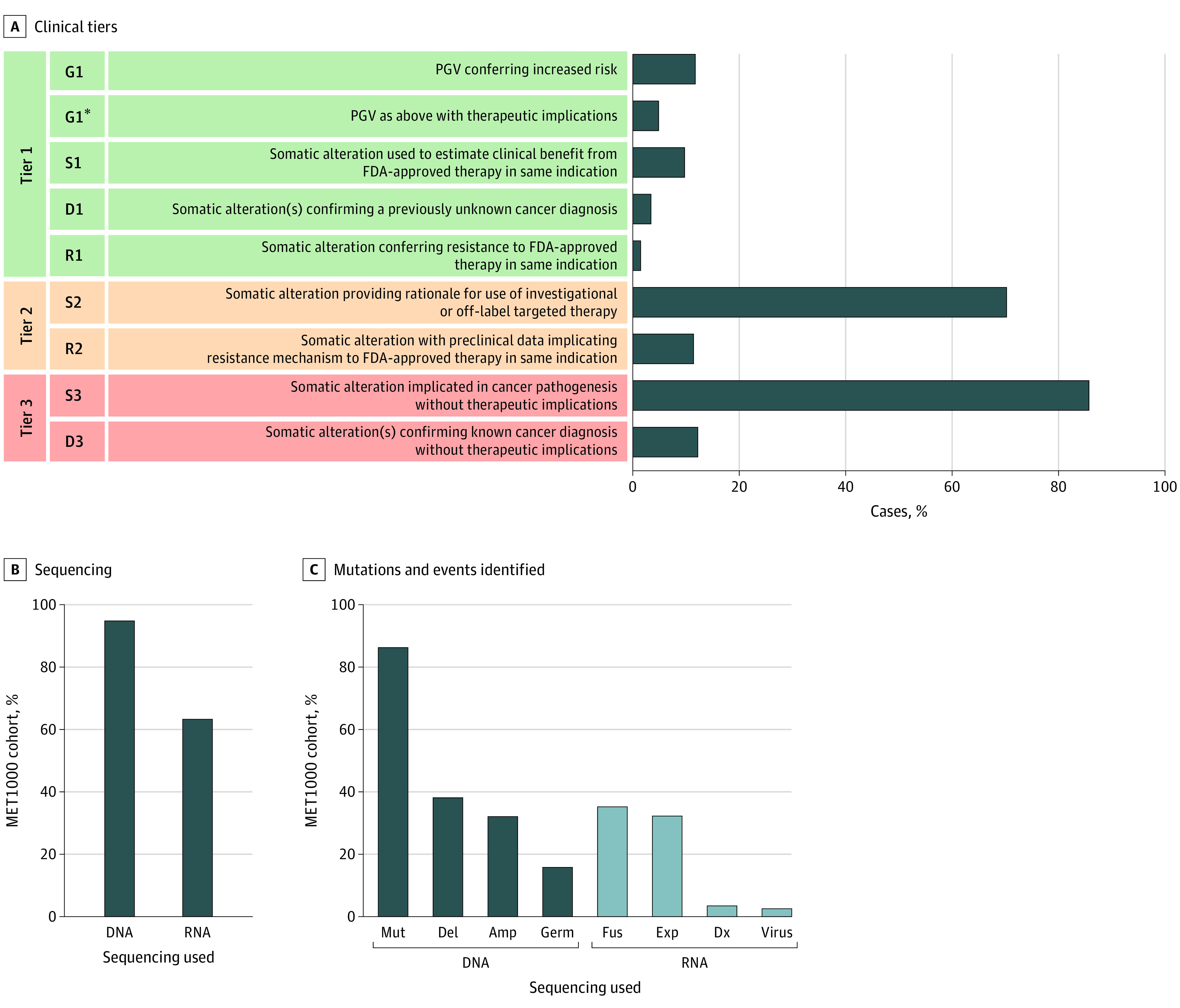
Figure 2.. Clinical Tiering of Molecular Alterations Identified in Metastatic Cancer
A, Tiering of genomic alterations identified in the MET1000 cohort by clinical relevance. D indicates diagnosis change; G, germline; R, resistance to therapy; and S, somatic. Tier 1 alterations were known to have clinical utility for that individual’s cancer type and included pathogenic germline variants (PGVs) conferring increased cancer risk, changes in cancer diagnosis, and somatic alteration(s) used to estimate clinical benefit from or resistance to a therapy approved by the US Food and Drug Administration (FDA). Tier 2 alterations included somatic events that provided rationale for use of investigational or off-label targeted therapy and alterations postulated from strong preclinical evidence to estimate resistance to an FDA-approved therapy in that indication. Tier 3 included alterations implicated in cancer pathogenesis or molecular events indicative of a known cancer diagnosis but without current therapeutic implications. Genomic alterations in tiers 1 and 2 were considered potentially clinically actionable. B, Percentage of cases in which DNA or RNA sequencing contributed to identifying clinically relevant alterations. C, Classes of clinically relevant alterations identified in the MET1000 cohort. Amp indicates amplification; Del, homozygous deletion; Dx, markers for cancer of unknown primary origin or change of diagnosis; Exp, expression concordant with gene amplification; Fus, gene fusion; Germ, germline; Mut, mutation; and Virus, viral pathogen.
Figure 3.
Figure 3.. Patients Receiving Sequencing-Directed Therapy (SDT) in MET1000 Cohort and Exceptional Responses
Bar graphs depict proportion of patients in the MET1000 cohort (n = 1015) who received SDT and ultimately had clinical benefit or exceptional response to treatment.
Figure 4.
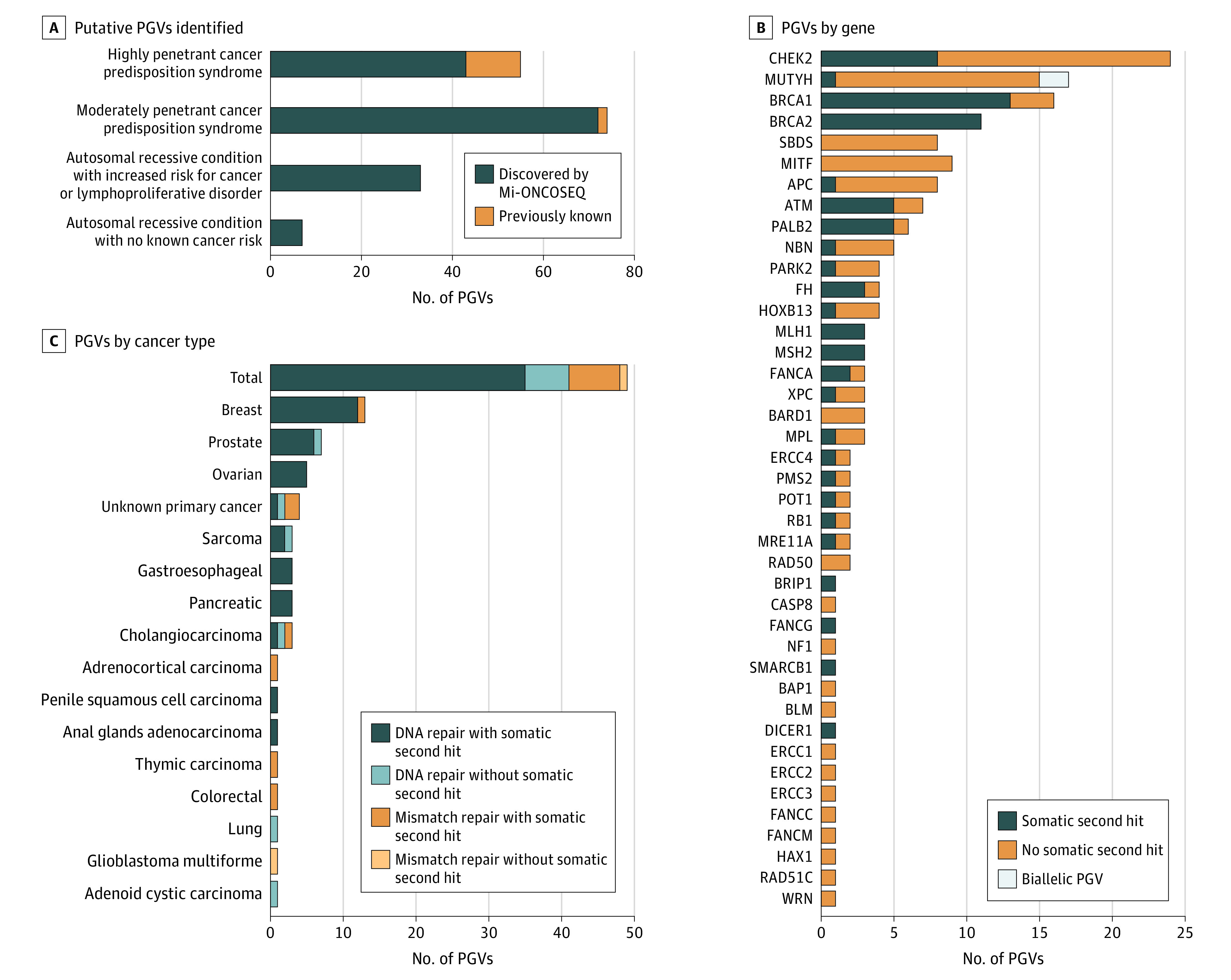
Figure 4.. Pathogenic Germline Variants (PGVs) Observed in the MET1000 Cohort
A, Among 1015 patients undergoing sequencing, 169 putative PGVs were identified (160 patients [15.8%] of MET1000 cohort). Fifty-five PGVs associated with highly penetrant cancer predisposition syndromes (including PGVs in APC, BAP1, BRCA1, BRCA2, DICER1, FH, HOXB13, MLH1, MSH2, PALB2, PMS2, POT1, and RB1) were identified, which included 14 PGVs known before the patient’s enrollment in the Michigan Oncology Sequencing Program (Mi-ONCOSEQ). Seventy-four PGVs associated with moderately penetrant cancer predisposition syndromes (including PGVs in APC, ATM, BARD1, CHEK2, MITF, MRE11A, MUTYH, RAD50, RAD51C, NF1, and SMARCB1) were identified, which included 2 PGVs known before the patient’s enrollment in Mi-ONCOSEQ. An additional 33 PGVs associated with an autosomal recessive condition conferring increased risk for cancer or lymphoproliferative disorder (including MPL, BLM, CASP8, ERCC1, ERCC2, ERCC3, ERCC4, FANCA, FANCC, FANCG, FANCM, HAX1, NBN, SBDS, and XPC) and 7 PGVs associated with an autosomal recessive condition not known to increase cancer risk (including PARK2, FH, and WRN) were identified. B, Pathogenic germline variants with somatic second-hit events identified by gene. Sixty-nine of the PGVs identified (40.8% of PGVs and 6.8% of MET1000 cohort) harbored a somatic second-hit event in the tumor. Incidental PGVs in highly penetrant cancer predisposition syndromes (ie, BRCA1) were identified in cases where the PGV was not likely related to tumor pathogenesis. C, Pathogenic germline variants with therapeutic targets were identified in 49 patients (4.8% of MET1000 cohort), often in diseases not typically associated with cancer predisposition syndromes in DNA or mismatch repair. Among the 49 PGVs identified with a therapeutic target, 42 (85.7%) harbored a somatic second-hit event in the tumor.
Figure 5.
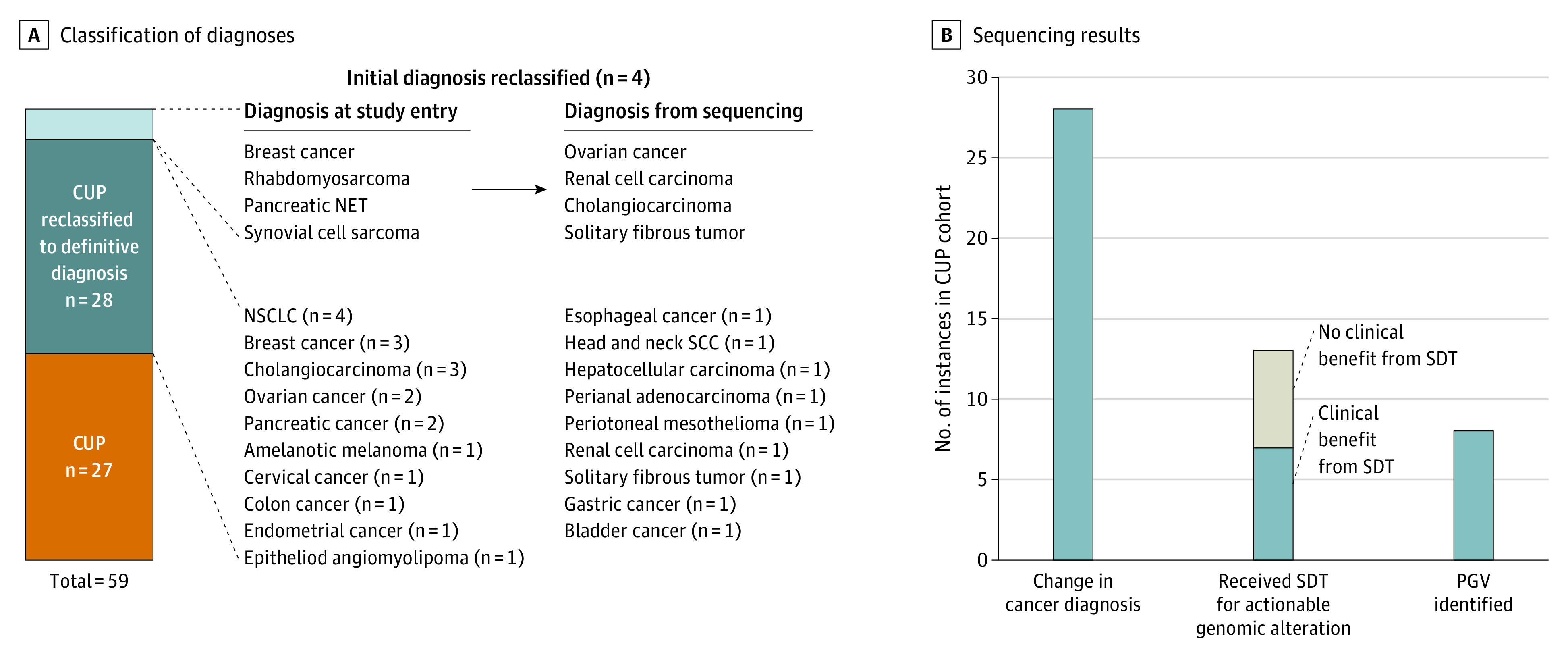
Figure 5.. Cancers of Unknown Primary Origin in MET1000 Cohort
A, Among 55 cases of cancer of unknown primary (CUP) origin sequenced, 28 (50.9%) were reclassified to a definitive diagnosis through RNA sequencing tissue of origin predictor. An additional 4 cases in the MET1000 cohort with presumed known diagnoses at study entry were also reclassified. B, Sequencing results were highly informative for patients with CUP, with a total of 34 of 55 CUP cases (61.8%) having at least 1 of the following: (1) a change in cancer diagnosis (28 patients [50.9%]), (2) receipt of sequencing-directed therapy (SDT) (13 patients [23.6%]), or (3) identification of a pathogenic germline variant (PGV) conferring increased cancer risk (8 patients [14.5%]). NET indicates neuroendocrine tumor; NSCLC, non–small cell lung cancer; and SCC, squamous cell carcinoma.

Comment in

References

    1. Ramalingam SS, Vansteenkiste J, Planchard D, et al. ; FLAURA Investigators . Overall survival with osimertinib in untreated, EGFR-mutated advanced NSCLC. N Engl J Med. 2020;382(1):41-50. doi: 10.1056/NEJMoa1913662 - DOI - PubMed
    1. Slamon DJ, Leyland-Jones B, Shak S, et al. Use of chemotherapy plus a monoclonal antibody against HER2 for metastatic breast cancer that overexpresses HER2. N Engl J Med. 2001;344(11):783-792. doi: 10.1056/NEJM200103153441101 - DOI - PubMed
    1. Marabelle A, Le DT, Ascierto PA, et al. Efficacy of pembrolizumab in patients with noncolorectal high microsatellite instability/mismatch repair-deficient cancer: results from the phase II KEYNOTE-158 study. J Clin Oncol. 2020;38(1):1-10. doi: 10.1200/JCO.19.02105 - DOI - PMC - PubMed
    1. Flaherty KT, Infante JR, Daud A, et al. Combined BRAF and MEK inhibition in melanoma with BRAF V600 mutations. N Engl J Med. 2012;367(18):1694-1703. doi: 10.1056/NEJMoa1210093 - DOI - PMC - PubMed
    1. Le DT, Durham JN, Smith KN, et al. Mismatch repair deficiency predicts response of solid tumors to PD-1 blockade. Science. 2017;357(6349):409-413. doi: 10.1126/science.aan6733 - DOI - PMC - PubMed

Publication types

Substances