. 2021 Feb 25;16(2):e0247081.
doi: 10.1371/journal.pone.0247081. eCollection 2021.

A novel methodology to study antimicrobial properties of high-touch surfaces used for indoor hygiene applications-A study on Cu metal

Affiliations

A novel methodology to study antimicrobial properties of high-touch surfaces used for indoor hygiene applications-A study on Cu metal

T Chang et al. PLoS One. .

Abstract

Metal-based high-touch surfaces used for indoor applications such as doorknobs, light switches, handles and desks need to remain their antimicrobial properties even when tarnished or degraded. A novel laboratory methodology of relevance for indoor atmospheric conditions and fingerprint contact has therefore been elaborated for combined studies of both tarnishing/corrosion and antimicrobial properties of such high-touch surfaces. Cu metal was used as a benchmark material. The protocol includes pre-tarnishing/corrosion of the high touch surface for different time periods in a climatic chamber at repeated dry/wet conditions and artificial sweat deposition followed by the introduction of bacteria onto the surfaces via artificial sweat droplets. This methodology provides a more realistic and reproducible approach compared with other reported procedures to determine the antimicrobial efficiency of high-touch surfaces. It provides further a possibility to link the antimicrobial characteristics to physical and chemical properties such as surface composition, chemical reactivity, tarnishing/corrosion, surface roughness and surface wettability. The results elucidate that bacteria interactions as well as differences in extent of tarnishing can alter the physical properties (e.g. surface wettability, surface roughness) as well as the extent of metal release. The results clearly elucidate the importance to consider changes in chemical and physical properties of indoor hygiene surfaces when assessing their antimicrobial properties.


Conflict of interest statement

All authors declare no competing interests. Funding from Getinge AB does not alter our adherence to PLOS ONE policies on sharing data and materials.

Figures
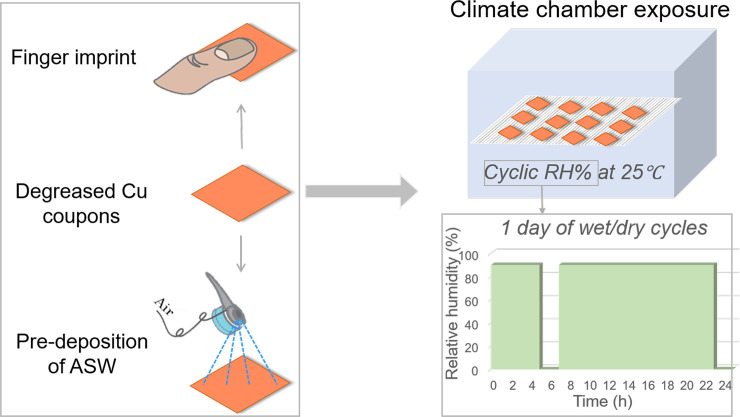
Fig 1
Fig 1. Illustration of sample preparation and the wet/dry cyclic laboratory exposure conditions in a climate chamber.
Fig 2
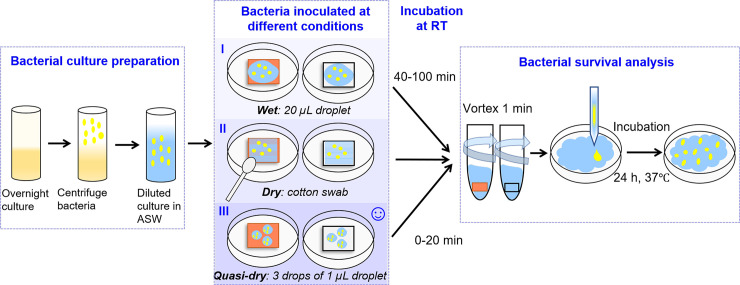
Fig 2. Schematic illustration of the three methodological approaches performed to assess the antimicrobial properties of high touch surfaces of relevance for indoor atmospheric conditions (Cu metal used as a benchmark surface).
Fig 3
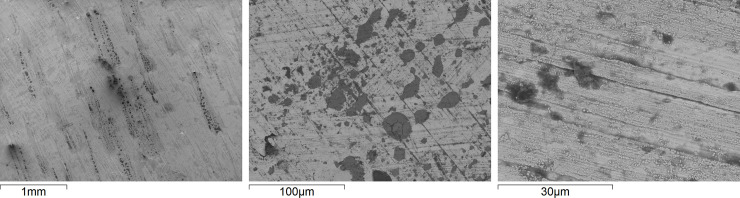
Fig 3. SEM-BE images of locally occurring corrosion features formed on three Cu metal surfaces exposed to daily fingerprint contact (thumb imprint) for one week.
Fig 4
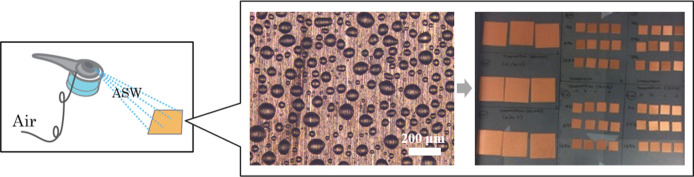
Fig 4. Illustration of deposited ASW droplets (scale bar 200 μm) sprayed by means of an air-brush (left) onto several Cu coupons (middle) simultaneously for further exposure (right) to cyclic wet/dry exposure conditions in a climatic chamber for 1 day to 4 weeks.
Fig 5
Fig 5
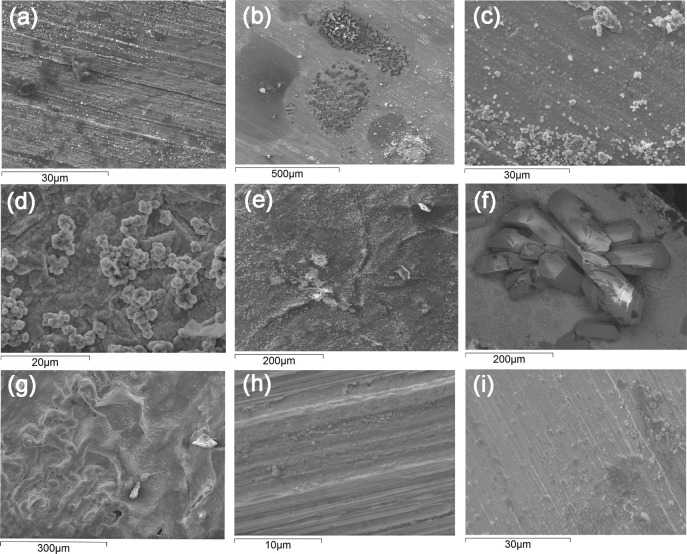
Selected SEM-SE top-surface images of the corrosion product layer of Cu coupons after 2 weeks of daily fingerprint contact and continous daily cycles of repeated dry/wet periods at constant temperature (a) compared with parallel exposures with daily deposition of ASW on Cu metal coupons after 1 day (b-d) and 4 weeks (e-g) and non-ASW-deposited Cu metal coupons after 1 day (h) and 4 weeks (i) of exposure in the climatic chamber.
Fig 6
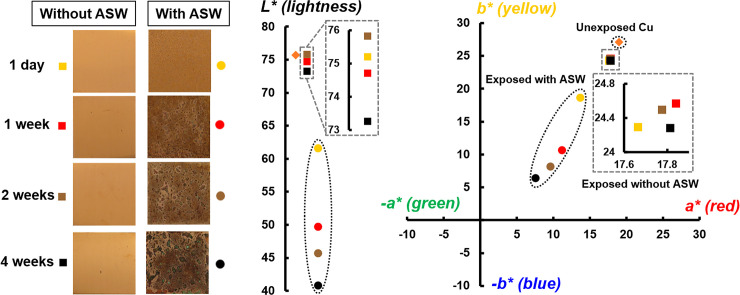
Fig 6. Changes in surface appearance (CIELab color reference space) of Cu metal with and without deposited ASW after climatic chamber exposure at daily repeated dry/wet periods for 1 day, 1, 2 and 4 weeks.
Fig 7
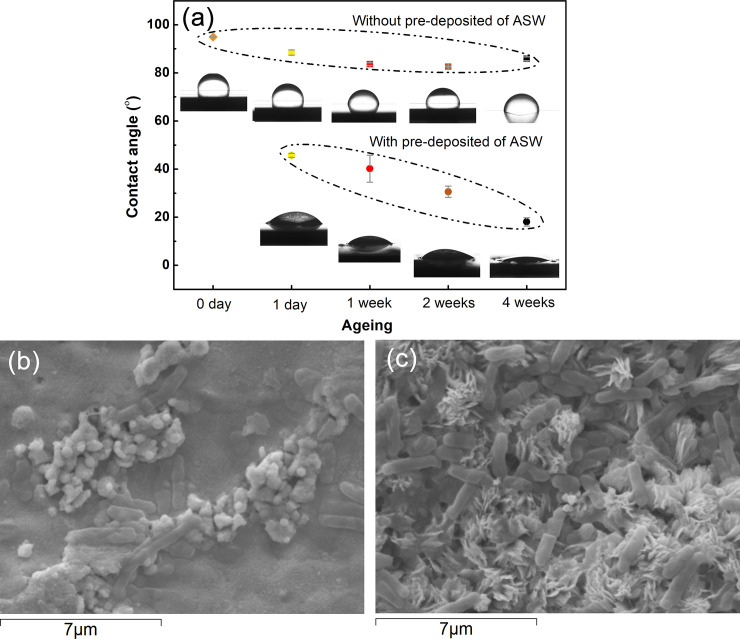
Fig 7
Changes in contact angle (indicative of increased surface wettability) of ASW droplets with time on Cu metal surfaces deposited with and without ASW and exposed to daily repeated dry/wet cycles for 1 day, 1, 2 and 4 weeks (a) SEM images of (b) bacteria and some corrosion products on the surface of Cu metal with deposited ASW for 1 day and (c) bacteria and corrosion products on Cu metal deposited with ASW for 4 weeks.
Fig 8
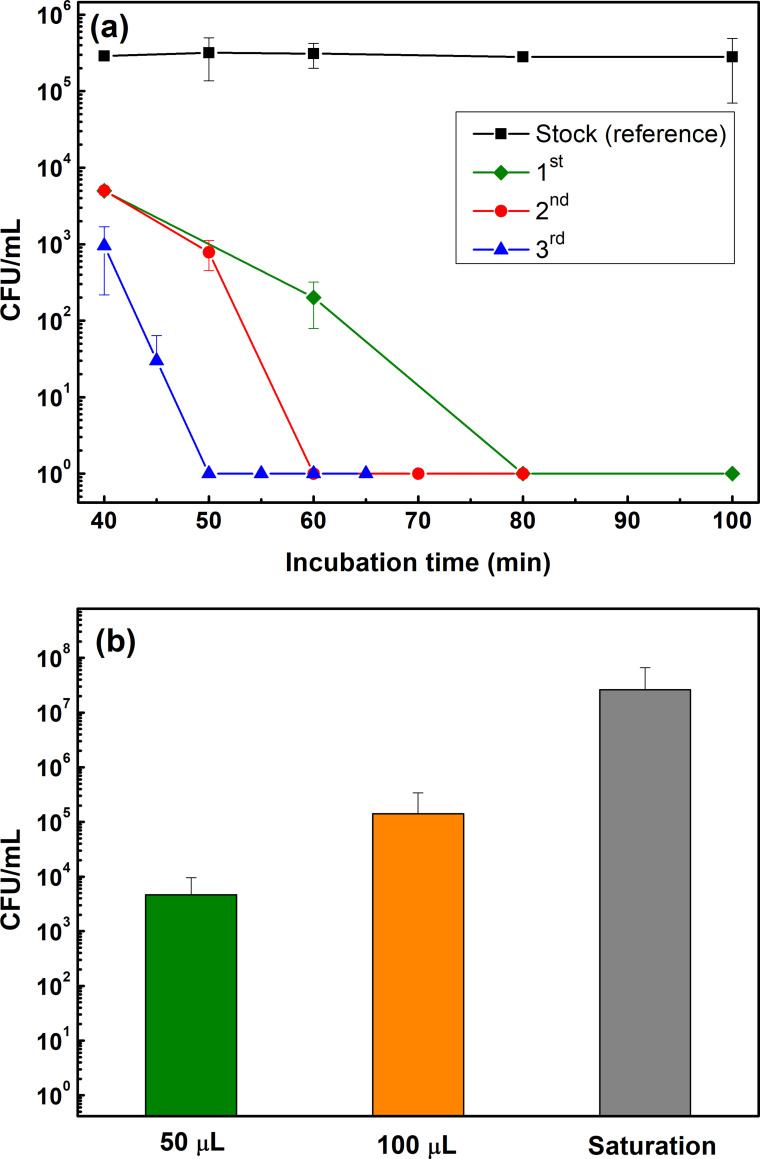
Fig 8
Kinetics of the variation in transferred number of bacteria onto one-day tarnished/corroded Cu surfaces (3 different surfaces, (1st, 2nd, 3rd)) following the wet protocol (a) and the reduction in bacteria (E. Coli) viability in ASW following the dry (b) protocol. Each point reflects the average value based on triplicate coupons for each measurement done three times.
Fig 9
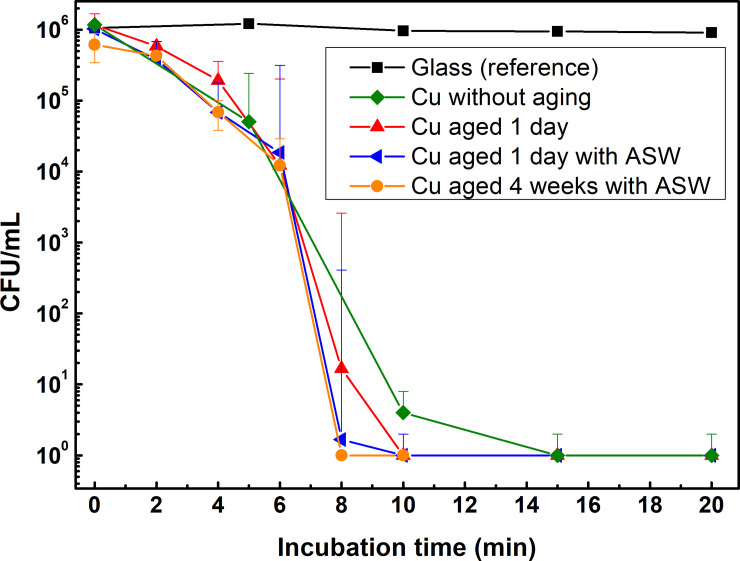
Fig 9. Kinetics in reduction of bacteria (E. coli) viability for one-day and 4 weeks tarnished/corroded Cu metal surfaces following the quasi-dry protocol up to 20 h of incubation at 37°C.
Each point is the average value of 6 NA plates including 2 replica from 3 different coupons and the statistic p-values were at all conditions < 0.05 (see detailed values in S2 Table).
Fig 10
Fig 10
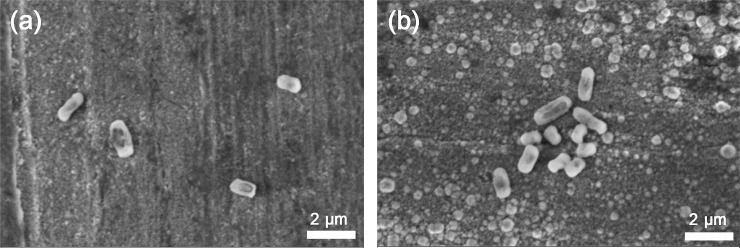
SEM images of surface morphologies and presence of bacteria adherent to the surface of one-day tarnished/corroded Cu metal without (a) and with (b) ASW deposition followed by exposure for 24 h to E. Coli (OD600 = 0.5) and the concomitant detachment of looosly adherent bacteria via vigorous vortexing (1 min) in ASW.
Fig 11
Fig 11
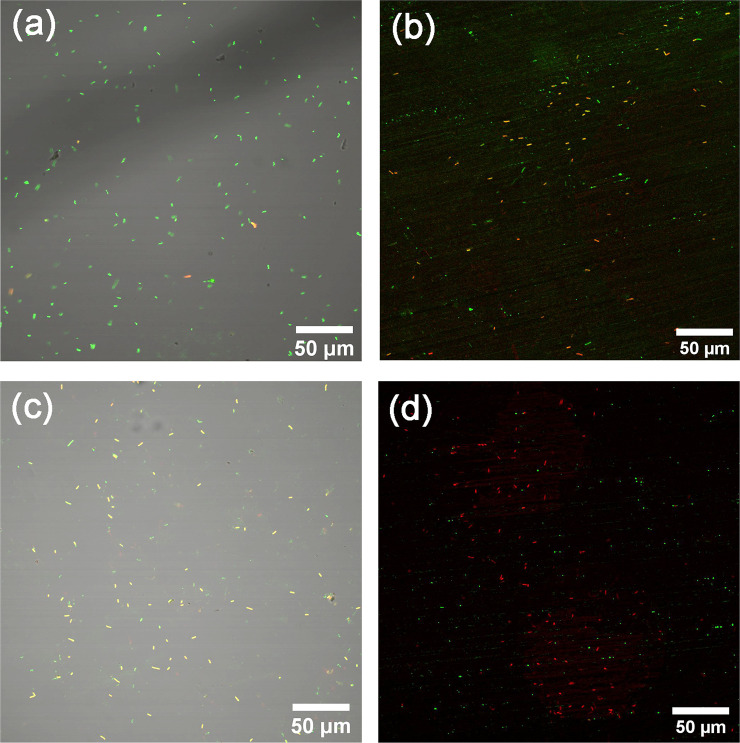
Representative fluorescence microscopy images of viable/dead bacteria on glass with merged transmitted light (a, c) and on one-day tarnished/corroded Cu surfaces (b, d) exposed to E. coli (OD600 = 0.9 ± 0.1) and stained with an viable/dead staining assay after 0 min (+10–15 min imaging time) (a-b) and after 20 min (+10–15 imaging time) (c-d). Live (green) and dead (red) cells were dyed by means of SYTO9 (a green fluorescent nucleic acid stain) and PI (propidium iodide, a red-fluorescent nuclear and chromosome counterstain).
Fig 12
Fig 12
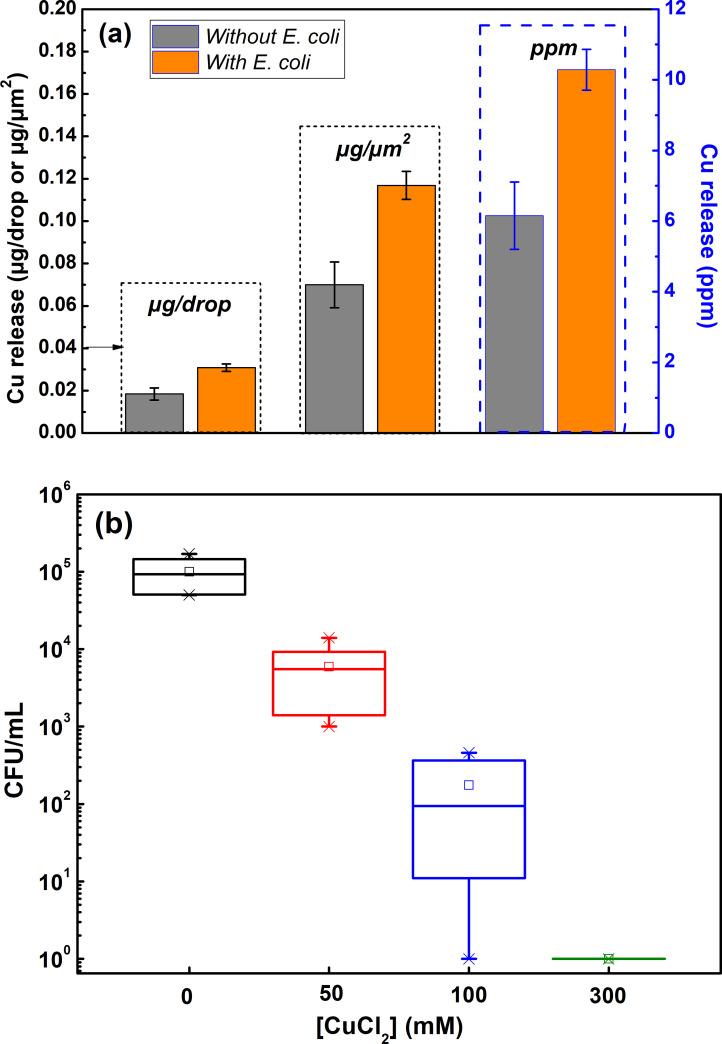
Released amounts of Cu in deposited ASW droplets (following the quasi-dry protocol) after 10 min of exposure of one-day aged (tarnished/corroded) surfaces both with and without the presence of E. coli (a); bacterial survival (p = 0.04 < 0.05) of E. Coli (OD600 = 1) after 10 min of exposure in ASW solution at different Cu2+ concentrations (b).
Fig 13
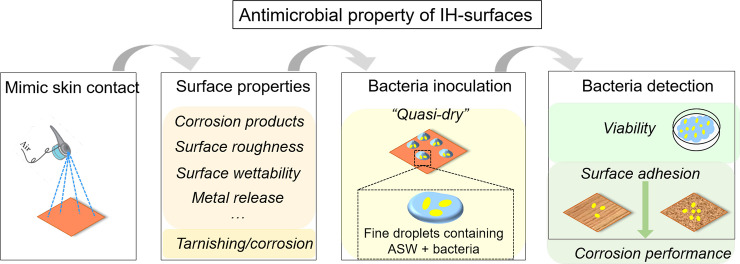
Fig 13. Schematic illustration of the test methodology and investigated properties to assess the surface characteristics and antimicrobial properties of high-touch surfaces.
Cu metal was used as benchmark material in this study.

References

    1. World Health Organization. Antibiotic resistance https://www.who.int/news-room/fact-sheets/detail/antibiotic-resistance; 2018.
    1. Casini B, Righi A, De Feo N, Totaro M, Giorgi S, Zezza L, et al.. Improving cleaning and disinfection of high-touch surfaces in intensive care during carbapenem-resistant Acinetobacter baumannii endemo-epidemic situations. Int J Environ Res Public Health. 2018;15(10):2305. 10.3390/ijerph15102305 - DOI - PMC - PubMed
    1. Schmidt MG, Tuuri RE, Dharsee A, Attaway HH, Fairey SE, Borg KT, et al.. Antimicrobial copper alloys decreased bacteria on stethoscope surfaces. Am J Infect Control. 2017;45(6):642–7. 10.1016/j.ajic.2017.01.030 - DOI - PubMed
    1. Best E, Parnell P, Couturier J, Barbut F, Le Bozec A, Arnoldo L, et al.. Environmental contamination by bacteria in hospital washrooms according to hand-drying method: a multi-centre study. J Hosp Infect. 2018;100(4):469–75. 10.1016/j.jhin.2018.07.002 - DOI - PubMed
    1. Villapún VM, Dover LG, Cross A, González S. Antibacterial metallic touch surfaces. Materials. 2016;9(9):736. 10.3390/ma9090736 - DOI - PMC - PubMed

Publication types

MeSH terms