


Prospective examination of adolescent sleep patterns and behaviors before and during COVID-19
- PMID: 33631014
- PMCID: PMC7928571
- DOI: 10.1093/sleep/zsab054
Prospective examination of adolescent sleep patterns and behaviors before and during COVID-19
Abstract
Study objectives: To prospectively examine changes in adolescent sleep before and during the COVID-19 pandemic in adolescents with and without ADHD.
Methods: Participants were 122 adolescents (ages 15-17; 61% male; 48% with ADHD). Parents reported on adolescents' sleep duration and difficulties initiating and maintaining sleep (DIMS); adolescents reported on sleep patterns, sleep duration, delayed sleep/wake behaviors, and daytime sleepiness before (September 2019 to February 2020) and during (May-June 2020) COVID-19. Adolescents also reported on their health behaviors, COVID-19-related negative affect, and difficulties concentrating due to COVID-19.
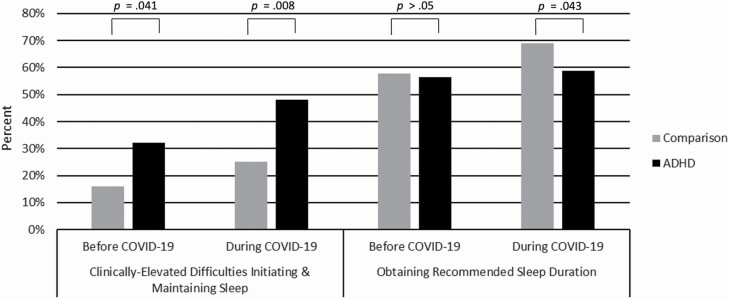
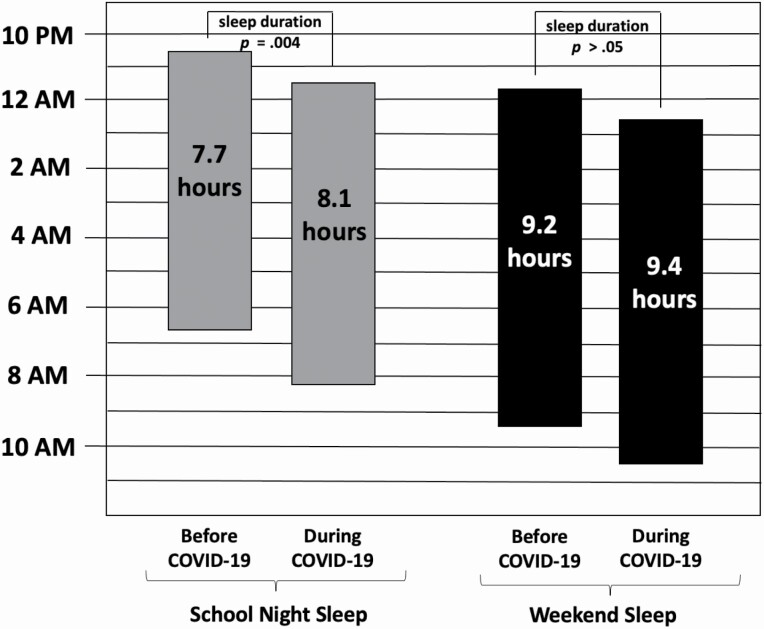
Results: Parents reported adolescents had more DIMS during COVID-19 than before COVID-19, with clinically elevated rates increasing from 24% to 36%. Both bedtimes and waketimes shifted later during COVID-19, and adolescents reported more delayed sleep/wake behaviors. Adolescents also reported less daytime sleepiness and longer school night sleep duration during COVID-19. In considering differences between adolescents with and without ADHD, adolescents with ADHD did not experience an increase in school night sleep duration and were less likely to obtain recommended sleep duration during COVID-19. In the full sample, controlling for ADHD status, COVID-19-related sadness/loneliness was associated with increases in DIMS, and spending less time outside and more COVID-19-related worries/fears were associated with increases in delayed sleep/wake behaviors during COVID-19.
Conclusions: COVID-19 had negative and positive impacts on adolescent sleep. Adolescents with ADHD did not experience the benefit of increased school night sleep duration during COVID-19 like adolescents without ADHD. Negative affect and health behaviors may be useful intervention targets for reducing negative impacts of COVID-19 for adolescent sleep.
Keywords: adolescence; attention-deficit/hyperactivity disorder; coronavirus; health behaviors; negative affect.
© Sleep Research Society 2021. Published by Oxford University Press on behalf of the Sleep Research Society. All rights reserved. For permissions, please email: journals.permissions@oup.com.
Figures
References
-
- Pfefferbaum B, et al. Mental Health and the Covid-19 pandemic. N Engl J Med. 2020;383(6):510–512. - PubMed
-
- Gregory AM, et al. Annual Research Review: sleep problems in childhood psychiatric disorders–a review of the latest science. J Child Psychol Psychiatry. 2016;57(3): 296–317. - PubMed
-
- Altena E, et al. Dealing with sleep problems during home confinement due to the COVID-19 outbreak: practical recommendations from a task force of the European CBT-I Academy. J Sleep Res. 2020;29(4):e13052. - PubMed
Publication types
MeSH terms
Grants and funding
LinkOut - more resources
Full Text Sources
Other Literature Sources
Medical
