


COVID-19 sequelae in adults aged less than 50 years: A systematic review
- PMID: 33631340
- PMCID: PMC7898978
- DOI: 10.1016/j.tmaid.2021.101995
COVID-19 sequelae in adults aged less than 50 years: A systematic review
Abstract
Background: There is emerging evidence of long-term sequelae in a considerable proportion of COVID-19 patients after recovery and the spectrum and severity of such sequelae should be systematically reviewed. This review aims to evaluate the available evidence of all intermediate and long-term COVID-19 sequelae affecting formerly healthy adults.
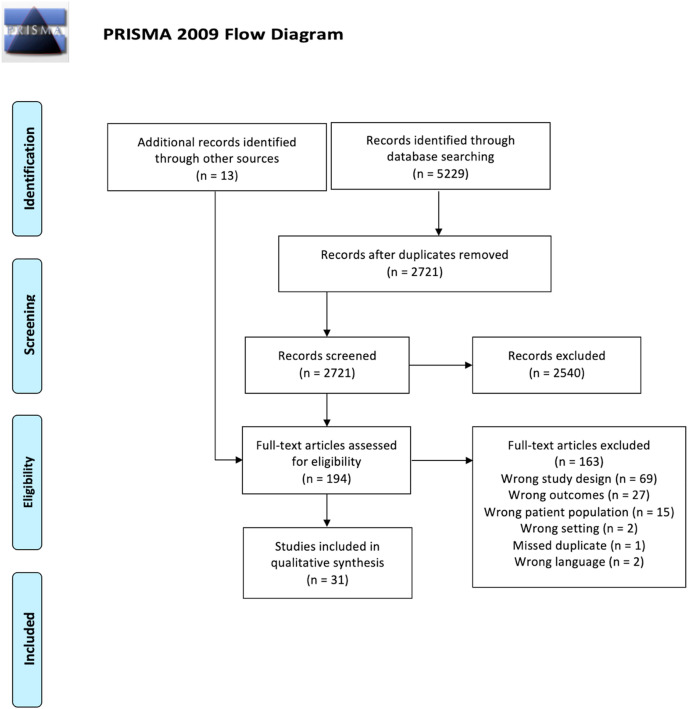
Methods: A systematic literature search of Embase, WHO, Scopus, Pubmed, Litcovid, bioRxiv and medRxiv was conducted with a cutoff date of the 17th September 2020 according to PRISMA guidelines and registered in PROSPERO (CRD42020208725). Search terms included "COVID-19", "coronavirus disease 2019", "SARS-CoV-2", "sequelae" and "consequence*". Publications on adult participants, with a confirmed SARS-CoV-2 infection were included. Elderly (>50 years old) and children (<18 years old) were excluded. Bias assessment was performed using a modified Newcastle-Ottawa Scale.
Results: A total of 31 papers were included. Study types included prospective and retrospective cohort studies, cross-sectional studies and case reports. Sequelae persistence since infection spanned 14 days to three months. Sequelae included persistent fatigue (39-73% of assessed persons), breathlessness (39-74%), decrease in quality of life (44-69%), impaired pulmonary function, abnormal CT findings including pulmonary fibrosis (39-83%), evidence of peri-/perimyo-/myocarditis (3-26%), changes in microstructural and functional brain integrity with persistent neurological symptoms (55%), increased incidence of psychiatric diagnoses (5.8% versus 2.5-3.4% in controls), incomplete recovery of olfactory and gustatory dysfunction (33-36% of evaluated persons).
Conclusions: A variety of organ systems are affected by COVID-19 in the intermediate and longer-term after recovery. Main sequelae include post-infectious fatigue, persistent reduced lung function and carditis. Careful follow-up post COVID 19 is indicated to assess and mitigate possible organ damage and preserve life quality.
Keywords: COVID-19; Consequences; Coronavirus; Long-term; SARS-CoV-2; Sequelae.
Copyright © 2021 The Author(s). Published by Elsevier Ltd.. All rights reserved.
Conflict of interest statement
All authors declare no conflict of interest.
References
-
- Veritas Health Innovation . 2020. Covidence systematic review software.
-
- World Health Organization COVID-19: vulnerable and high risk groups. 2020. https://www.who.int/westernpacific/emergencies/covid-19/information/high...
-
- Wells G., Shea B., O'Connell D., Peterson je, Welch V., Losos M., et al. 2000. The newcastle–ottawa Scale (NOS) for assessing the quality of non-randomized studies in meta-analysis.
-
- JAMA Instructions for authors. 2020. https://jamanetwork.com/journals/jama/pages/instructions-for-authors#Sec...
Publication types
MeSH terms
LinkOut - more resources
Full Text Sources
Other Literature Sources
Medical
Miscellaneous
