


Validity and Responsiveness of the Patient-reported Outcomes Measurement Information System in Children With Ulcerative Colitis
- PMID: 33633083
- PMCID: PMC8364754
- DOI: 10.1097/MPG.0000000000003101
Validity and Responsiveness of the Patient-reported Outcomes Measurement Information System in Children With Ulcerative Colitis
Abstract
Objectives: Patient-reported outcome measures allow children to directly report on their health and well-being. We assessed the construct validity and responsiveness of the Patient-Reported Outcomes Measurement Information System (PROMIS) Pediatric measures in children and adolescents with ulcerative colitis (UC).
Methods: Through the Inflammatory Bowel Disease Partners Kids & Teens' Internet-based cohort, children with UC reported symptoms related to disease activity (Pediatric Ulcerative Colitis Activity Index), IMPACT-III health-related quality of life measure, and 5 PROMIS Pediatric measures (anxiety, depressive symptoms, pain interference, fatigue, and peer relationships). We included participants aged 9 to 17 years and conducted cross-sectional and longitudinal, mixed-linear regression analyses to examine the extent to which PROMIS Pediatric scores are associated with and respond to changes in Pediatric Ulcerative Colitis Activity Index and IMPACT-III.
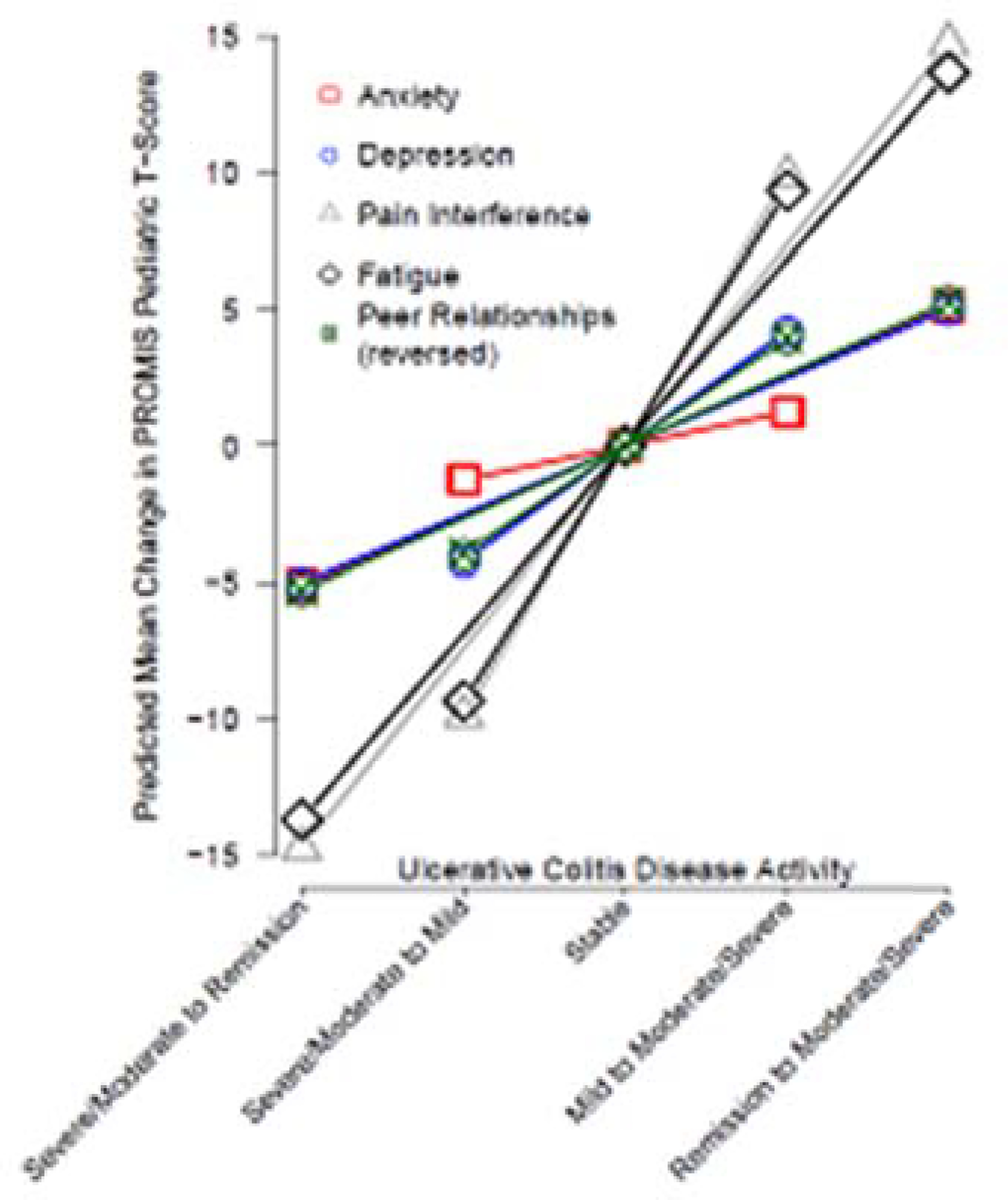
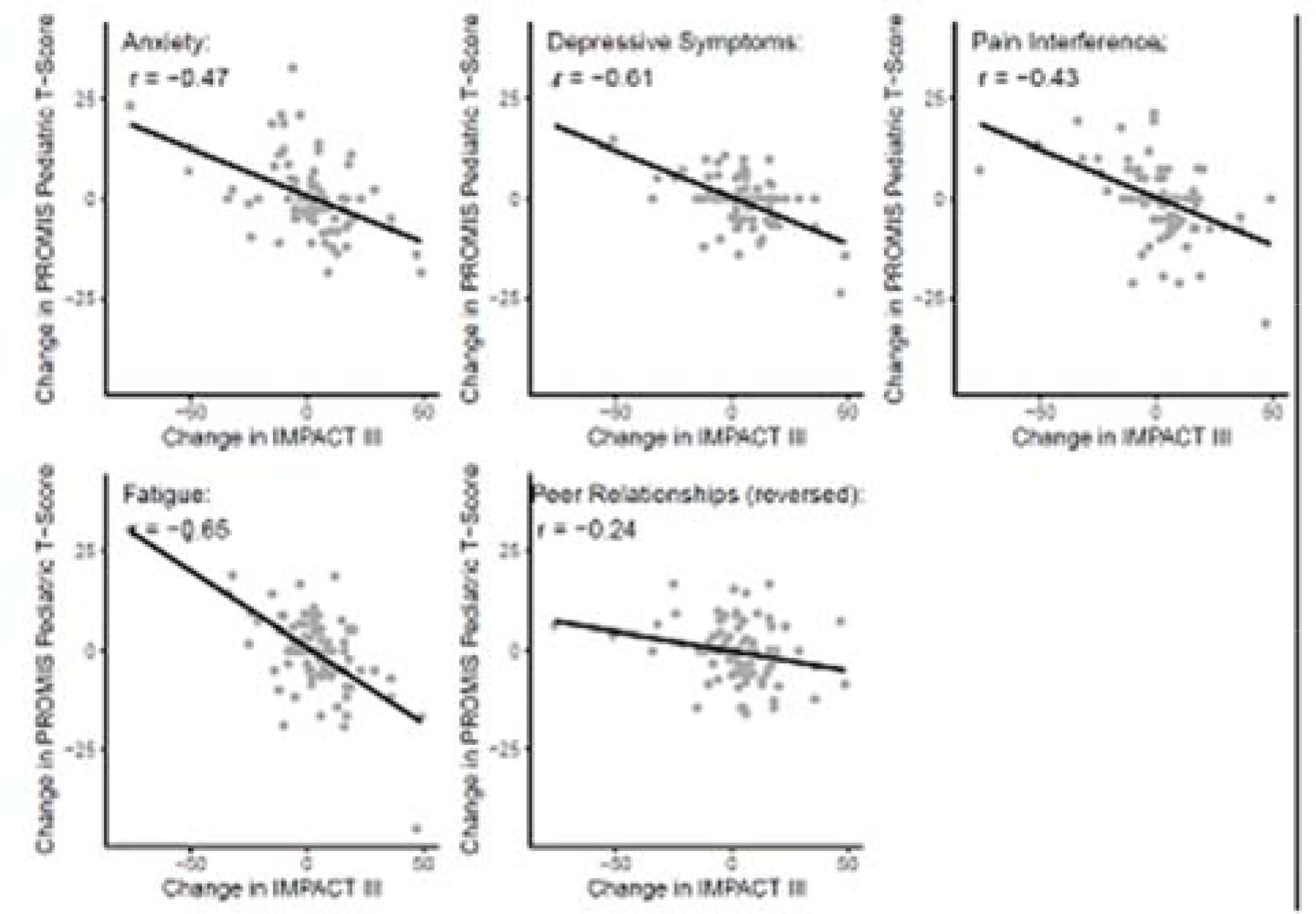
Results: We evaluated 91 participants with UC (mean age 13 years, 57% girls). Better PROMIS Pediatric scores were associated with lower disease activity, in both cross-sectional and longitudinal analyses. For a change from moderate/severe to remission, observed effect estimates were -5.1 points for anxiety, -5.0 for depressive symptoms, -14.7 for pain interference, -13.7 for fatigue, and 5.3 for peer relationships (P < 0.05 for all domains). Better PROMIS Pediatric scores were associated with improved IMPACT-III scores (P values <0.01), and changes in scores were moderately correlated with changes in IMPACT-III over time (adjusted P values <0.01).
Conclusions: This study provides evidence for the construct validity and longitudinal responsiveness of the PROMIS Pediatric measures in pediatric patients with UC, thus supporting their use in clinical research and patient care.
Copyright © 2021 by European Society for Pediatric Gastroenterology, Hepatology, and Nutrition and North American Society for Pediatric Gastroenterology, Hepatology, and Nutrition.
Conflict of interest statement
The authors have no conflicts of interest to disclose.
Figures
References
-
- Karwowski CA, Keljo D, Szigethy E. Strategies to improve quality of life in adolescents with inflammatory bowel disease. Inflammatory Bowel Diseases 2009;15:1755–1764. - PubMed
-
- Kim SC, Ferry GD. Inflammatory bowel diseases in pediatric and adolescent patients: clinical, therapeutic, and psychosocial considerations. Gastroenterology 2004;126:1550–60.. - PubMed
Publication types
MeSH terms
Grants and funding
LinkOut - more resources
Full Text Sources
Other Literature Sources
Medical
