


Superior predatory ability and abundance predicts potential ecological impact towards early-stage anurans by invasive 'Killer Shrimp' (Dikerogammarus villosus)
- PMID: 33633148
- PMCID: PMC7907340
- DOI: 10.1038/s41598-021-82630-5
Superior predatory ability and abundance predicts potential ecological impact towards early-stage anurans by invasive 'Killer Shrimp' (Dikerogammarus villosus)
Abstract
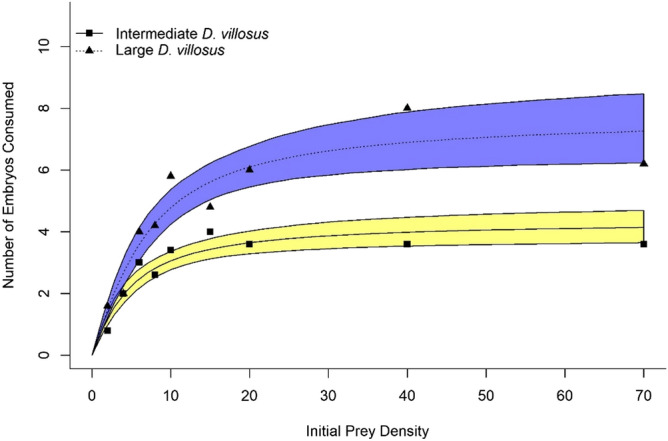
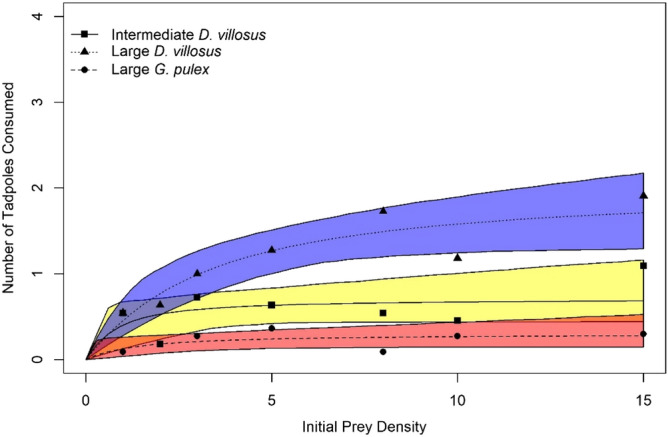
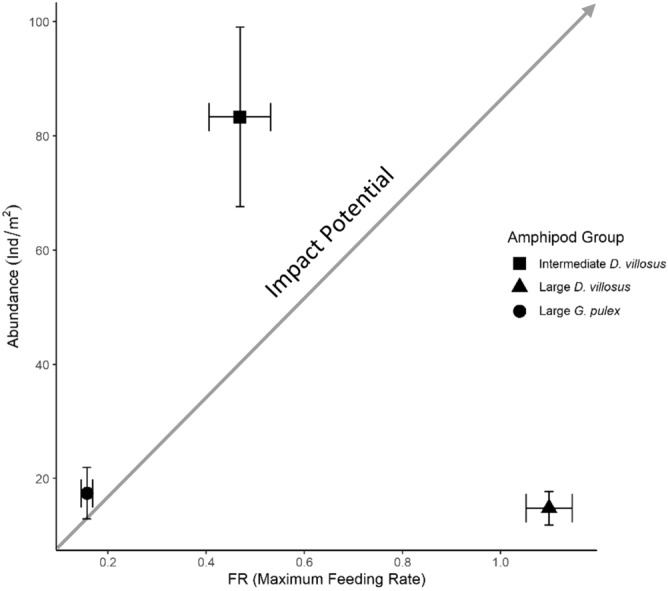
Invasive alien species negatively impact upon biodiversity and generate significant economic costs worldwide. Globally, amphibians have suffered considerable losses, with a key driver being predation by large invasive invertebrate and vertebrate predators. However, there is no research regarding the potential ecological impact of small invertebrate invaders. The invasive freshwater amphipod Dikerogammarus villosus can act as a top predator capable of displacing native amphipods and preying heavily upon a range of native species. Listed as one of Europe's top 100 worst invaders, D. villosus has significantly restructured freshwater communities across western Europe and is expected to invade North America in the near future. Here we explore the ecological impact of invasive D. villosus upon UK native and invasive amphibians (Rana temporaria and Xenopus laevis respectively) using the "Relative Impact Potential" (RIP) metric. By combining estimations of per capita effects (i.e. functional response; FR) and relative field abundances, we apply the RIP metric to quantify the potential ecological impact of invasive D. villosus upon embryonic and larval amphibian prey, compared to the native amphipod Gammarus pulex. Both native and invasive amphipods consumed early-stage amphibians and exhibited potentially destabilising Type II FRs. However, larger body size in invasive D. villosus translated into a superior FR through significantly lower handling times and subsequently higher maximum feeding rates-up to seven times greater than native G. pulex. Higher invader abundance also drove elevated RIP scores for invasive D. villosus, with potential impact scores predicted up to 15.4 times greater than native G. pulex. Overall, D. villosus is predicted to have a greater predatory impact upon amphibian populations than G. pulex, due primarily to its larger body size and superior field abundance, potentially reducing amphibian recruitment within invaded regions.
Conflict of interest statement
The authors declare no competing interests.
Figures
References
-
- Hoffmann BD, Broadhurst LM. The economic cost of managing invasive species in Australia. NeoBiota. 2016;31:1–18. doi: 10.3897/neobiota.31.6960. - DOI
-
- Dueñas MA, et al. The role played by invasive species in interactions with endangered and threatened species in the United States: a systematic review. Biodivers. Conserv. 2018;27:3171–3183. doi: 10.1007/s10531-018-1595-x. - DOI
-
- Ricciardi A, MacIsaac HJ. Impacts of biological invasions on freshwater ecosystems. Fifty Years Invas. Ecol. Legacy Charles Elton. 2010 doi: 10.1002/9781444329988.ch16. - DOI
-
- Moorhouse TP, Macdonald DW. Are invasives worse in freshwater than terrestrial ecosystems? Wiley Interdiscip. Rev. Water. 2015;2:1–8. doi: 10.1002/wat2.1059. - DOI
Publication types
MeSH terms
LinkOut - more resources
Full Text Sources
Other Literature Sources
Miscellaneous
