


How to Reduce Employees' Turnover Intention from the Psychological Perspective: A Mediated Moderation Model
- PMID: 33633474
- PMCID: PMC7901568
- DOI: 10.2147/PRBM.S293839
How to Reduce Employees' Turnover Intention from the Psychological Perspective: A Mediated Moderation Model
Abstract
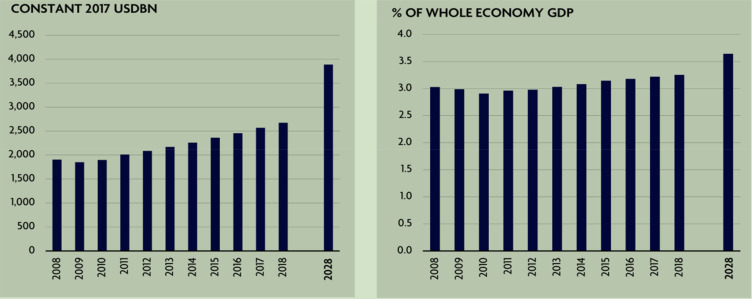
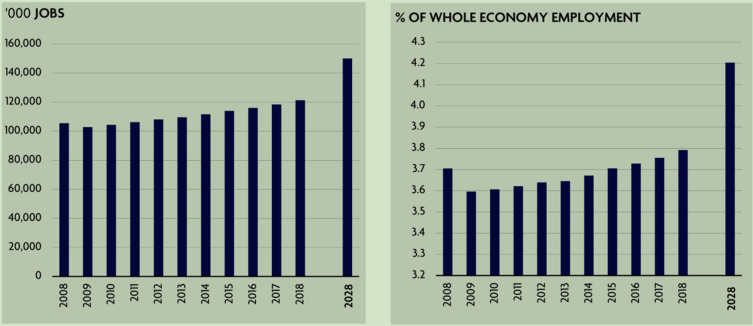
Background: The hospitality industry is deemed a great generator of global GDP and employment. However, high rates of voluntary turnover have gradually undermined global service organizations and brought huge losses to them. Nowadays, the hotel sector continues to be plagued by high turnover rates.
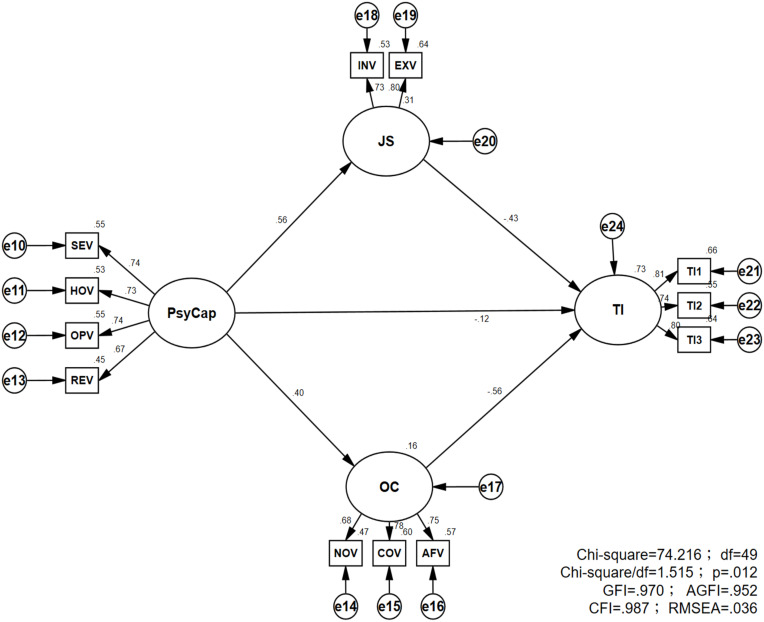
Purpose: A research model investigating job attitudes (job satisfaction and organizational commitment) as mediators of the impact of psychological capital (PsyCap) on turnover intention and also examining position as a moderator between job attitudes and turnover intention was proposed and tested.
Methods: This study collected data from 406 employees selected from four-star and five-star hotels in the southwest region of China. Online survey questionnaires and a purposive sampling technique were employed in this study. Structural equation modeling was utilized to evaluate the direct, mediating, and moderating effects.
Results: The results showed that organizational commitment and job satisfaction fully mediated the association between PsyCap and turnover intention. Moreover, position played a moderating role on the effect of the aforementioned two job attitudes on turnover intention.
Conclusion: The findings implied that hoteliers should focus on employees' PsyCap and job attitudes in order to mitigate serious turnover issues in the hotel sector in China. Besides, the fact that position resulted in disparity impacts in the formation of turnover intention was evidenced.
Keywords: four-star and five-star hotels in China; job satisfaction; organizational commitment; position; psychological capital; turnover intention.
© 2021 Yan et al.
Conflict of interest statement
The authors report no conflicts of interest in this work.
Figures
References
-
- Jones P, Hillier D, Comfort D. Sustainability in the hospitality industry: some personal reflections on corporate challenges and research agendas. Int J Contemp Hosp Manag. 2016;28(1):36–67. doi:10.1108/IJCHM-11-2014-0572 - DOI
-
- Lopez-Cabrales A, Valle-Cabrera R. Sustainable HRM strategies and employment relationships as drivers of the triple bottom line. Hum Resour Manag Rev. 2020;30(3):100689. doi:10.1016/j.hrmr.2019.100689 - DOI
-
- Dei Mensah R, Mensah I. Management of Tourism and Hospitality Services. Xlibris Corporation; 2013.
-
- World Travel&Tourism Council. Economic impact of global travel& Tourism. Published 2018. Available from: https://wttc.org/research/economic-impact. Accessed January17, 2020.
-
- Baum T, Cheung C, Kong H, et al. Sustainability and the tourism and hospitality workforce: a thematic analysis. Sustain. 2016;8:8. doi:10.3390/su8080809 - DOI
LinkOut - more resources
Full Text Sources
Other Literature Sources
