


The Role of Sphingolipids and Specialized Pro-Resolving Mediators in Alzheimer's Disease
- PMID: 33633739
- PMCID: PMC7902029
- DOI: 10.3389/fimmu.2020.620348
The Role of Sphingolipids and Specialized Pro-Resolving Mediators in Alzheimer's Disease
Abstract
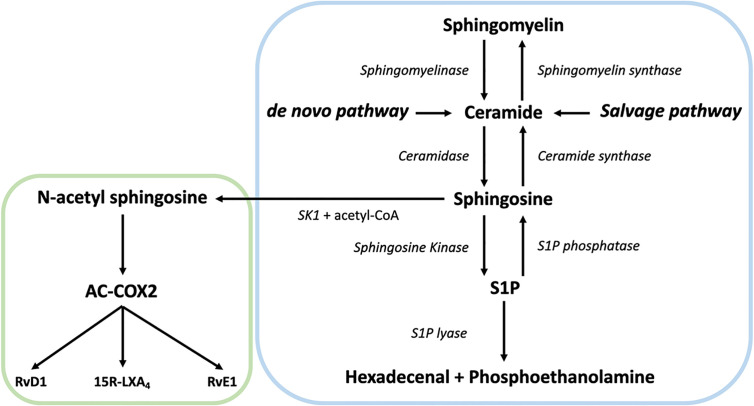
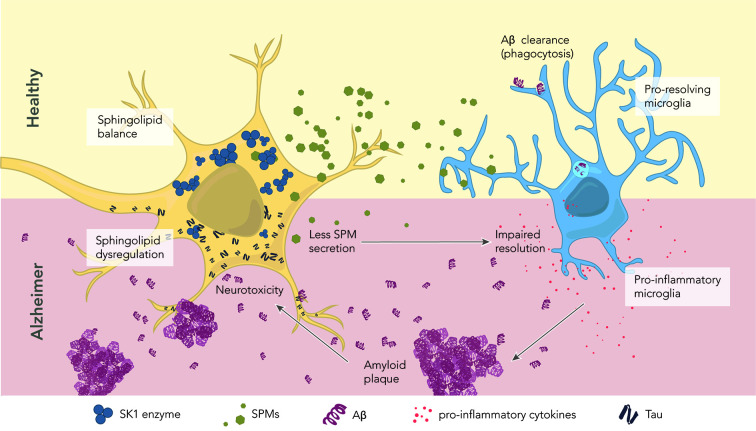
Alzheimer's disease (AD) is the leading cause of dementia worldwide giving rise to devastating forms of cognitive decline, which impacts patients' lives and that of their proxies. Pathologically, AD is characterized by extracellular amyloid deposition, neurofibrillary tangles and chronic neuroinflammation. To date, there is no cure that prevents progression of AD. In this review, we elaborate on how bioactive lipids, including sphingolipids (SL) and specialized pro-resolving lipid mediators (SPM), affect ongoing neuroinflammatory processes during AD and how we may exploit them for the development of new biomarker panels and/or therapies. In particular, we here describe how SPM and SL metabolism, ranging from ω-3/6 polyunsaturated fatty acids and their metabolites to ceramides and sphingosine-1-phosphate, initiates pro- and anti-inflammatory signaling cascades in the central nervous system (CNS) and what changes occur therein during AD pathology. Finally, we discuss novel therapeutic approaches to resolve chronic neuroinflammation in AD by modulating the SPM and SL pathways.
Keywords: Alzheimer’s disease; bioactive lipids; ceramide; neuroinflammation; specialized pro-resolving mediator; sphingolipids; sphingosine-1-phosphate.
Copyright © 2021 de Wit, Mol, Rodríguez-Lorenzo, de Vries and Kooij.
Conflict of interest statement
The authors declare that the research was conducted in the absence of any commercial or financial relationships that could be construed as a potential conflict of interest.
Figures
References
Publication types
MeSH terms
Substances
LinkOut - more resources
Full Text Sources
Other Literature Sources
Medical
