


Mesenchymal stem cell-based treatment in autoimmune liver diseases: underlying roles, advantages and challenges
- PMID: 33633826
- PMCID: PMC7887681
- DOI: 10.1177/2040622321993442
Mesenchymal stem cell-based treatment in autoimmune liver diseases: underlying roles, advantages and challenges
Abstract
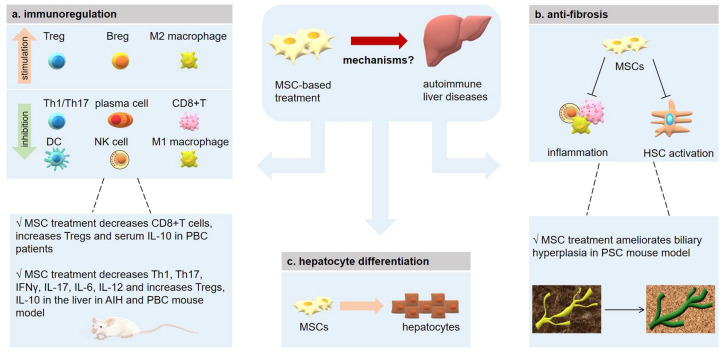
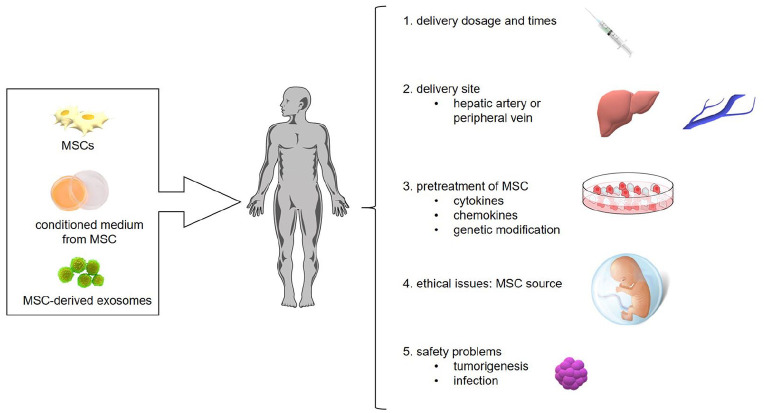
Autoimmune liver disease (AILD) is a series of chronic liver diseases with abnormal immune responses, including autoimmune hepatitis (AIH), primary biliary cholangitis (PBC), and primary sclerosing cholangitis (PSC). The treatment options for AILD remain limited, and the adverse side effects of the drugs that are typically used for treatment frequently lead to a low quality of life for AILD patients. Moreover, AILD patients may have a poor prognosis, especially those with an incomplete response to first-line treatment. Mesenchymal stem cells (MSCs) are pluripotent stem cells with low immunogenicity and can be conveniently harvested. MSC-based therapy is emerging as a promising approach for treating liver diseases based on their advantageous characteristics of immunomodulation, anti-fibrosis effects, and differentiation to hepatocytes, and accumulating evidence has revealed the positive effects of MSC therapy in AILD. In this review, we first summarize the mechanisms, safety, and efficacy of MSC treatment for AILD based on work in animal and clinical studies. We also discuss the challenges of MSC therapy in clinical applications. In summary, although promising data from preclinical studies are now available, MSC therapy is currently far for being applied in clinical practice, thus developing MSC therapy in AILD is still challenging and warrants further research.
Keywords: autoimmune hepatitis; mesenchymal stem cell; primary biliary cholangitis; primary sclerosing cholangitis; therapy.
© The Author(s), 2021.
Conflict of interest statement
Conflict of interest statement: The authors declare that there is no conflict of interest.
Figures
References
-
- Doherty DG. Immunity, Tolerance and autoimmunity in the liver: a comprehensive review. J Autoimmun 2016; 66: 60–75. - PubMed
-
- Lohse AW, Sebode M, Jorgensen MH, et al. Second-line and third-line therapy for autoimmune hepatitis: a position statement from the European reference network on hepatological diseases and the international autoimmune hepatitis group. J Hepatol 2020; 73: 1496–1506. - PubMed
-
- Shah RA, Kowdley KV. Current and potential treatments for primary biliary cholangitis. Lancet Gastroenterol Hepatol 2020; 5: 306–315. - PubMed
Publication types
LinkOut - more resources
Full Text Sources
Other Literature Sources
