


Community-driven citizen science approach to explore cardiovascular disease risk perception, and develop prevention advocacy strategies in sub-Saharan Africa: a programme protocol
- PMID: 33637131
- PMCID: PMC7907793
- DOI: 10.1186/s40900-020-00246-x
Community-driven citizen science approach to explore cardiovascular disease risk perception, and develop prevention advocacy strategies in sub-Saharan Africa: a programme protocol
Abstract
Background: In sub-Saharan Africa (SSA), which experiences a disproportionately high cardiovascular disease (CVD) burden, population-based screening and prevention measures are hampered by low levels of knowledge about CVD and associated risk factors, and inaccurate perceptions of severity of risk.
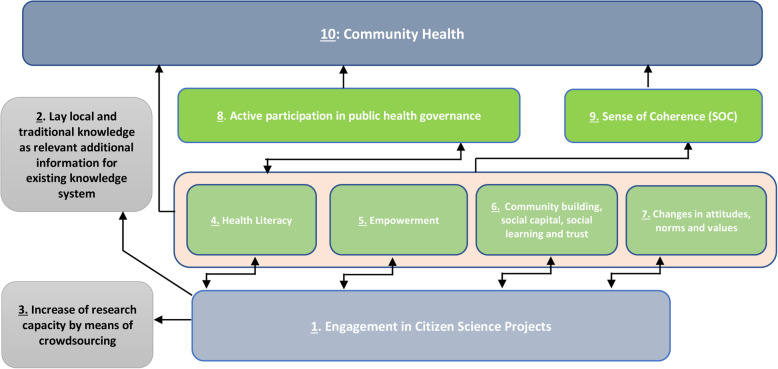
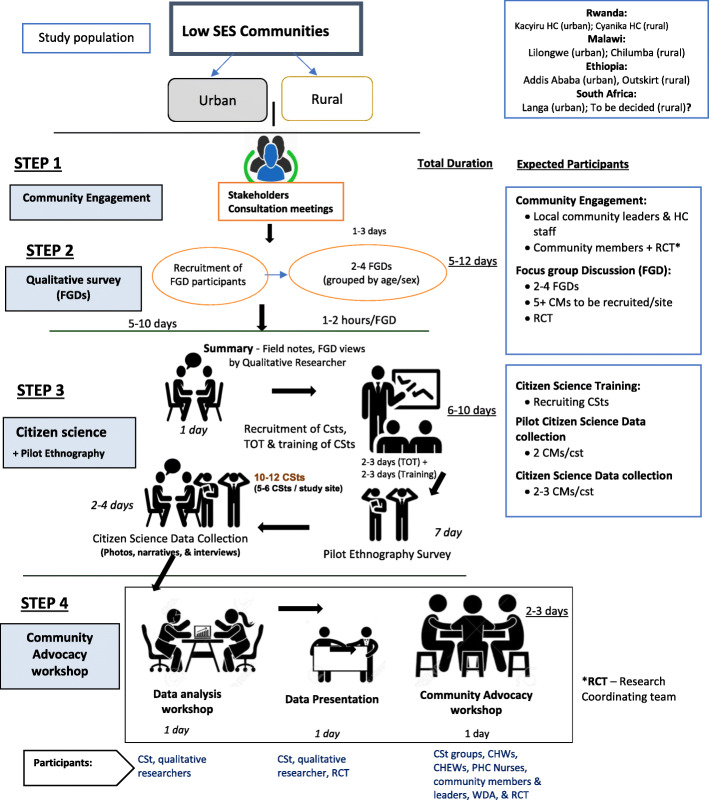
Methods: This protocol describes the planned processes for implementing community-driven participatory research, using a citizen science method to explore CVD risk perceptions and to develop community-specific advocacy and prevention strategies in the rural and urban SSA settings. Multi-disciplinary research teams in four selected African countries will engage with and train community members living in rural and urban communities as citizen scientists to facilitate conceptualization, co-designing of research, data gathering, and co-creation of knowledge that can lead to a shared agenda to support collaborative participation in community-engaged science. The emphasis is on robust community engagement, using mobile technology to support data gathering, participatory learning, and co-creation of knowledge and disease prevention advocacy.
Discussion: Contextual processes applied and lessons learned in specific settings will support redefining or disassembling boundaries in participatory science to foster effective implementation of sustainable prevention intervention programmes in Low- and Middle-income countries.
Keywords: Advocacy; Cardiovascular disease; Citizen science; Community engagement; Community-driven; Participatory learning; Risk perception; Sub-Saharan Africa.
Conflict of interest statement
The authors declare that they have no competing interests” in this section.
Figures
References
Grants and funding
LinkOut - more resources
Full Text Sources
Other Literature Sources
Research Materials
