


Expression of p53 is significantly associated with recurrence-free survival and overall survival in pleuropulmonary blastoma (PPB): a report from the International Pleuropulmonary Blastoma/DICER1 Registry
- PMID: 33637876
- PMCID: PMC9236228
- DOI: 10.1038/s41379-021-00735-8
Expression of p53 is significantly associated with recurrence-free survival and overall survival in pleuropulmonary blastoma (PPB): a report from the International Pleuropulmonary Blastoma/DICER1 Registry
Abstract
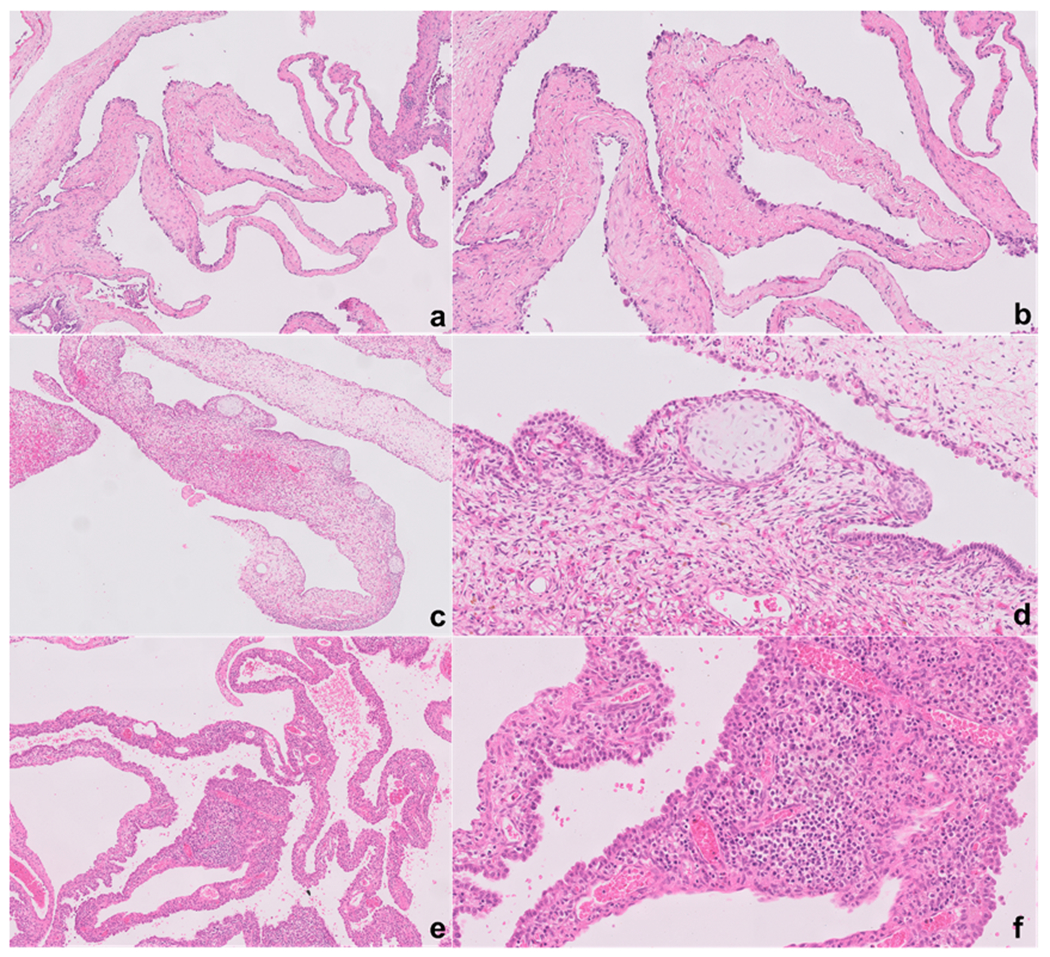
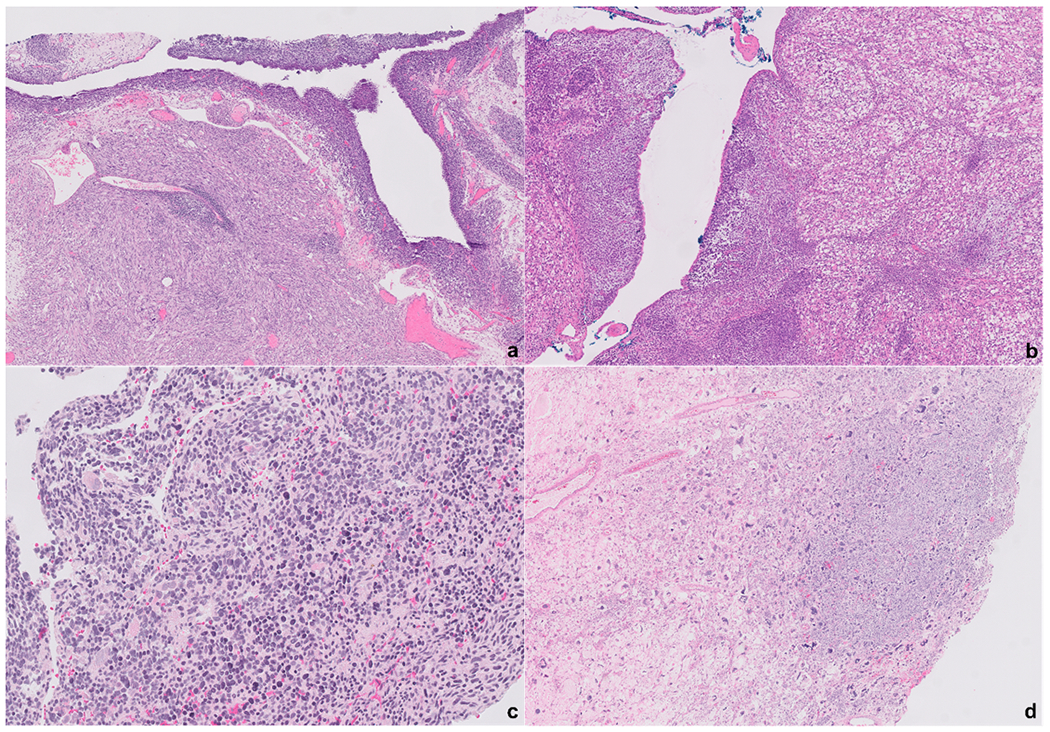
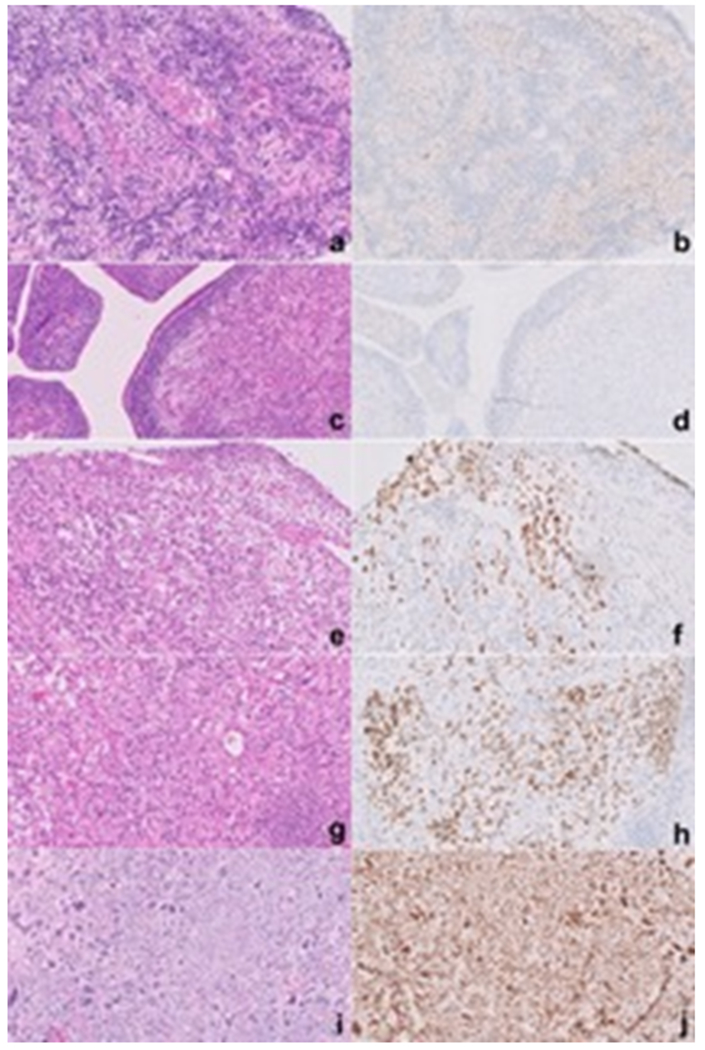
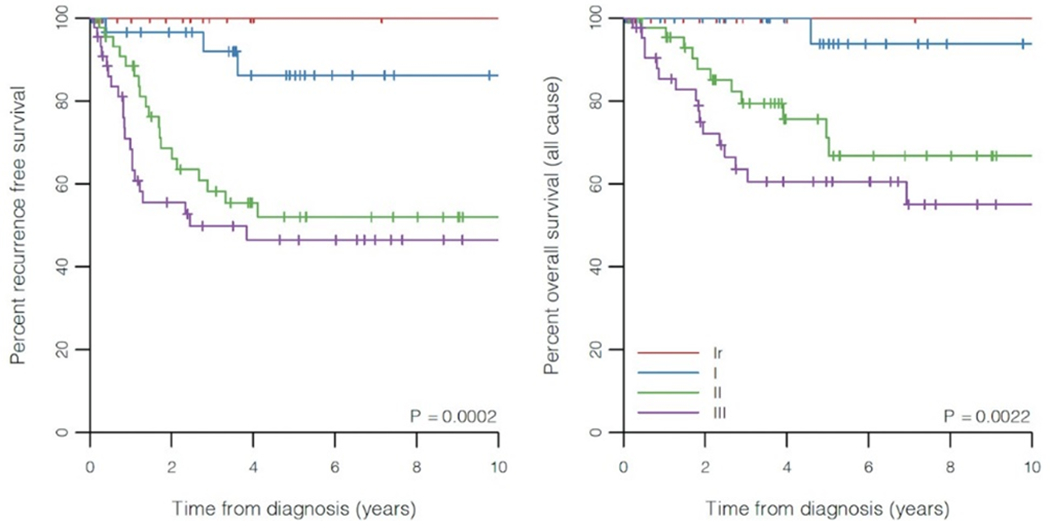
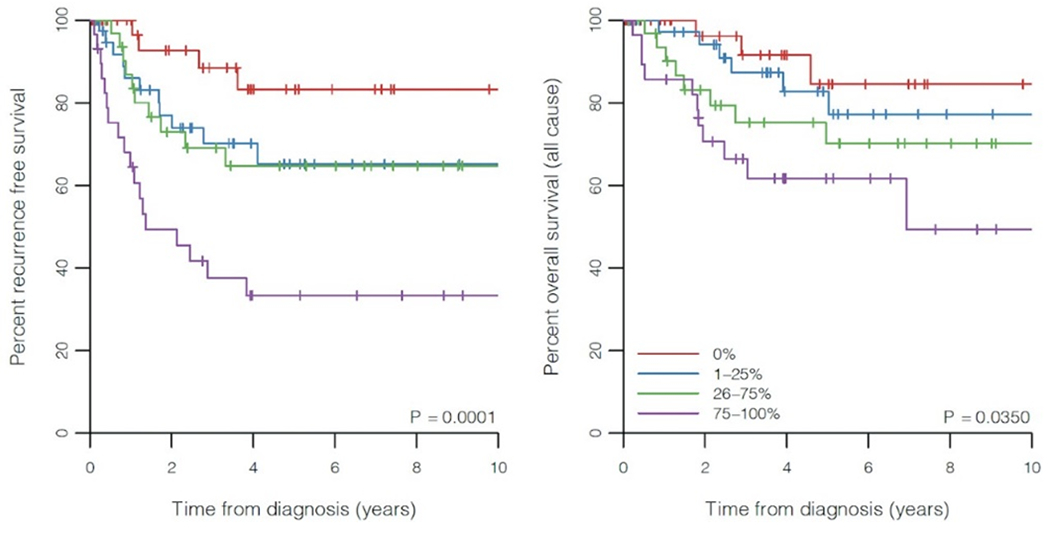
Pleuropulmonary blastoma (PPB) is a primary embryonal malignancy of childhood that is characterized by distinct morphologic types: type Ir (regressed), type I (cystic), type II (cystic and solid), and type III (solid). Prognosis varies by PPB type. Most cases are associated with a germline pathogenic mutation in DICER1; however, there is limited data on the factor(s) at a cellular level that drive progression from type I to type III. In this study, we evaluated the expression of p53 and its prognostic implications. A total of 143 PPB cases were included in the study with the following distribution in PPB types: Ir (14%), I (23%), II (32%), and III (31%). P53 expression by immunohistochemistry (IHC) was recorded as four groups: 0%, 1-25%, 26-75%, and 76-100%. All type I PPBs showed 0-25% p53 expression compared to the higher p53 expression (>25%) in type III PPB (p < 0.0001), to support the argument that p53 has a role in tumor progression. In addition, type Ir with the architectural hallmarks of type I PPB, but lacking the primitive cell population, has negligible p53 expression. High p53 expression (staining observed in >25% of the tumor cells) was significantly associated with age over 1 year (p = 0.0033), neoadjuvant therapy (p = 0.0009), positive resection margin (p = 0.0008) and anaplasia (p < 0.0001). P53 expression was significantly associated with recurrence-free survival (p < 0.0001) and overall survival (p = 0.0350), with higher p53 expression associated with worse prognosis. Comparisons of concordance statistics showed no significant difference in prognostication when using morphologic types compared to p53 expression groups (p = 0.647). TP53 sequence was performed in 16 cases; the most common variant identified was a missense variant (12 cases), and in one case a frameshift truncating variant was noted. Based on these findings, we recommend performing p53 IHC in all newly diagnosed cases of types II and III PPB to further aid in risk stratification.
Conflict of interest statement
Disclosure
D. Ashley Hill is the owner of ResourcePath, a private research and clinical laboratory. ResourcePath has no financial interests or products described in or promoted by this manuscript.
Figures

References
-
- Manivel JC, Priest JR, Watterson J, Steiner M, Woods WG, Wick MR, et al. Pleuropulmonay Blastoma. The So-Called Pulmonary Blastoma of Childhood. Cancer. 1988;62:1516–26. - PubMed
-
- Dehner LP. Pleuropulmonary Blastoma is THE Pulmonary Blastoma of Childhood. Semin Diagn Pathol. 1994;11:144–51. - PubMed
-
- Priest JR, Watterson J, Strong L, Huff V, Woods WG, Byrd RL, et al. Pleuropulmonary blastoma: A marker for familial disease. J Pediatr. 1996;128:220–4. - PubMed
-
- Schultz KAP, Stewart DR, Kamihara J, Bauer AJ, Merideth MA, Stratton P, et al. DICER1 Tumor Predisposition. In: Adam MP, Ardinger HH, Pagon RA, Wallace SE, Bean LJH, Stephens K, et al., editors. Seattle (WA); 2014.
Publication types
MeSH terms
Substances
Supplementary concepts
Grants and funding
LinkOut - more resources
Full Text Sources
Other Literature Sources
Medical
Research Materials
Miscellaneous
