


Searching for host immune-microbiome mechanisms in obsessive-compulsive disorder: A narrative literature review and future directions
- PMID: 33639178
- PMCID: PMC8106658
- DOI: 10.1016/j.neubiorev.2021.02.034
Searching for host immune-microbiome mechanisms in obsessive-compulsive disorder: A narrative literature review and future directions
Abstract
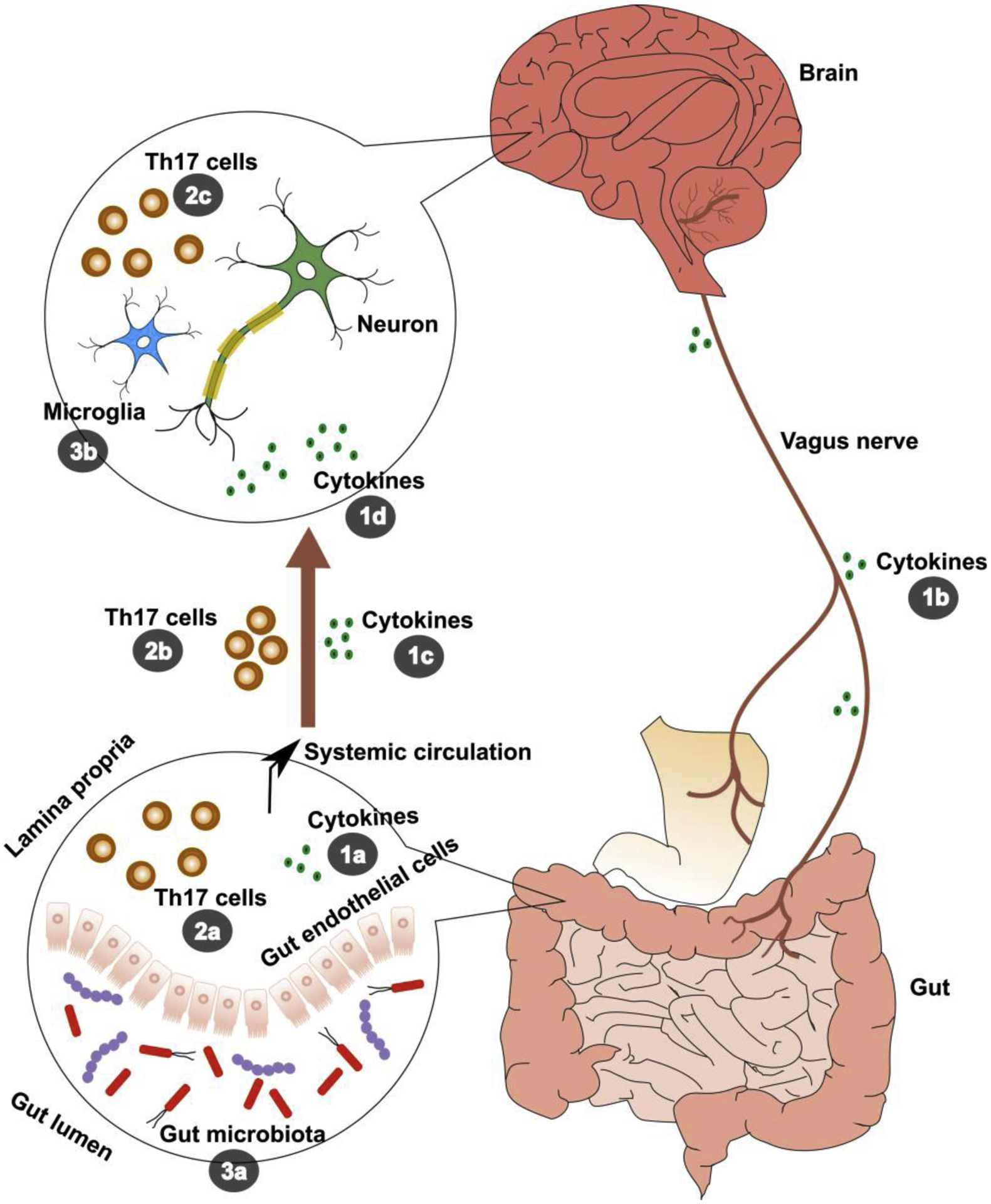
Obsessive-compulsive disorder (OCD) is disabling and often treatment-refractory. Host immunity and gut microbiota have bidirectional communication with each other and with the brain. Perturbations to this axis have been implicated in neuropsychiatric disorders, but immune-microbiome signaling in OCD is relatively underexplored. We review support for further pursuing such investigations in OCD, including: 1) gut microbiota has been associated with OCD, but causal pathogenic mechanisms remain unclear; 2) early environmental risk factors for OCD overlap with critical periods of immune-microbiome development; 3) OCD is associated with increased risk of immune-mediated disorders and changes in immune parameters, which are separately associated with the microbiome; and 4) gut microbiome manipulations in animal models are associated with changes in immunity and some obsessive-compulsive symptoms. Theoretical pathogenic mechanisms could include microbiota programming of cytokine production, promotion of expansion and trafficking of peripheral immune cells to the CNS, and regulation of microglial function. Immune-microbiome signaling in OCD requires further exploration, and may offer novel insights into pathogenic mechanisms and potential treatment targets for this disabling disorder.
Keywords: Gut microbiome; Gut-brain-immune axis; Immune; Inflammation; Microbiota; Neuroinflammation; Obsessive-compulsive behavior; Obsessive-compulsive disorder.
Copyright © 2021 Elsevier Ltd. All rights reserved.
Conflict of interest statement
Financial Disclosures
Drs. Troyer, Kohn, Ecklu-Mensah, Aleti, Rosenberg and Hong have no commercial financial conflicts of interest to disclose.
Figures
References
-
- Aden K, Rehman A, Waschina S, Pan WH, Walker A, Lucio M, Nunez AM, Bharti R, Zimmerman J, Bethge J, Schulte B, Schulte D, Franke A, Nikolaus S, Schroeder JO, Vandeputte D, Raes J, Szymczak S, Waetzig GH, Zeuner R, Schmitt-Kopplin P, Kaleta C, Schreiber S, Rosenstiel P, 2019. Metabolic functions of gut microbes associate with efficacy of tumor necrosis factor antagonists in patients with inflammatory bowel diseases. Gastroenterology 157, 1279–1292.e11. 10.1053/j.gastro.2019.07.025 - DOI - PubMed
-
- APA, 2013. American Psychiatric Association: Diagnostic and Statistical Manual of Mental Disorders, Fifth. ed. American Psychiatric Association, Washington, D.C.
Publication types
MeSH terms
Grants and funding
LinkOut - more resources
Full Text Sources
Other Literature Sources
Medical
