Review
. 2021 Feb 27;20(1):23.
doi: 10.1186/s12944-021-01435-7.

The impact of reactive oxygen species in the development of cardiometabolic disorders: a review

Affiliations
Review

The impact of reactive oxygen species in the development of cardiometabolic disorders: a review

Roland Akhigbe et al. Lipids Health Dis. .

Abstract

Oxidative stress, an alteration in the balance between reactive oxygen species (ROS) generation and antioxidant buffering capacity, has been implicated in the pathogenesis of cardiometabolic disorders (CMD). At physiological levels, ROS functions as signalling mediators, regulates various physiological functions such as the growth, proliferation, and migration endothelial cells (EC) and smooth muscle cells (SMC); formation and development of new blood vessels; EC and SMC regulated death; vascular tone; host defence; and genomic stability. However, at excessive levels, it causes a deviation in the redox state, mediates the development of CMD. Multiple mechanisms account for the rise in the production of free radicals in the heart. These include mitochondrial dysfunction and uncoupling, increased fatty acid oxidation, exaggerated activity of nicotinamide adenine dinucleotide phosphate oxidase (NOX), reduced antioxidant capacity, and cardiac metabolic memory. The purpose of this study is to discuss the link between oxidative stress and the aetiopathogenesis of CMD and highlight associated mechanisms. Oxidative stress plays a vital role in the development of obesity and dyslipidaemia, insulin resistance and diabetes, hypertension via various mechanisms associated with ROS-led inflammatory response and endothelial dysfunction.

Keywords: Free radicals; IGF; NOS uncoupling; OxLDL; PDGF; ROS.


Conflict of interest statement

The authors declare that there are no competing interests

Figures
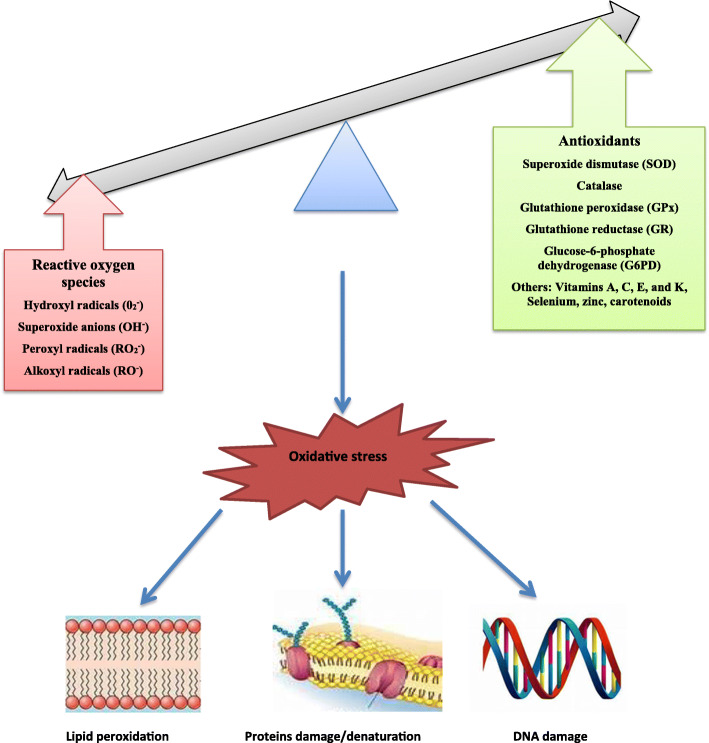
Fig. 1
Fig. 1
Oxidative stress resulting from an imbalance between ROS generation and antioxidant system and its consequences on cellular macromolecules
Fig. 2
Fig. 2
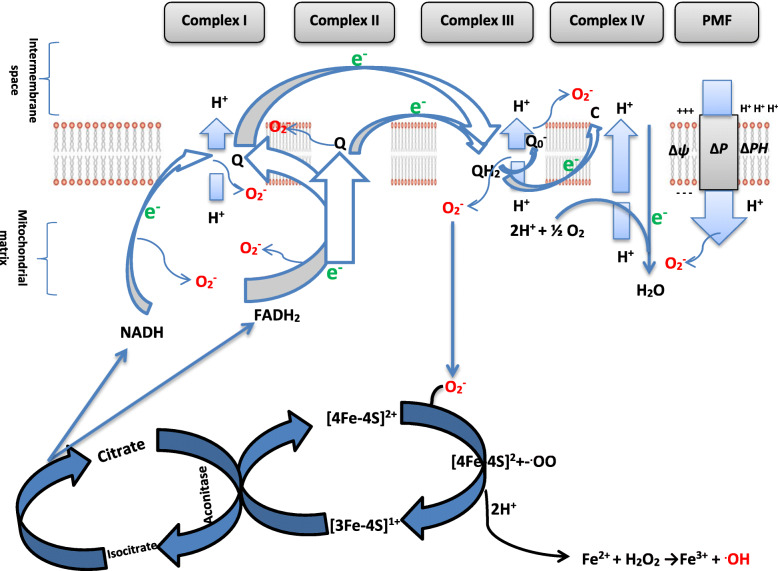
Generation of reactive oxygen species (ROS) by the mitochondria electron transport chain. Δp : proton motive force, ΔΨ: membrane potential, ΔpH : proton gradient
Fig. 3
Fig. 3
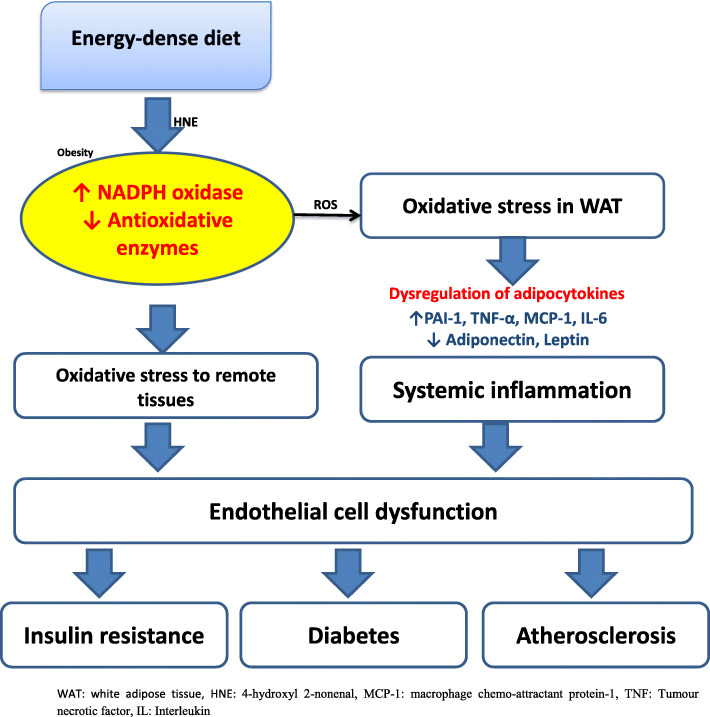
The role of oxidative stress in the development of obesity and cardiometabolic disorders. This illustration is a modification of the working model illustrating how increased ROS production in accumulated fat contributes to metabolic syndrome by Furukawa et al. [115]
Fig. 4
Fig. 4
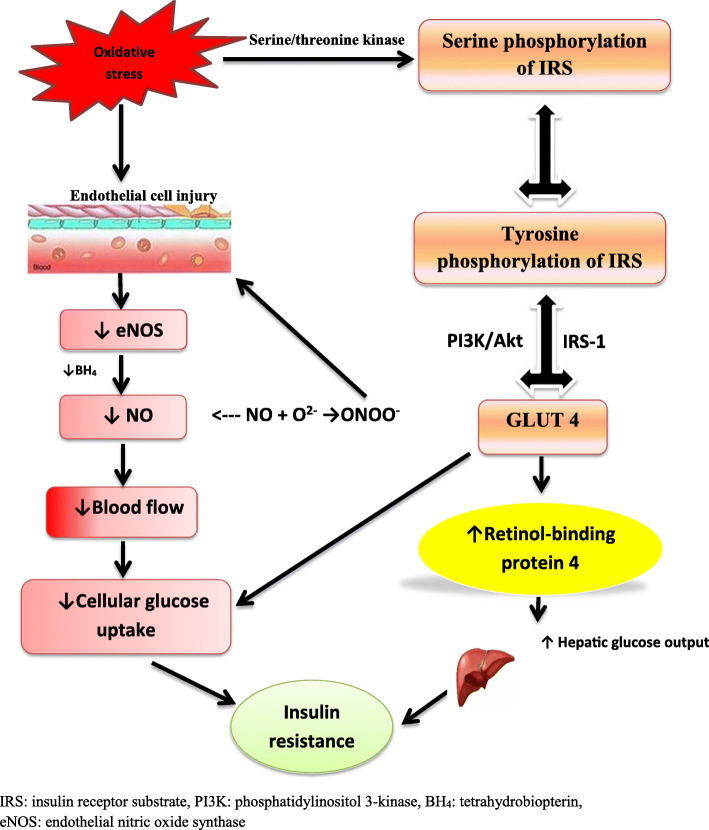
The role of oxidative stress in the pathogenesis of insulin resistance/type II diabetes. This illustration is a modification of the mechanism illustrating the role of oxidative stress to adipocytes in insulin resistance by Otani H [137].
Fig. 5
Fig. 5
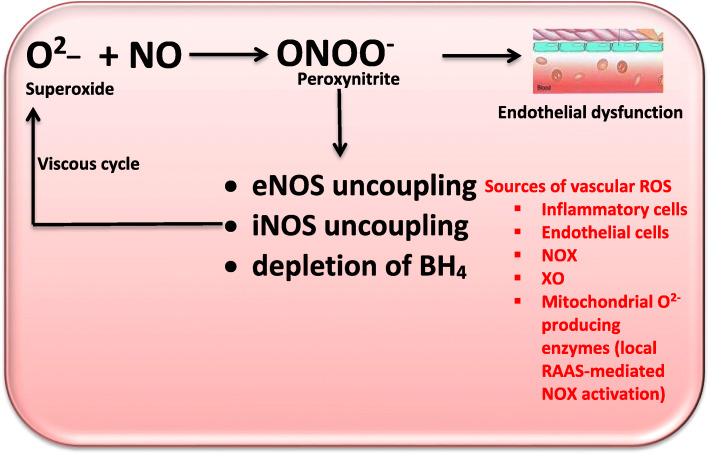
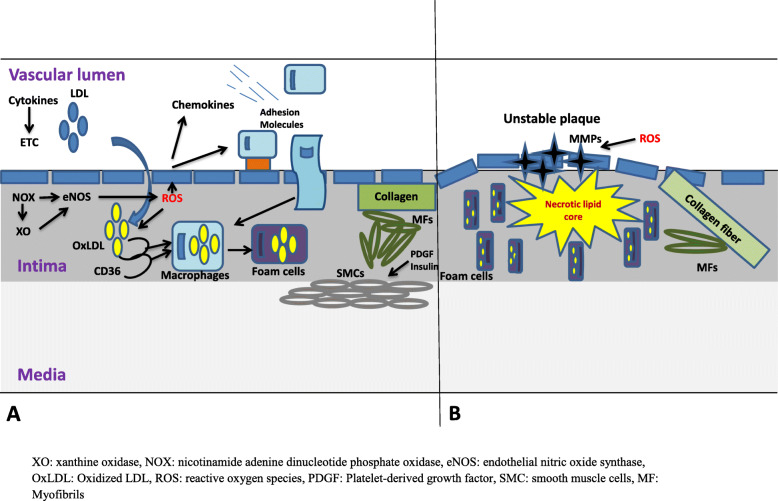
The role of oxidative stress in the pathogenesis of hypertension. XO: xanthine oxidase, NOX: nicotinamide adenine dinucleotide phosphate oxidase, eNOS: endothelial nitric oxide synthase, OxLDL: Oxidized LDL, ROS: reactive oxygen species, PDGF: Platelet-derived growth factor, SMC: smooth muscle cells, MF: Myofibrils
Fig. 6
Fig. 6
The role of oxidative stress in the pathogenesis of atherosclerosis – early phase (a) and late phase (b). This illustration is culled from the illustration of the role of oxidative stress to adipocytes in atherosclerosis by Otani H [137].

References

    1. Grundy SM, Cleeman JI, Daniels SR, Donato KA, Eckel RH, et al. Diagnosis and management of the metabolic syndrome: an American Heart Association/National Heart, Lung, and Blood Institute Scientific Statement. Circulation. 2005;112:2735–2752. doi: 10.1161/CIRCULATIONAHA.105.169404. - DOI - PubMed
    1. Han JC, Lawlor DA, Kimm SY. Childhood obesity. Lancet. 2010;375(9727):1737–1748. doi: 10.1016/S0140-6736(10)60171-7. - DOI - PMC - PubMed
    1. Malik VS, Willett WC, Hu FB. Global obesity: trends, risk factors and policy implications. Nature Reviews Endocrinol. 2013;9:13–27. doi: 10.1038/nrendo.2012.199. - DOI - PubMed
    1. Kuklina EV, Tong X, George MG, Bansil P. Epidemiology and prevention of stroke: a worldwide perspective. Expert Review Neurotherapeutics. 2012;12(2):199–208. doi: 10.1586/ern.11.99. - DOI - PMC - PubMed
    1. Springer SC, Silverstein J, Copeland K. Management of type 2 diabetes mellitus in children and adolescents. Pediatrics. 2013;131:648–664. doi: 10.1542/peds.2012-3496. - DOI - PubMed

MeSH terms