


Emulsion-based isothermal nucleic acid amplification for rapid SARS-CoV-2 detection via angle-dependent light scatter analysis
- PMID: 33640656
- PMCID: PMC7892303
- DOI: 10.1016/j.bios.2021.113099
Emulsion-based isothermal nucleic acid amplification for rapid SARS-CoV-2 detection via angle-dependent light scatter analysis
Abstract
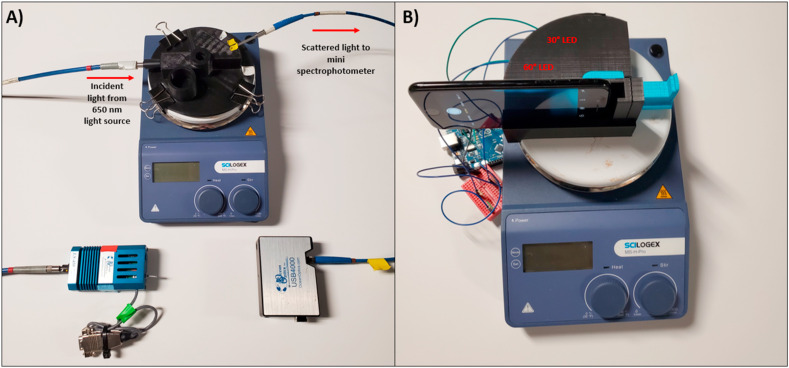
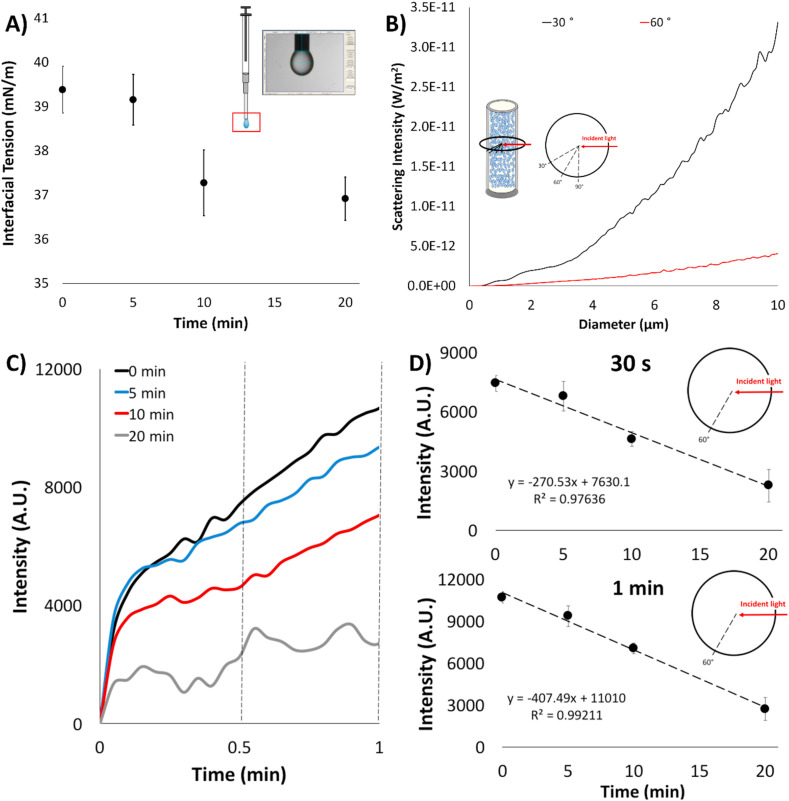
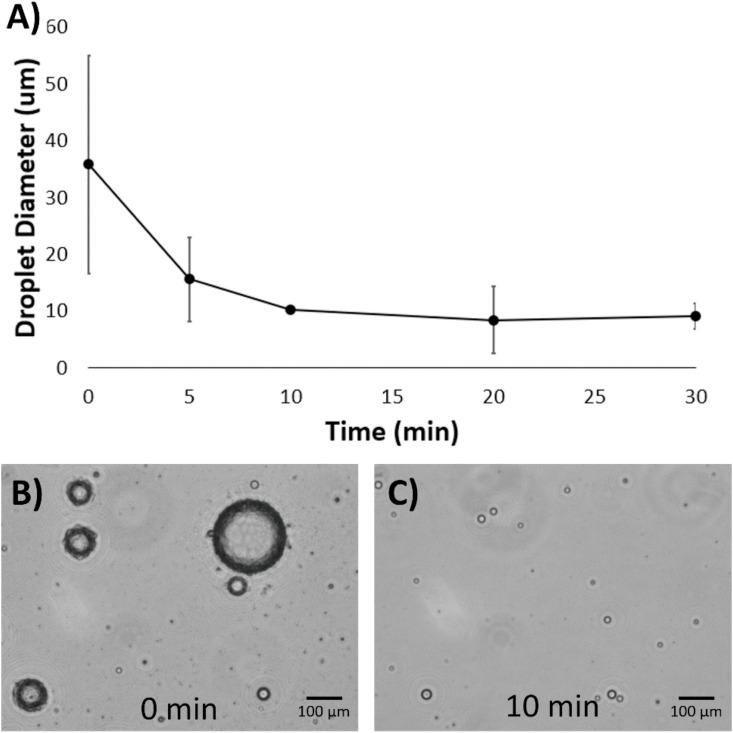
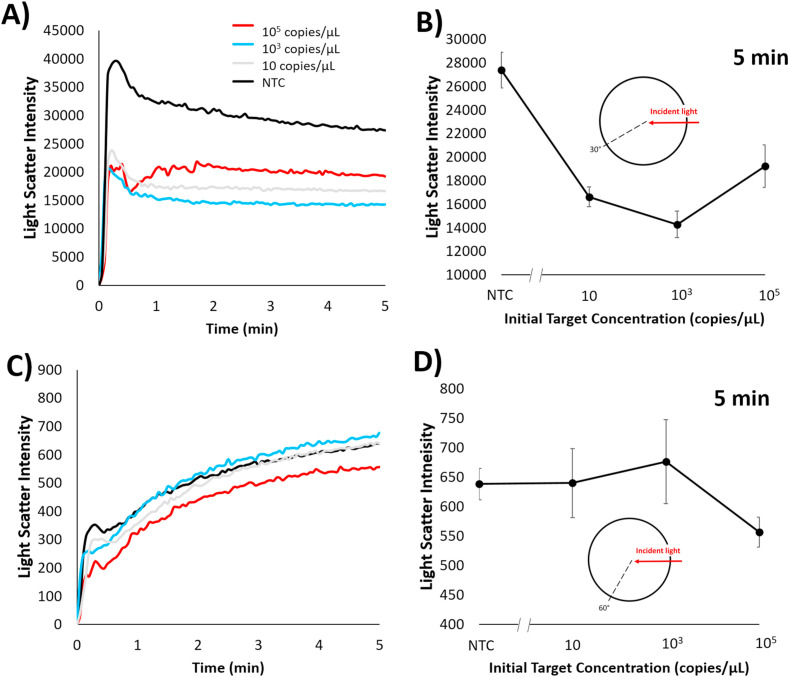
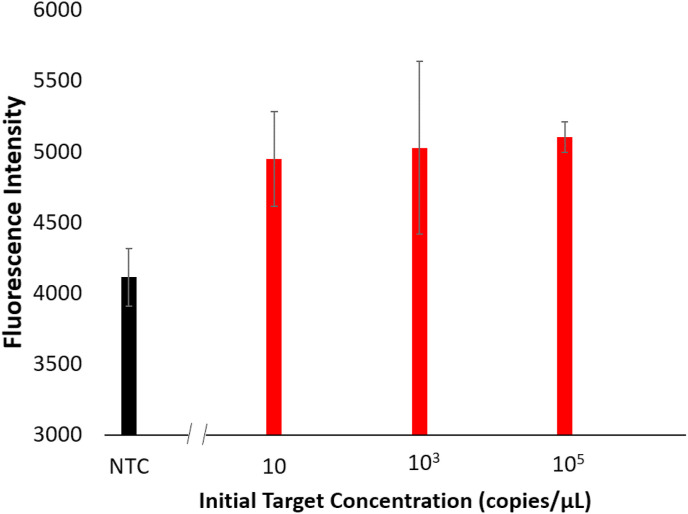
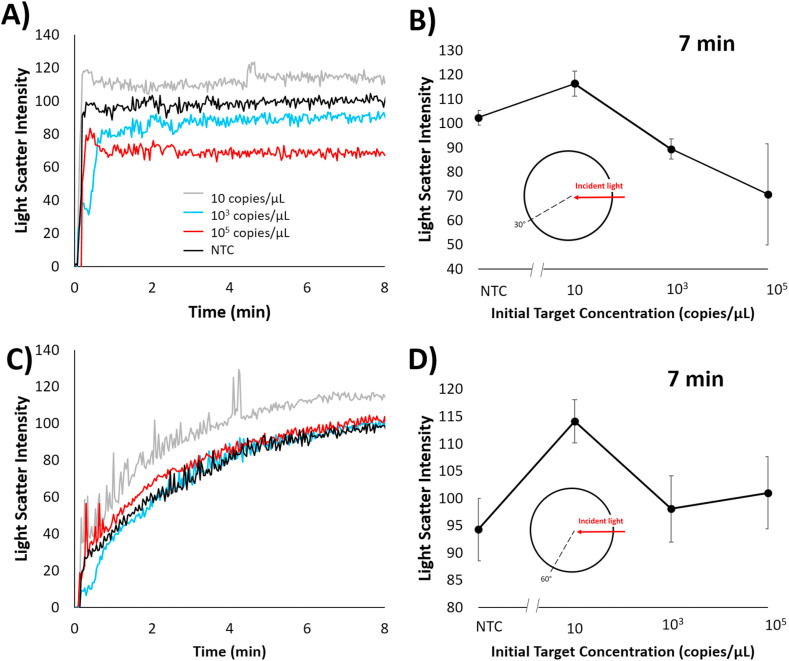
The SARS-CoV-2 pandemic, an ongoing global health crisis, has revealed the need for new technologies that integrate the sensitivity and specificity of RT-PCR tests with a faster time-to-detection. Here, an emulsion loop-mediated isothermal amplification (eLAMP) platform was developed to allow for the compartmentalization of LAMP reactions, leading to faster changes in emulsion characteristics, and thus lowering time-to-detection. Within these droplets, ongoing LAMP reactions lead to adsorption of amplicons to the water-oil interface, causing a decrease in interfacial tension, resulting in smaller emulsion diameters. Changes in emulsion diameter allow for the monitoring of the reaction by use of angle-dependent light scatter (based off Mie scatter theory). Mie scatter simulations confirmed that light scatter intensity is diameter-dependent and smaller colloids have lower intensity values compared to larger colloids. Via spectrophotometers and fiber optic cables placed at 30° and 60°, light scatter intensity was monitored. Scatter intensities collected at 5 min, 30° could statistically differentiate 10, 103, and 105 copies/μL initial concentrations compared to NTC. Similarly, 5 min scatter intensities collected at 60° could statistically differentiate 105 copies/μL initial concentrations in comparison to NTC. The use of both angles during the eLAMP assay allows for distinction between high and low initial target concentrations. The efficacy of a smartphone-based platform was also tested and had a similar limit of detection and assay time of less than 10 min. Furthermore, fluorescence-labeled primers were used to validate target nucleic acid amplification. Compared to existing LAMP assays for SARS-CoV-2 detection, these times-to-detections are very rapid.
Keywords: COVID-19; Emulsion; Interfacial tension; Loop-mediated isothermal amplification; Mie scatter; SARS-CoV-2.
Copyright © 2021 Elsevier B.V. All rights reserved.
Conflict of interest statement
The authors declare that they have no known competing financial interests or personal relationships that could have appeared to influence the work reported in this paper.
Figures
References
-
- Deguo W., Guicheng H., Fugui W., Yonggang L., Daxi R. Afr. J. Food Sci. 2008;1(7):83–86. doi: 10.5897/AJFS.9000079. - DOI
MeSH terms
Substances
Supplementary concepts
Grants and funding
LinkOut - more resources
Full Text Sources
Other Literature Sources
Medical
Miscellaneous
