


Effect of epigallocatechin-3-gallate on tumor necrosis factor-alpha production by human gingival fibroblasts stimulated with bacterial lipopolysaccharide: An in vitro study
- PMID: 33642735
- PMCID: PMC7904023
- DOI: 10.4103/jisp.jisp_323_20
Effect of epigallocatechin-3-gallate on tumor necrosis factor-alpha production by human gingival fibroblasts stimulated with bacterial lipopolysaccharide: An in vitro study
Abstract
Background: Evidence shows that epigallocatechin-3-gallate (EGCG) in green tea has anti-inflammatory effects.
Aim: This study assessed the effect of EGCG on the production of tumor necrosis factor-alpha (TNF-α) as an inflammatory cytokine in periodontitis, which produced by human gingival fibroblasts (HGFs) stimulated with lipopolysaccharide (LPS) of Porphyromonas gingivalis.
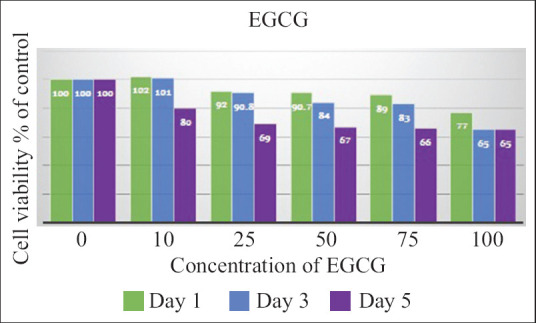
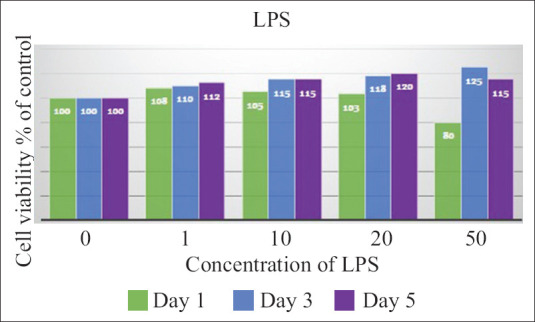
Materials and methods: In this study, HGFs were cultured and subjected to LPS and EGCG. Cell viability of different concentrations of EGCG (10, 25, 50, 75, and 100 μM) and LPS (1, 10, 20, and 50 μg/mL) was assessed using methyl-thiazole-tetrazolium (MTT) assay. Then, the best concentrations of EGCG and P. gingivalis LPS were used simultaneously and separately to assess the production of TNF-α by HGFs using the enzyme-linked immunosorbent assay (ELISA). Assessments were done at 1, 3, and 5 days. Data were read using the ELISA reader and analyzed by the SPSS through two-way ANOVA.
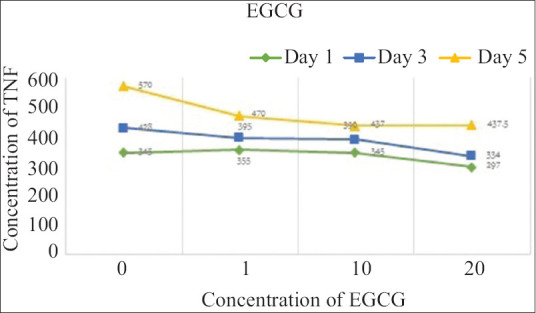
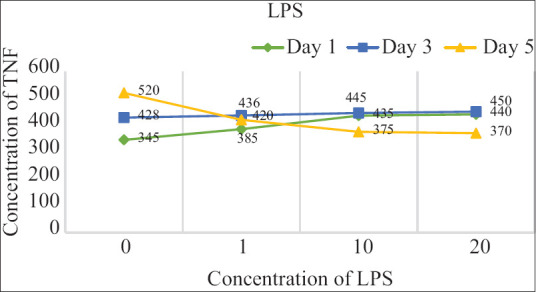
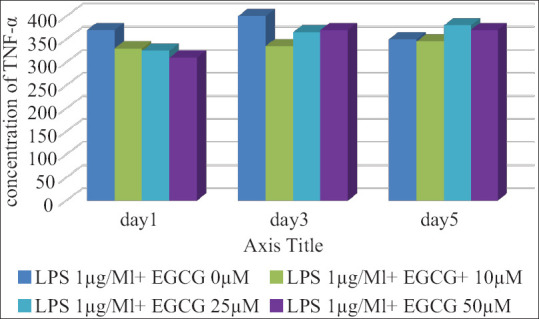
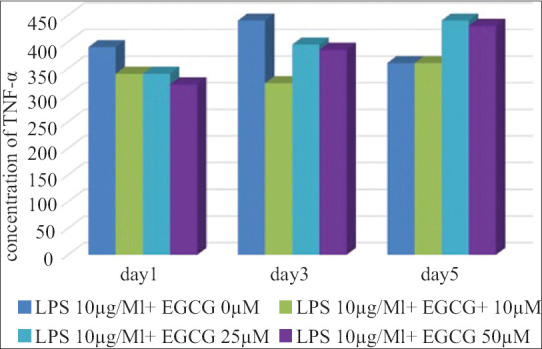
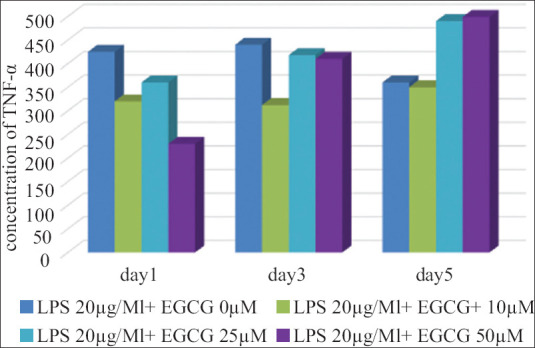
Results: LPS at 1, 10, and 20 and EGCG at 10.25 and 50 μM showed the least cytotoxicity in MTT assay. ELISA showed EGCG alone decreased the production of TNF-α in all days, except 10 μM on day 1. 1, 10, and 20 μg/mL LPS increased the output of TNF-α on days 1 and 3 while reducing it on day 5. The combination of EGCG and LPS showed a decrease of TNF-α in all days except on day 5 that revealed an increase in the production of TNF-α at 25 and 50 μM EGCG.
Conclusion: In the combination use of EGCG and LPS, EGCG shows anti-inflammatory effects by decreasing the production of TNF-α by HGFs stimulated with P. gingivalis.
Keywords: Epigallocatechin-3-gallate; Porphyromonas gingivalis; fibroblasts; tumor necrosis factor-alpha.
Copyright: © 2021 Journal of Indian Society of Periodontology.
Conflict of interest statement
There are no conflicts of interest.
Figures
References
-
- Scheres N, Crielaard W. Gingival fibroblast responsiveness is differentially affected by Porphyromonas gingivalis: Implications for the pathogenesis of periodontitis. Mol Oral Microbiol. 2013;28:204–18. - PubMed
-
- Wang QB, Sun LY, Gong ZD, Du Y. Veratric Acid Inhibits LPS-Induced IL-6 and IL-8 Production in Human Gingival Fibroblasts. Inflammation. 2016;39:237–42. - PubMed
LinkOut - more resources
Full Text Sources