


NO, ROS, RAS, and PVAT: More Than a Soup of Letters
- PMID: 33643076
- PMCID: PMC7902489
- DOI: 10.3389/fphys.2021.640021
NO, ROS, RAS, and PVAT: More Than a Soup of Letters
Abstract
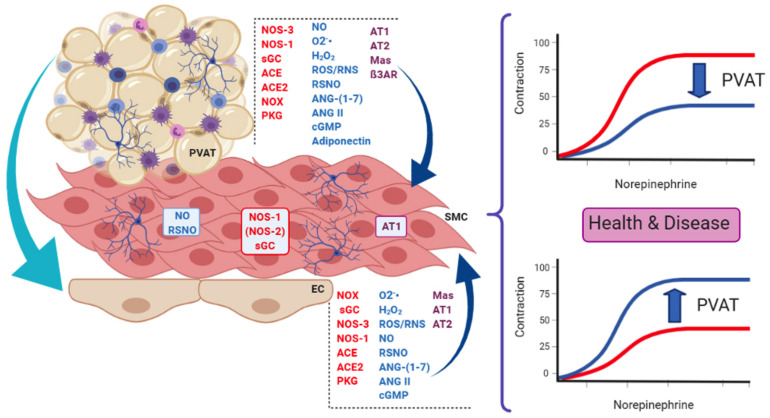
Perivascular adipose tissue (PVAT) has recently entered in the realm of cardiovascular diseases as a putative target for intervention. Notwithstanding its relevance, there is still a long way before the role of PVAT in physiology and pathology is fully understood. The general idea that PVAT anti-contractile effect is beneficial and its pro-contractile effect is harmful is being questioned by several reports. The role of some PVAT important products or systems such as nitric oxide (NO), reactive oxygen species (ROS), and RAS may vary depending on the context, disease, place of production, etc., which adds doubts on how mediators of PVAT anti- and pro-contractile effects are called to action and their final result. This short review will address some points regarding NO, ROS, and RAS in the beneficial and harmful roles of PVAT.
Keywords: angiotensin; nitric oxide; perivascular adipose tissue; sepsis; superoxide; vascular dysfunction.
Copyright © 2021 Barp, Bonaventura and Assreuy.
Conflict of interest statement
The authors declare that the research was conducted in the absence of any commercial or financial relationships that could be construed as a potential conflict of interest.
Figures
References
-
- Araujo A. V., Ferezin C. Z., Rodrigues G. J., Lunardi C. N., Vercesi J. A., Grando M. D., et al. (2011). Prostacyclin, not only nitric oxide, is a mediator of the vasorelaxation induced by acetylcholine in aortas from rats submitted to cecal ligation and perforation (CLP). Vascul. Pharmacol. 54 44–51. 10.1016/j.vph.2010.12.002 - DOI - PubMed
Publication types
LinkOut - more resources
Full Text Sources
Other Literature Sources
