


Changes in Lifestyle, Behaviors, and Risk Factors for Cognitive Impairment in Older Persons During the First Wave of the Coronavirus Disease 2019 Pandemic in Finland: Results From the FINGER Study
- PMID: 33643095
- PMCID: PMC7907420
- DOI: 10.3389/fpsyt.2021.624125
Changes in Lifestyle, Behaviors, and Risk Factors for Cognitive Impairment in Older Persons During the First Wave of the Coronavirus Disease 2019 Pandemic in Finland: Results From the FINGER Study
Abstract
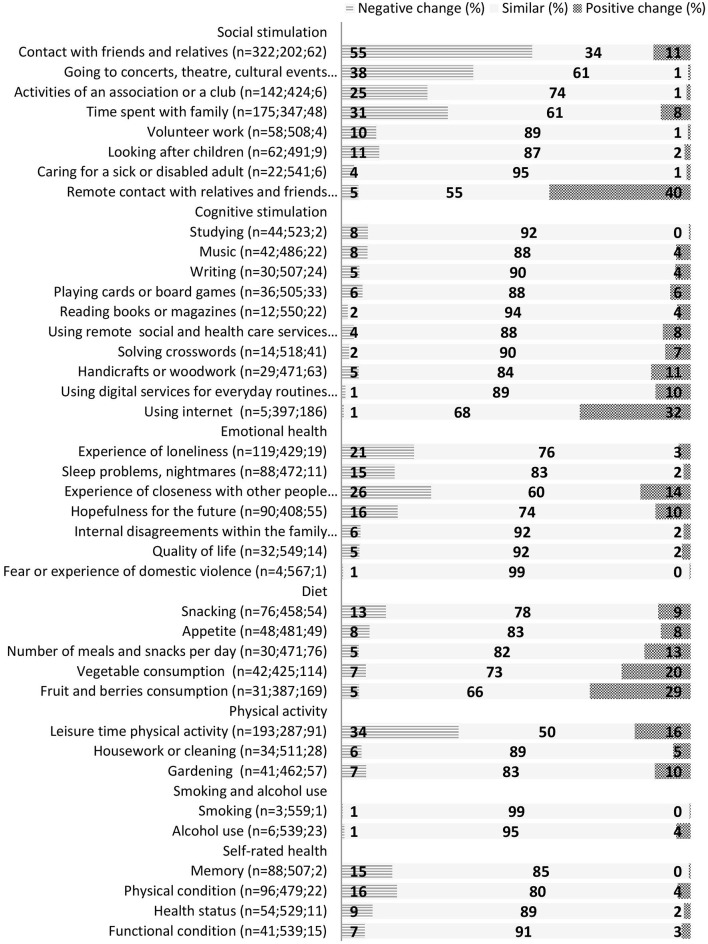
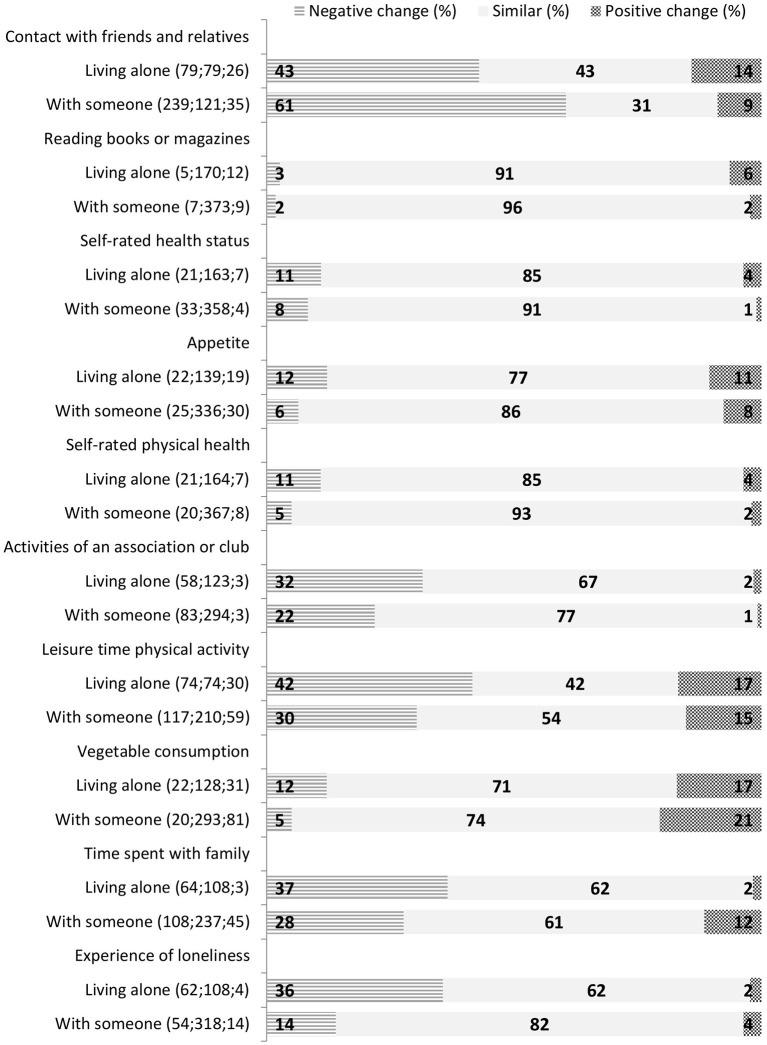
Aims: This study aimed to describe how the first phase of the coronavirus disease 2019 (COVID-19) pandemic affected older persons from the general Finnish population who are at risk of developing or have cognitive impairment, specifically, to describe whether participants experienced a change in risk factors that are relevant for the prevention of cognitive decline including diet, physical activity, access to medical care, socially and cognitively stimulating activities, and emotional health and well-being. Method: A postal survey was sent in June 2020 to 859 participants from the Finnish Geriatric Intervention Study to Prevent Cognitive Impairment and Disability (FINGER), an ongoing longitudinal study. The survey was developed to assess the effect of the COVID-19 pandemic and related infection-control measures on daily life, specifically commitment to distancing measures, access to health care and social services, daily activities, and changes in cognitive and social activities. Results: By September 2020, 613 (71%) participants responded (mean age = 77.7 years, 32% lived alone, and 80% had at least one chronic condition). Three quarters adopted some distancing practices during the first months of the pandemic. Older participants were more likely to practice total isolation than younger ones (29 vs. 19%; p = 0.003). Non-acute health-care visits were canceled for 5% of the participants who needed appointments, but cancellations in dental health care (43%), home aid (30%), and rehabilitative services (53%) were more common. Pandemic-related changes were reported in social engagements, for example, less contact with friends (55%) and family (31%), or less frequent attendance in cultural events (38%) or associations (25%), although remote contact with others increased for 40%. Feelings of loneliness increased for 21%, particularly those who were older (p = 0.023) or living alone (p < 0.001). Physical activity reduced for 34%, but dietary habits remained stable or improved. Pandemic-related changes in lifestyle and activities were more evident among those living alone. Conclusions: Finnish older persons generally reported less negative changes in lifestyles and behaviors during the pandemic than expected. Older people and those living alone seemed more susceptible to negative changes. It is important to compare how coping strategies may compare with other European countries to identify factors that may help older individuals to maintain healthy lifestyles during future waves of COVID-19.
Keywords: COVID-19; SARS-CoV-2 (CoVID-19); aging; cognitive impairment; lifestyle; non-communicable diseases; prevention; quarantine.
Copyright © 2021 Lehtisalo, Palmer, Mangialasche, Solomon, Kivipelto and Ngandu.
Conflict of interest statement
The authors declare that the research was conducted in the absence of any commercial or financial relationships that could be construed as a potential conflict of interest.
Figures
References
-
- Ngandu T, Lehtisalo J, Solomon A, Levälahti E, Ahtiluoto S, Antikainen R, et al. A 2 year multidomain intervention of diet, exercise, cognitive training, and vascular risk monitoring versus control to prevent cognitive decline in at-risk elderly people (FINGER): a randomised controlled trial. Lancet. (2015) 385:2255–63. 10.1016/S0140-6736(15)60461-5 - DOI - PubMed
-
- Marengoni A, Rizzuto D, Fratiglioni L, Antikainen R, Laatikainen T, Lehtisalo J, et al. The effect of a 2-year intervention consisting of diet, physical exercise, cognitive training, and monitoring of vascular risk on chronic morbidity-the FINGER randomized controlled trial. J Am Med Dir Assoc. (2018) 19:355–60.e1. 10.1016/j.jamda.2017.09.020 - DOI - PubMed
LinkOut - more resources
Full Text Sources
Other Literature Sources
Miscellaneous
