


Health economics of disease-modifying therapy for multiple sclerosis in the United States
- PMID: 33643441
- PMCID: PMC7894590
- DOI: 10.1177/1756286420987031
Health economics of disease-modifying therapy for multiple sclerosis in the United States
Abstract
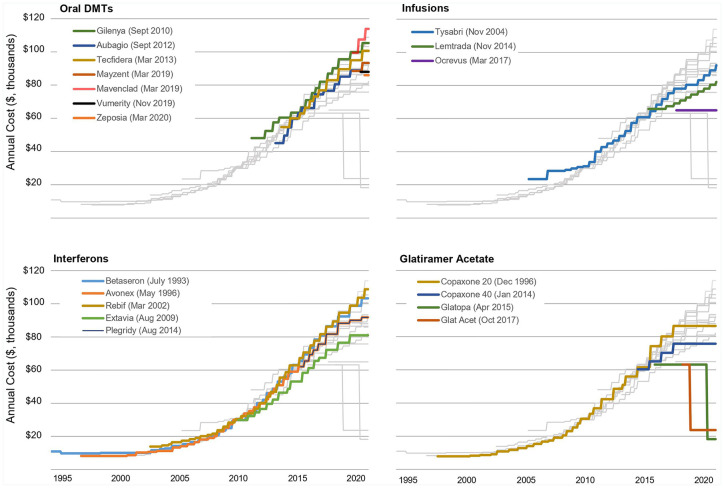
Multiple sclerosis (MS) is chronic neuroinflammatory condition associated with significant disability. The economic burden of MS is substantial, and high and rising disease-modifying therapy (DMT) prices are the single largest drivers of healthcare expenditures. Over much of the last decade, price increases for most DMTs have surpassed 10% annually. Currently, many MS DMTs exceed US$90,000 a year and their economic value is widely debated. In addition to creating a financial burden for the healthcare system, high DMT costs negatively impact patients through unaffordable out-of-pocket costs and excessive restrictions by insurance companies. The objective of this narrative review is to summarize economic issues related to MS DMTs, including trends in pricing, relative value, and effects on patient care in the United States.
Keywords: disease-modifying therapies; multiple sclerosis; pharmacoeconomics.
© The Author(s), 2021.
Conflict of interest statement
Conflict of interest statement: Research support from AbbVie Pharmaceuticals Research and consulting from NMSS.
Figures
References
-
- Noseworthy JH, Lucchinetti C, Rodriguez M, et al. Multiple sclerosis. N Engl J Med 2000; 343: 938–952. - PubMed
-
- Goodin DS. The epidemiology of multiple sclerosis: insights to disease pathogenesis. Handb Clin Neurol 2014; 122: 231–266. - PubMed
-
- Kobelt G, Berg J, Atherly D, et al. Costs and quality of life in multiple sclerosis: a cross-sectional study in the United States. Neurology 2006; 66: 1696–1702. - PubMed
Publication types
LinkOut - more resources
Full Text Sources
Other Literature Sources
