


Long non-coding RNAs: From disease code to drug role
- PMID: 33643816
- PMCID: PMC7893121
- DOI: 10.1016/j.apsb.2020.10.001
Long non-coding RNAs: From disease code to drug role
Abstract
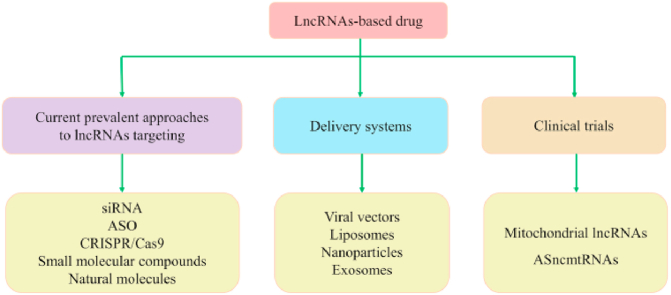
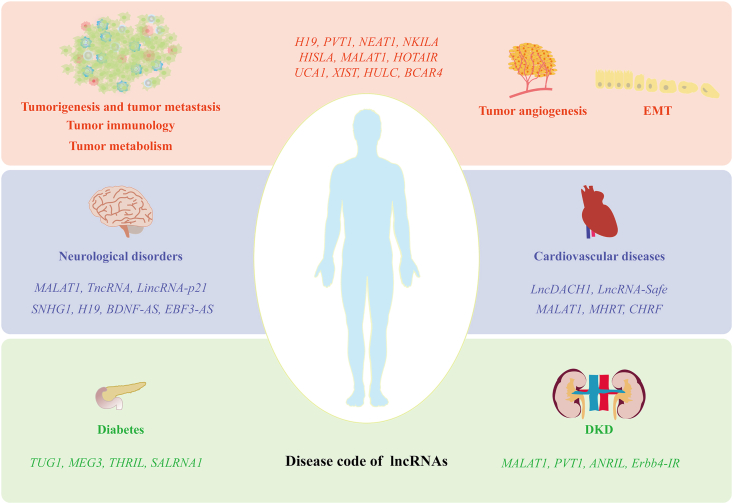
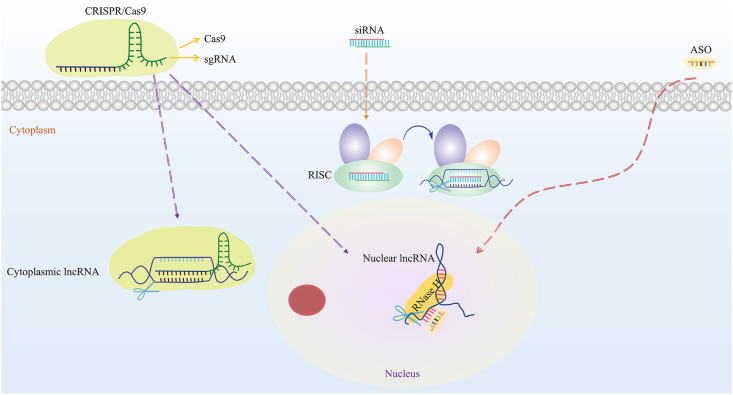
Enormous studies have corroborated that long non-coding RNAs (lncRNAs) extensively participate in crucial physiological processes such as metabolism and immunity, and are closely related to the occurrence and development of tumors, cardiovascular diseases, nervous system disorders, nephropathy, and other diseases. The application of lncRNAs as biomarkers or intervention targets can provide new insights into the diagnosis and treatment of diseases. This paper has focused on the emerging research into lncRNAs as pharmacological targets and has reviewed the transition of lncRNAs from the role of disease coding to acting as drug candidates, including the current status and progress in preclinical research. Cutting-edge strategies for lncRNA modulation have been summarized, including the sources of lncRNA-related drugs, such as genetic technology and small-molecule compounds, and related delivery methods. The current progress of clinical trials of lncRNA-targeting drugs is also discussed. This information will form a latest updated reference for research and development of lncRNA-based drugs.
Keywords: AD, Alzheimer's disease; ANRIL, antisense noncoding RNA gene at the INK4 locus; ASO, antisense oligonucleotide; ASncmtRNA; ASncmtRNA, antisense noncoding mitochondrial RNA; BCAR4, breast cancer anti-estrogen resistance 4; BDNF-AS, brain-derived neurotrophic factor antisense; CASC9, cancer susceptibility candidate 9; CDK, cyclin dependent kinase 1; CHRF, cardiac hypertrophy related factor; CRISPR, clustered regularly interspaced short palindromic repeats; Clinical trials; DACH1, dachshund homolog 1; DANCR, differentiation antagonizing non-protein coding RNA; DKD, diabetic kidney disease; DPF, diphenyl furan; Delivery; EBF3-AS, early B cell factor 3-antisense; ENE, element for nuclear expression; Erbb4-IR, Erb-B2 receptor tyrosine kinase 4-immunoreactivity; FDA, U.S. Food and Drug Administration; GAPDH, glyceraldehyde-3-phosphate dehydrogenase; GAS5, growth arrest specific 5; Gene therapy; HISLA, HIF-1α-stabilizing long noncoding RNA; HOTAIR, HOX transcript antisense intergenic RNA; HULC, highly upregulated in liver cancer; LIPCAR, long intergenic noncoding RNA predicting cardiac remodeling; LNAs, locked nucleic acids; LncRNAs; MALAT1, metastasis associated lung adenocarcinoma transcript 1; MEG3, maternally expressed gene 3; MHRT, myosin heavy chain associated RNA transcripts; MM, multiple myeloma; NEAT1, nuclear enriched abundant transcript 1; NKILA, NF-kappaB interacting lncRNA; NPs, nanoparticles; Norad, non-coding RNA activated by DNA damage; OIP5-AS1, opa-interacting protein 5 antisense transcript 1; PD, Parkinson's disease; PEG, polyethylene glycol; PNAs, peptide nucleic acids; PTO, phosphorothioate; PVT1, plasmacytoma variant translocation 1; RGD, arginine-glycine-aspartic acid peptide; RISC, RNA-induced silencing complex; SALRNA1, senescence associated long non-coding RNA 1; SNHG1, small nucleolar RNA host gene 1; Small molecules; SncmtRNA, sense noncoding mitochondrial RNA; THRIL, TNF and HNRNPL related immunoregulatory; TTTY15, testis-specific transcript, Y-linked 15; TUG1, taurine-upregulated gene 1; TWIST1, twist family BHLH transcription factor 1; Targeted drug; TncRNA, trophoblast-derived noncoding RNA; Translational medicine; UCA1, urothelial carcinoma-associated 1; UTF1, undifferentiated transcription factor 1; XIST, X-inactive specific transcript; lincRNA-p21, long intergenic noncoding RNA p21; lncRNAs, long non-coding RNAs; mtlncRNA, mitochondrial long noncoding RNA; pHLIP, pH-low insertion peptide; sgRNA, single guide RNA; siRNAs, small interfering RNAs.
© 2021 Chinese Pharmaceutical Association and Institute of Materia Medica, Chinese Academy of Medical Sciences. Production and hosting by Elsevier B.V.
Conflict of interest statement
The authors declare no conflicts of competitive interest.
Figures
References
-
- Dahariya S., Paddibhatla I., Kumar S., Raghuwanshi S., Pallepati A., Gutti R.K. Long non-coding RNA: classification, biogenesis and functions in blood cells. Mol Immunol. 2019;112:82–92. - PubMed
-
- Lorenzen J.M., Thum T. Long noncoding RNAs in kidney and cardiovascular diseases. Nat Rev Nephrol. 2016;12:360–373. - PubMed
-
- Huang J.Z., Chen M., Chen D., Gao X.C., Zhu S., Huang H. A peptide encoded by a putative lncRNA HOXB-AS3 suppresses colon cancer growth. Mol Cell. 2017;68:171–184.e6. - PubMed
Publication types
LinkOut - more resources
Full Text Sources
Other Literature Sources
Research Materials
