


The strain and strain rate imaging paradox in echocardiography: overabundant literature in the last two decades but still uncertain clinical utility in an individual case
- PMID: 33644489
- PMCID: PMC7885811
- DOI: 10.5114/amsad.2020.103032
The strain and strain rate imaging paradox in echocardiography: overabundant literature in the last two decades but still uncertain clinical utility in an individual case
Abstract
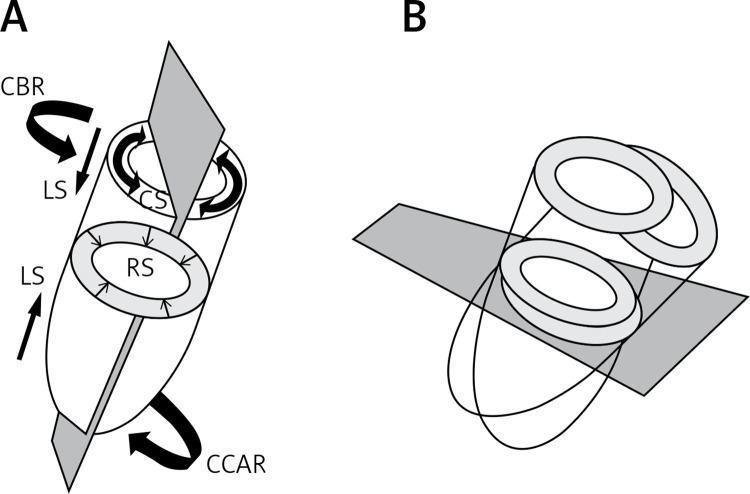
Almost two decades ago strain and strain rate imaging were proposed as a new, potentially more sensitive modality for quantifying both regional and global myocardial function. Until now, however, strain and strain rate imaging have been slow to be incorporated into everyday clinical practice. More recently, two dimensional strain has been claimed as of greater clinical utility, given that it is angle independent, with improved feasibility and reproducibility as compared to tissue Doppler strain. Nevertheless, speckle tracking strain is reliant on 2D image quality and frame rates. Three dimensional speckle tracking could eliminate the problem of through-plane motion inherent in 2D imaging, but 3D strain is currently limited by low frame rates. Another limitation of strain imaging is that the results are dependent on the ultrasound machine on which analyses are performed, with variability in measurements between different vendors. Despite the diagnostic and prognostic advantages of 2D strain, there is a lack of specific therapeutic interventions based on strain and a paucity of long-term large-scale randomized trial evidence on cardiovascular outcomes. After overabundant literature the same definition of normal cut-off values is controversial and not univocal. Further studies are needed, involving both manufacturers and medical professionals, on the additive contribution, possibly different case by case, of interfering and artifactual factors, aside from myocardial function per se. These artifactual determinants and motion artifacts components could be dominant in individual cases and should always be taken into account in the clinical decision making process in a single case.
Keywords: global and regional function; non-invasive cardiac function by ultrasound; strain and strain rate echocardiography; ventricular function.
Copyright: © 2020 Termedia & Banach.
Conflict of interest statement
The authors declare no conflict of interest.
Figures
References
-
- Sutherland GR, Di Salvo G, Claus P, D’hooge J, Bijnens B. Strain and strain rate imaging: a new clinical approach to quantifying regional myocardial function. J Am Soc Echocardiogr. 2004;17:788–802. - PubMed
-
- Leung DY, Ng ACT. Emerging clinical role of strain imaging in echocardiography. Heart Lung Circulation. 2010;19:161–74. - PubMed
-
- Trivedi SJ, Altman M, Stanton T, Thomas L. Echocardiographic strain in clinical practice. Heart Lung Circulation. 2019;28:1320–30. - PubMed
-
- Farsalinos KE, Daraban AM, Unlu S, et al. Head-to-head comparison of global longitudinal strain measurements among nine different vendors: the EACVI/ASE inter-vendor comparison study. J Am Soc Echocardiogr. 2015;28:1171–81. - PubMed
-
- Voigt JU, Pedrizzetti G, Lysyansky P, et al. Definitions for a Common Standard for 2D Speckle Tracking Echocardiography: Consensus Document of the EACVI/ASE/Industry Task Force to Standardize Deformation Imaging. J Am Soc Echocardiogr. 2015;28:183–93. - PubMed
LinkOut - more resources
Full Text Sources
