


Colonoscopy Trainers Experience Greater Stress During Insertion than Withdrawal: Implications for Endoscopic Curricula
- PMID: 33644672
- PMCID: PMC7898374
- DOI: 10.1093/jcag/gwz031
Colonoscopy Trainers Experience Greater Stress During Insertion than Withdrawal: Implications for Endoscopic Curricula
Abstract
Background: Optimal colonoscopy training curricula should minimize stress and cognitive load. This study aimed to determine whether withdrawal or insertion colonoscopy skills training is associated with less stress or cognitive load for trainees or trainers.
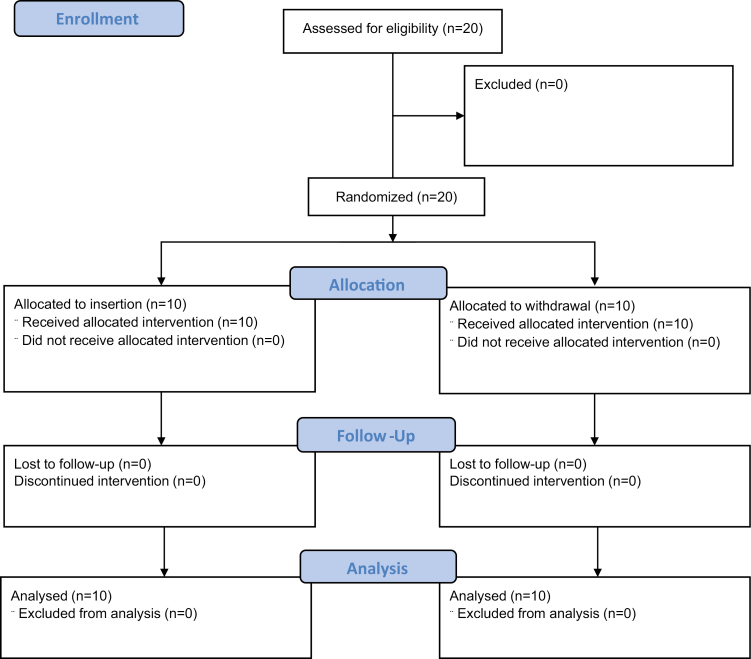
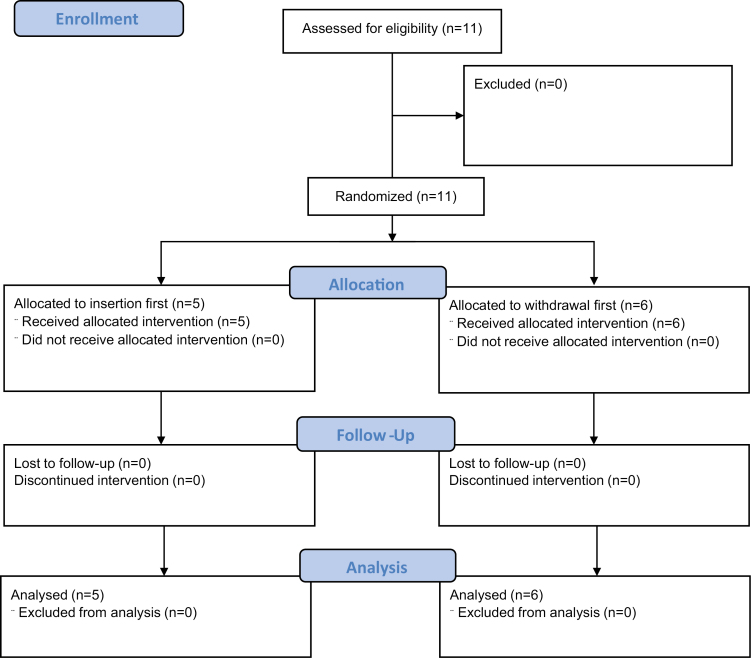
Methods: In Phase I, participants were randomized to train on either insertion or withdrawal in a simulated environment. In Phase II, participants were randomized to begin with either insertion or withdrawal in patient encounters. Salivary cortisol levels, heart rate, and State-Trait Anxiety Inventory (STAI) surveys were used to assess stress in trainees and trainers. NASA Task Load Index (TLX) survey was used to assess cognitive workload in trainees.
Results: In Phase I, trainee stress increased during the simulation training during both withdrawal and insertion compared to baseline, while trainer stress changed minimally. Cognitive load was higher for trainees during withdrawal (P = 0.005). In Phase II, trainers' STAI scores were greater during insertion training (P = 0.013). Trainees' stress was highest prior to beginning patient training and decreased during training, while trainer's stress increased during training. Trainees reported insertion training being of greater value (70.0%), while trainers reported withdrawal was preferred (77.8%).
Conclusion: Trainees and trainers exhibit important differences in stress during colonoscopy skills training. Trainees reported more stress during simulation training and greatest cognitive load during simulation withdrawal, whereas trainers reported greatest stress during patient encounters, particularly training of insertion techniques. Attention to the effect of stress on trainees and trainers and the drivers of stress is warranted and could be incorporated in competency based medical education.
Keywords: Colonoscopy; Endoscopy; Medical education; Simulation; Training.
© The Author(s) 2019. Published by Oxford University Press on behalf of the Canadian Association of Gastroenterology.
Figures
References
-
- Vedhara K, Hyde J, Gilchrist ID, et al. . Acute stress, memory, attention and cortisol. Psychoneuroendocrinology 2000;25(6):535–49. - PubMed
-
- Grover SC, Scaffidi MA, Khan R, et al. . Progressive learning in endoscopy simulation training improves clinical performance: A blinded randomized trial. Gastrointest Endosc 2017;86(5):881–9. - PubMed
-
- Waschke KA Will you be my first colonoscopy patient? Planning simulator training for novice endoscopists. Gastrointest Endosc 2017;86(5):890–1. - PubMed
LinkOut - more resources
Full Text Sources