


4-week eicosapentaenoic acid-rich fish oil supplementation partially protects muscular damage following eccentric contractions
- PMID: 33648546
- PMCID: PMC7923476
- DOI: 10.1186/s12970-021-00411-x
4-week eicosapentaenoic acid-rich fish oil supplementation partially protects muscular damage following eccentric contractions
Abstract
Background: We previously showed 8-week of fish oil supplementation attenuated muscle damage. However, the effect of a shorter period of fish oil supplementation is unclear. The present study investigated the effect of fish oil, eicosapentaenoic acid (EPA) and docosahexaenoic acid (DHA), for 4 weeks on muscular damage caused by eccentric contractions (ECCs) of the elbow flexors.
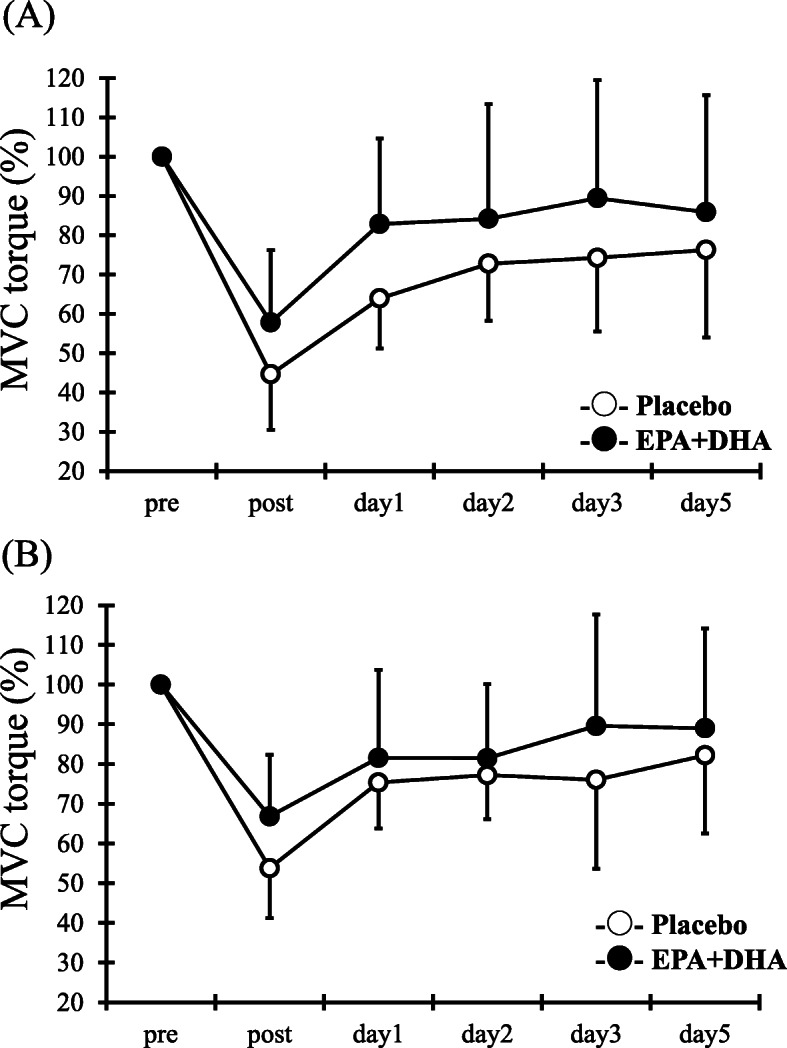
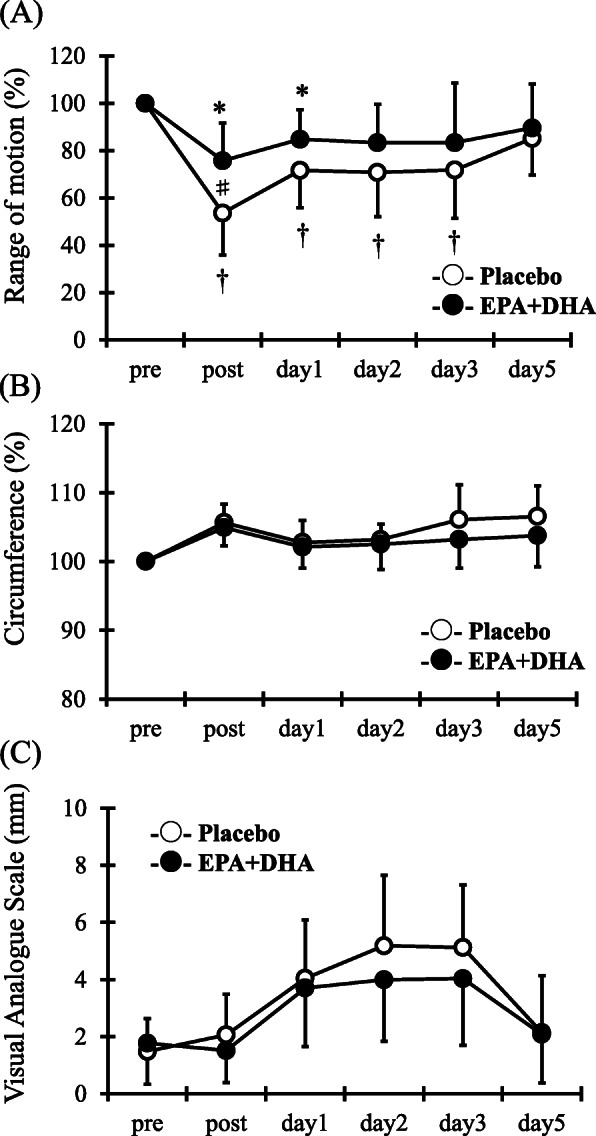
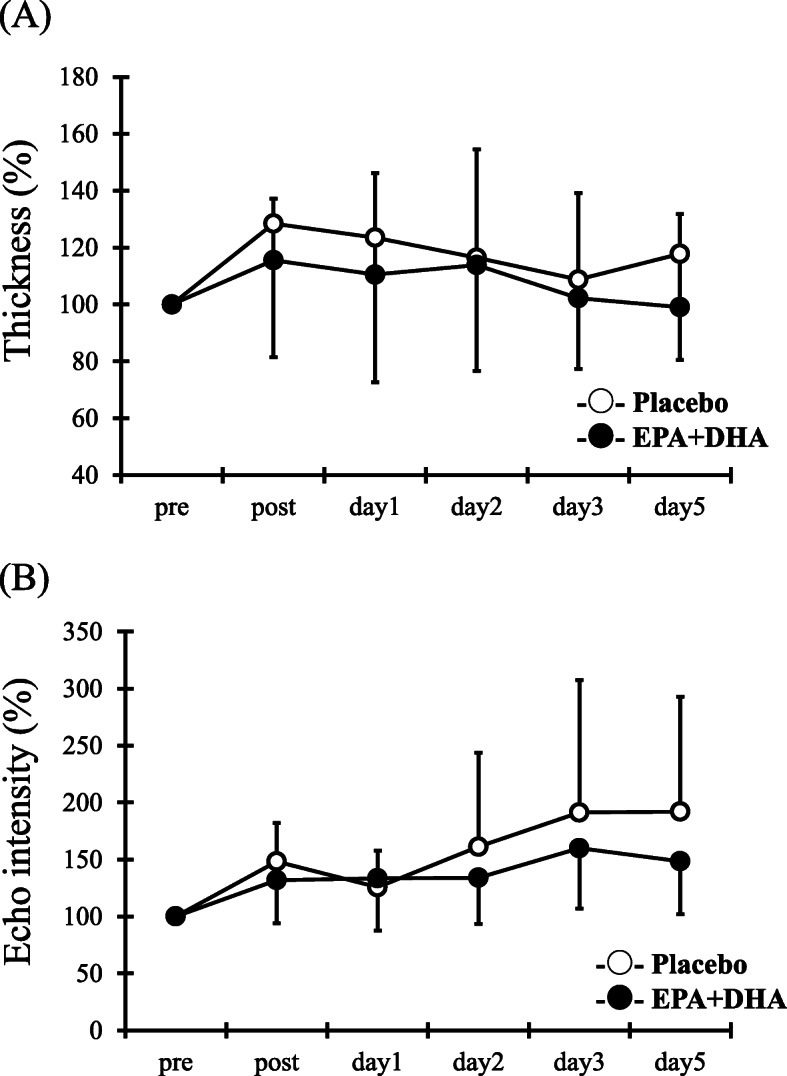
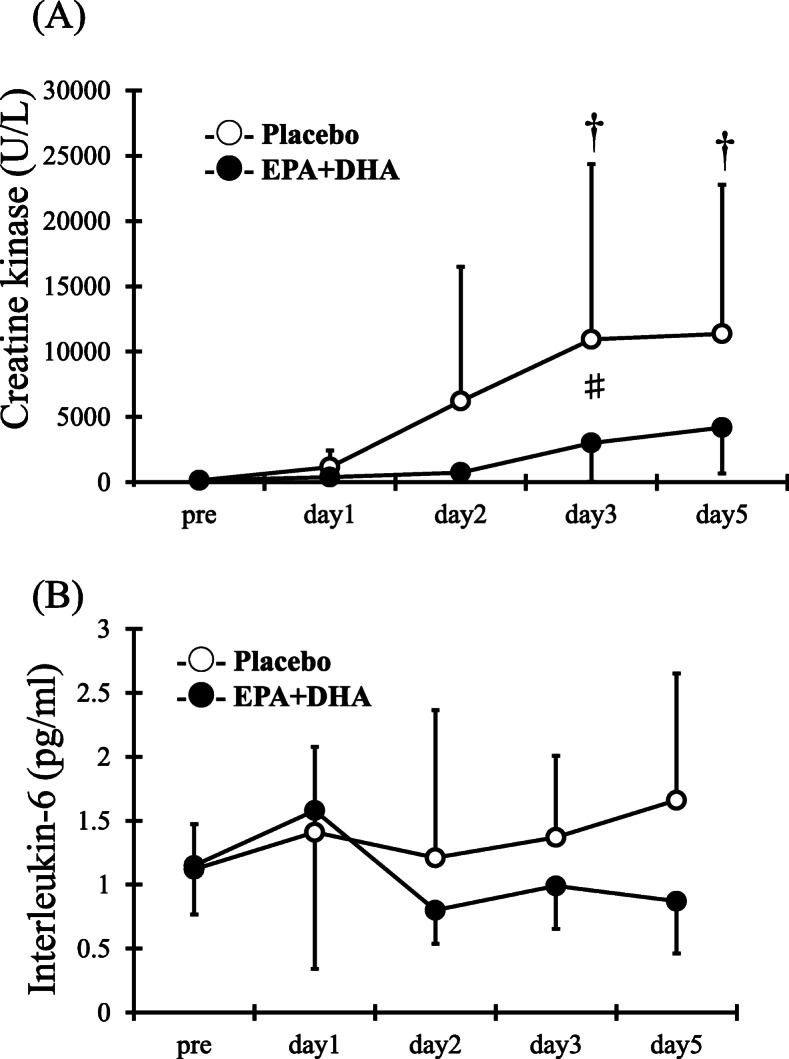
Methods: Twenty-two untrained men were recruited in this double-blind, placebo-controlled, parallel design study and the subjects were randomly assigned to the EPA and DHA group (EPA and DHA, n = 11) and placebo group (PL, n = 11). They consumed either EPA 600 mg and DHA 260 mg per day or placebo supplement for 4 weeks prior to exercise. Subjects performed 60 ECCs at 100 % maximal voluntary contraction (MVC) using a dumbbell. Changes in MVC torque, range of motion (ROM), upper arm circumference, muscle soreness, echo intensity, muscle thickness, serum creatine kinase (CK), and interleukin-6 (IL-6) were assessed before exercise; immediately after exercise; and 1, 2, 3, and 5 days after exercise.
Results: ROM was significantly higher in the EPA and DHA group than in the PL group immediately after performing ECCs (p < 0.05). No differences between groups were observed in terms of MVC torque, upper arm circumference, muscle soreness, echo intensity, and thickness. A significant difference was observed in serum CK 3 days after ECCs (p < 0.05).
Conclusions: We concluded that shorter period EPA and DHA supplementation benefits joint flexibility and protection of muscle fiber following ECCs.
Keywords: Eicosapentaenoic acid; Ergogenic aid; Joint flexibility; Lengthening; Long‐chain n-3 polyunsaturated fatty acids; Muscle function; Omega-3; Sports nutrition.
Conflict of interest statement
The authors declare that they have no competing interests.
Figures
References
-
- Andersson A, Nalsen C, Tengblad S, et al. Fatty acid composition of skeletal muscle reflects dietary fat composition in humans. Am J Clin Nutr. 2002;76:1222-9.doi. - PubMed
-
- Heileson JL, Funderburk LK. The effect of fish oil supplementation on the promotion and preservation of lean body mass, strength, and recovery from physiological stress in young, healthy adults: A systematic review. Nutr Rev 2020.doi. 10.1093/nutrit/nuaa034. - PubMed
-
- Clarkson PM, Nosaka K, Braun B. Muscle function after exercise-induced muscle damage and rapid adaptation. Med Sci Sports Exerc. 1992;24:512–20.doi. - PubMed
-
- Clarkson PM, Hubal MJ. Exercise-induced muscle damage in humans. American journal of physical medicine rehabilitation. 2002;81:52–69. doi. 10.1097/01.phm.0000029772.45258.43. - PubMed
-
- Clarkson PM, Sayers SP. Etiology of exercise-induced muscle damage. Can J Appl Physiol. 1999;24:234 – 48. doi. 10.1139/h99-020. - PubMed
Publication types
MeSH terms
Substances
Grants and funding
LinkOut - more resources
Full Text Sources
Other Literature Sources
Medical
Research Materials
