


The prognostic significance of single-nucleotide polymorphism array-based whole-genome analysis and uniparental disomy in myelodysplastic syndrome
- PMID: 33650312
- PMCID: PMC8518839
- DOI: 10.1111/ijlh.13502
The prognostic significance of single-nucleotide polymorphism array-based whole-genome analysis and uniparental disomy in myelodysplastic syndrome
Abstract
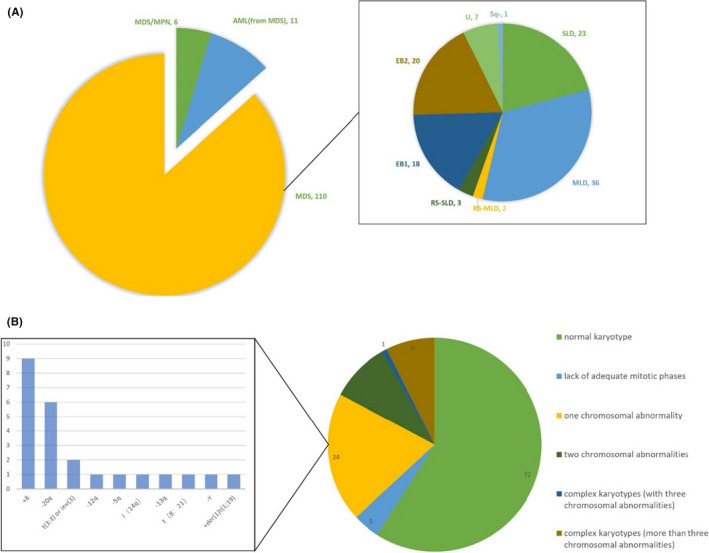
Introduction: Myelodysplastic syndrome (MDS) is a group of heterogeneous hematological diseases characterized by ineffective hematopoiesis and dysplastic morphology. Single nucleotide polymorphism array (SNP-A)-based whole genome analysis has a much higher resolution for chromosomal alterations when compared with conventional cytogenetic tools. In the present study, we evaluated the diagnostic value and prognostic significance of SNP-A in MDS patients with normal karyotypes.
Methods: A total of 127 patients with MDS and myeloproliferative neoplasms or acute myeloid leukemia with myelodysplasia-related changes were included in our study. The advantages and disadvantages of SNP-A were compared with those of traditional metaphase cytogenetic analysis (MC). The Kaplan-Meier analysis and COX regression analysis were used to investigate the prognostic value of SNP-A and uniparental disomy (UPD) in MDS patients with normal karyotype. Furthermore, the chromosomal abnormalities detected by SNP-A in patients with specific gene mutations were explored.
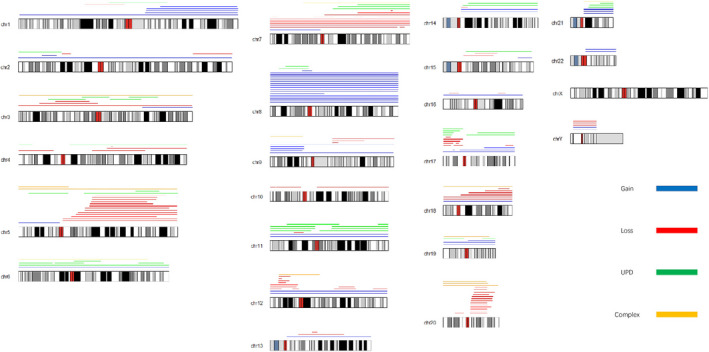
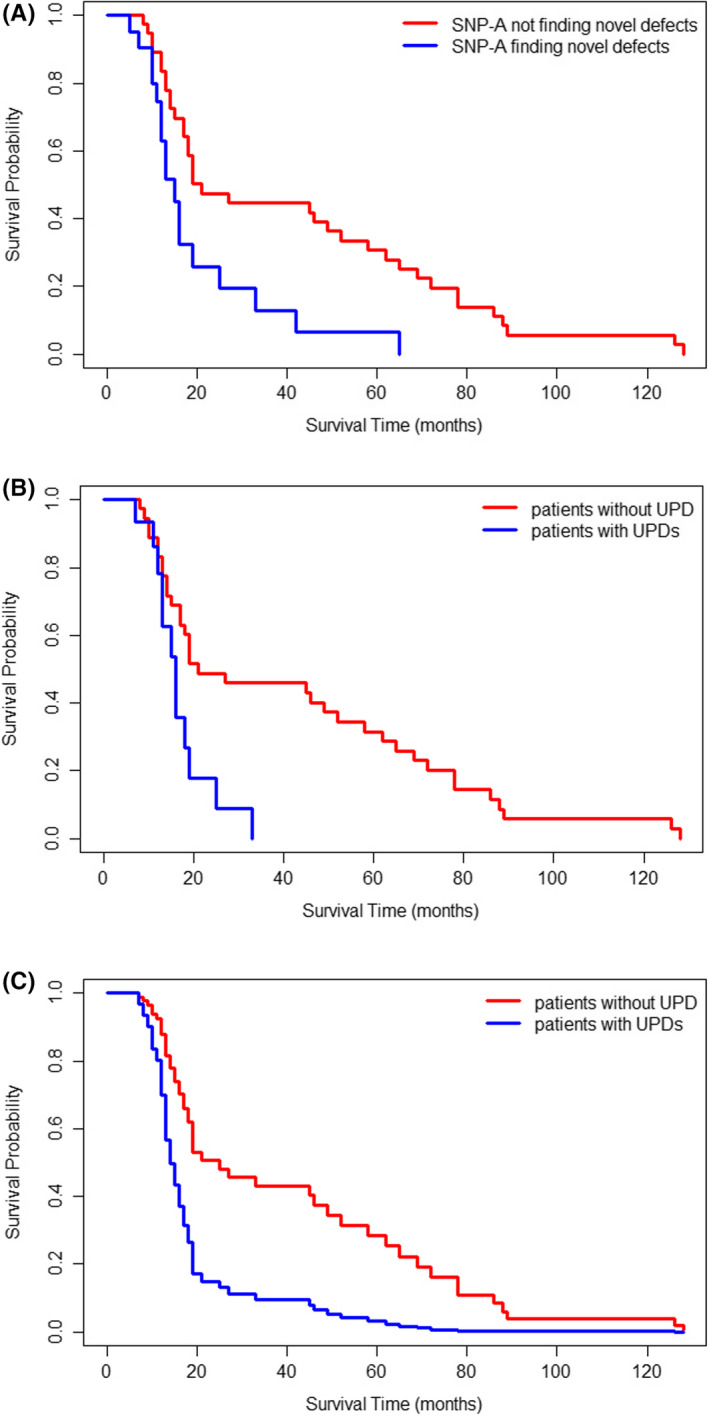
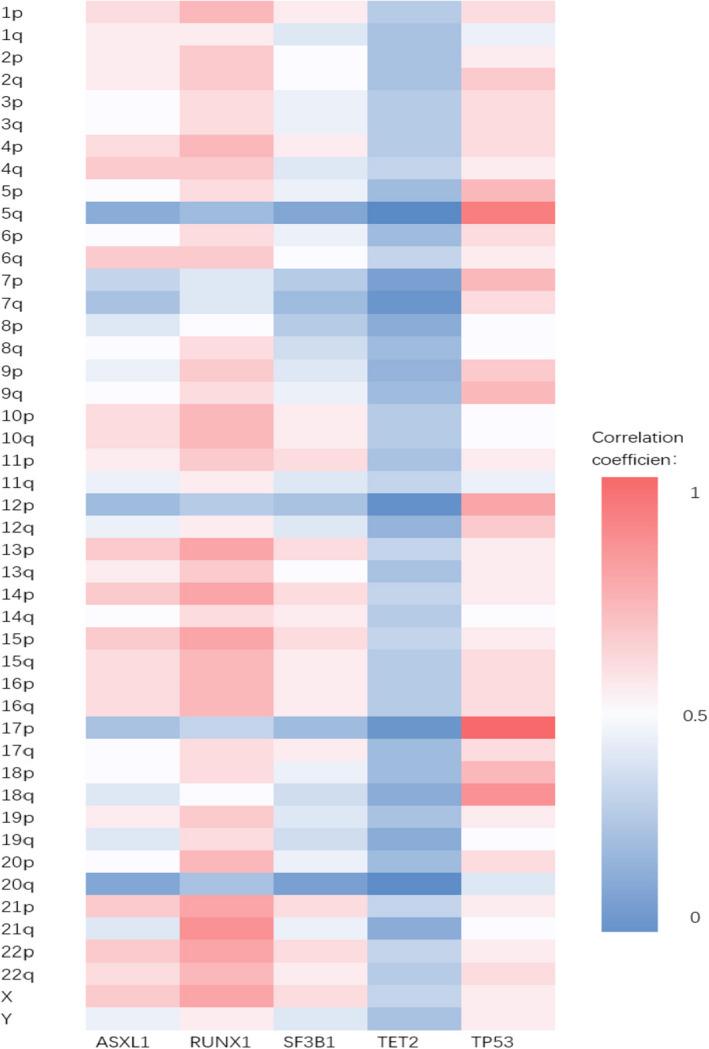
Results: SNP-A was more sensitive toward meaningful chromosomal aberrations (58.2% vs 36.9%; P < .05) than MC. Among the patients with normal karyotype, those who were detected with new chromosomal abnormalities via SNP-A presented with inferior survival compared with those without the abnormalities (P = .003). Additionally, the presence of UPD was an independent prognostic factor in patients with normal karyotype (P = .01). TP53 and RUNX1 mutations often occurred with abnormalities in chromosomes 17p and 21q, respectively.
Conclusions: Compared with MC, SNP-A capable of detecting UPD can offer more diagnostic and prognostic information; TP53 and RUNX1 gene mutations are often accompanied by abnormalities in their chromosomes (17p, 22q).
Keywords: metaphase cytogenetic analysis; myelodysplastic syndrome; uniparental disomy.
© 2021 The Authors. International Journal of Laboratory Hematology published by John Wiley & Sons Ltd.
Conflict of interest statement
The researchers claim no conflicts of interest.
Figures
References
-
- Prchal JT, Throckmorton DW, Carroll AJ 3rd, Fuson EW, Gams RA, Prchal JF. A common progenitor for human myeloid and lymphoid cells. Nature. 1978;274(5671):590‐591. - PubMed
-
- Greenberg P, Cox C, LeBeau MM, et al. International scoring system for evaluating prognosis in myelodysplastic syndromes. Blood. 1997;89(6):2079‐2088. - PubMed
-
- Haase D, Germing U, Schanz J, et al. New insights into the prognostic impact of the karyotype in MDS and correlation with subtypes: evidence from a core dataset of 2124 patients. Blood. 2007;110(13):4385‐4395. - PubMed
MeSH terms
Grants and funding
LinkOut - more resources
Full Text Sources
Other Literature Sources
Medical
Research Materials
Miscellaneous
