


Role of the purinergic signaling network in lung ischemia-reperfusion injury
- PMID: 33651003
- PMCID: PMC9270688
- DOI: 10.1097/MOT.0000000000000854
Role of the purinergic signaling network in lung ischemia-reperfusion injury
Abstract
Purpose of review: Primary graft dysfunction (PGD) is the leading cause of early mortality following lung transplantation and is typically caused by lung ischemia-reperfusion injury (IRI). Current management of PGD is largely supportive and there are no approved therapies to prevent lung IRI after transplantation. The purinergic signaling network plays an important role in this sterile inflammatory process, and pharmacologic manipulation of said network is a promising therapeutic strategy. This review will summarize recent findings in this area.
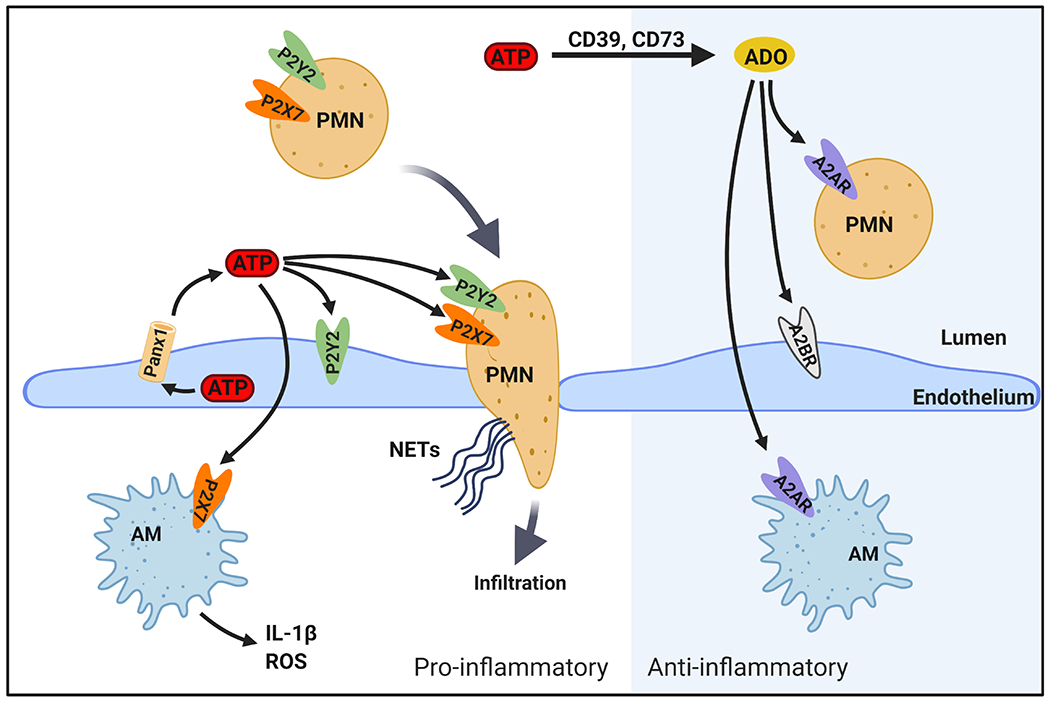
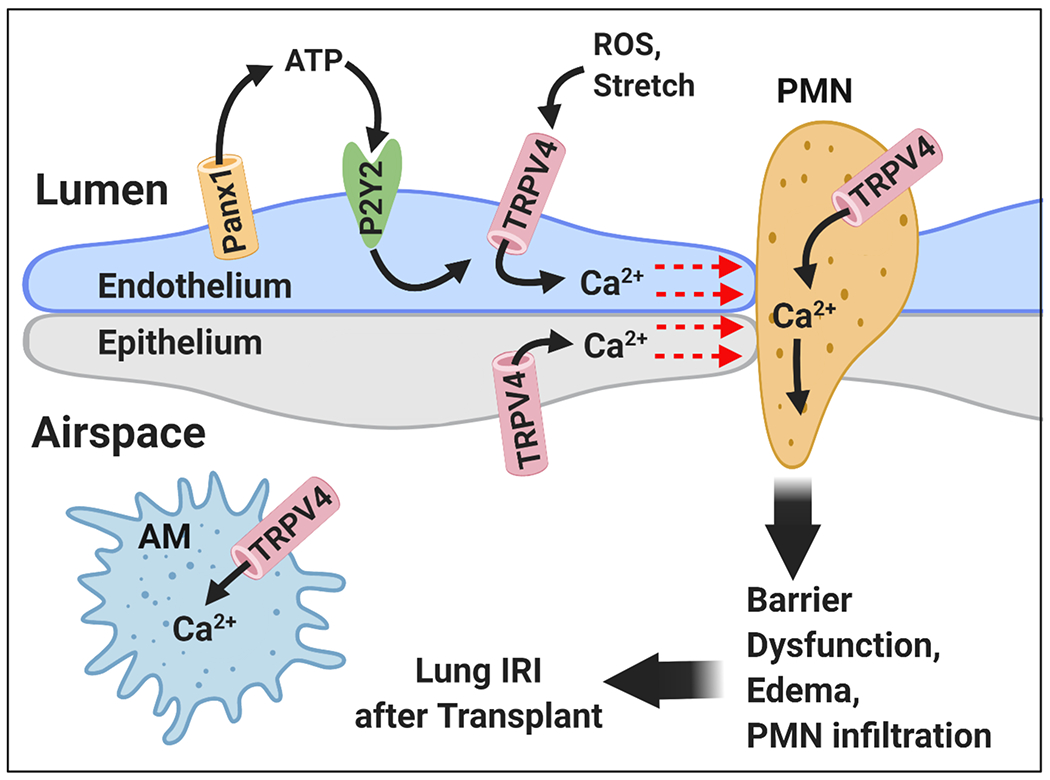
Recent findings: In the past 18 months, our understanding of lung IRI has improved, and it is becoming clear that the purinergic signaling network plays a vital role. Recent works have identified critical components of the purinergic signaling network (Pannexin-1 channels, ectonucleotidases, purinergic P1 and P2 receptors) involved in inflammation in a number of pathologic states including lung IRI. In addition, a functionally-related calcium channel, the transient receptor potential vanilloid type 4 (TRPV4) channel, has recently been linked to purinergic signaling and has also been shown to mediate lung IRI.
Summary: Agents targeting components of the purinergic signaling network are promising potential therapeutics to limit inflammation associated with lung IRI and thus decrease the risk of developing PGD.
Copyright © 2021 Wolters Kluwer Health, Inc. All rights reserved.
Conflict of interest statement
Figures
References
-
- Frye CC, Bery AI, Kreisel D, Kulkarni HS. Sterile inflammation in thoracic transplantation. Cell Mol Life Sci. 2020. - PMC - PubMed
-
This review highlights the most current state of the science regarding mechanisms of IRI-induced graft damage and provides further insight into future development of preventive and treatment strategies.
-
- Abassi Z, Armaly Z, Heyman SN. Glycocalyx degradation in ischemia-reperfusion injury. Am J Pathol. 2020;190(4):752–67. - PubMed
-
- Di Virgilio F, Sarti AC, Coutinho-Silva R. Purinergic signaling, DAMPs, and inflammation. Am J Physiol Cell Physiol. 2020;318(5):C832–c5. - PubMed
-
- Navis KE, Fan CY, Trang T, et al. Pannexin 1 Channels as a therapeutic target: structure, inhibition, and outlook. ACS Chem Neurosci. 2020;11(15):2163–72. - PubMed
-
This paper provides a thorough and recent review of Panx1 channel structure, function, physiological regulation and pharmacologic inhibition aimed toward therapeutic strategies.
-
- Le TT, Berg NK, Harting MT, et al. Purinergic signaling in pulmonary inflammation. Front Immunol. 2019;10:1633. - PMC - PubMed
-
This review provides the most up-to-date examination of the role of purinergic signaling in acute and chronic pulmonary inflammation, with an emphasis on ATP and adenosine signaling.
Publication types
MeSH terms
Grants and funding
LinkOut - more resources
Full Text Sources
Other Literature Sources
Medical
Research Materials
Miscellaneous
