


Association between antibiotics and gut microbiome dysbiosis in children: systematic review and meta-analysis
- PMID: 33651651
- PMCID: PMC7928022
- DOI: 10.1080/19490976.2020.1870402
Association between antibiotics and gut microbiome dysbiosis in children: systematic review and meta-analysis
Abstract
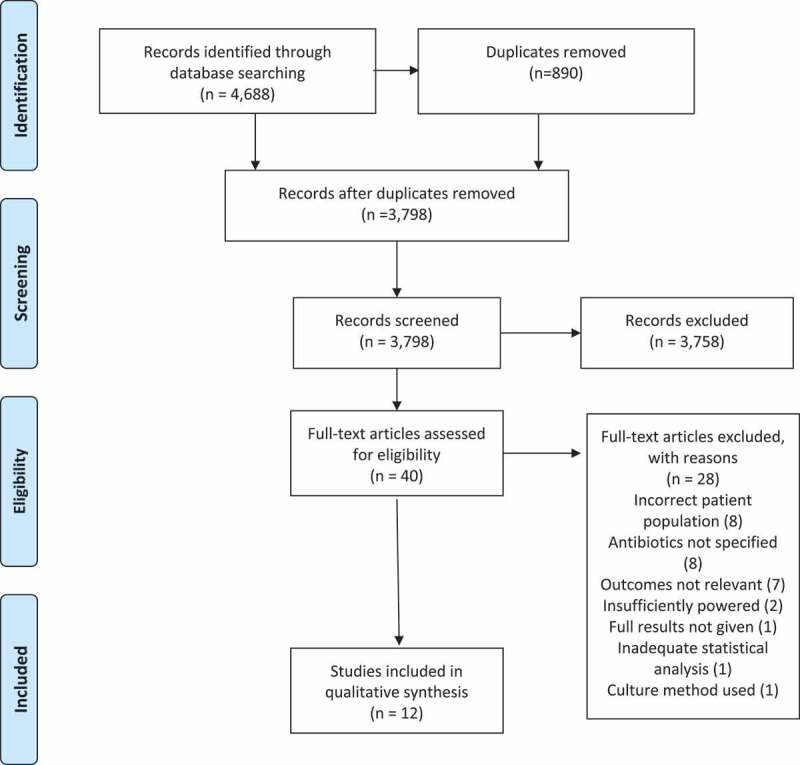
Antibiotics in childhood have been linked with diseases including asthma, juvenile arthritis, type 1 diabetes, Crohn's disease and mental illness. The underlying mechanisms are thought related to dysbiosis of the gut microbiome. We conducted a systematic review of the association between antibiotics and disruption of the pediatric gut microbiome. Searches used MEDLINE, EMBASE and Web of Science. Eligible studies: association between antibiotics and gut microbiome dysbiosis; children 0-18 years; molecular techniques of assessment; outcomes of microbiome richness, diversity or composition. Quality assessed by Newcastle-Ottawa Scale or Cochrane Risk of Bias Tool. Meta-analysis where possible. A total of 4,668 publications identified: 12 in final analysis (5 randomized controlled trials (RCTs), 5 cohort studies, 2 cross-sectional studies). Microbiome richness was measured in 3 studies, species diversity in 6, and species composition in 10. Quality of evidence was good or fair. 5 studies found a significant reduction in diversity and 3 a significant reduction in richness. Macrolide exposure was associated with reduced richness for twice as long as penicillin. Significant reductions were seen in Bifidobacteria (5 studies) and Lactobacillus (2 studies), and significant increases in Proteobacteria such as E. coli (4 studies). A meta-analysis of RCTs of the effect of macrolide (azithromycin) exposure on the gut microbiome found a significant reduction in alpha-diversity (Shannon index: mean difference -0.86 (95% CI -1.59, -0.13). Antibiotic exposure was associated with reduced microbiome diversity and richness, and with changes in bacterial abundance. The potential for dysbiosis in the microbiome should be taken into account when prescribing antibiotics for children.
Keywords: Antibiotics; Children; Gut dysbiosis.
Figures

References
-
- Liu SX, Li YH, Dai WK, Li X-S, Qiu C-Z, Ruan M-L, Zou B, Dong C, Liu Y-H, He J-Y, et al. Fecal microbiota transplantation induces remission of infantile allergic colitis through gut microbiota re-establishment. World J Gastroenterol. 2017;23(48):8570–18. doi: 10.3748/wjg.v23.i48.8570. - DOI - PMC - PubMed
-
- Khan MY, Dirweesh A, Khurshid T, Siddiqui W. Comparing fecal microbiota transplantation to standard-of-care treatment for recurrent clostridium difficile infection: a systematic review and meta-analysis. Eur J Gastroenterol Hepatol. 2018;30(11):1309–1317. doi: 10.1097/MEG.000000000000124. - DOI - PubMed
Publication types
MeSH terms
Substances
Grants and funding
LinkOut - more resources
Full Text Sources
Other Literature Sources
Medical
