


Performance and onsite regeneration of natural zeolite for ammonium removal in a field-scale non-sewered sanitation system
- PMID: 33652315
- PMCID: PMC8111385
- DOI: 10.1016/j.scitotenv.2021.145938
Performance and onsite regeneration of natural zeolite for ammonium removal in a field-scale non-sewered sanitation system
Abstract
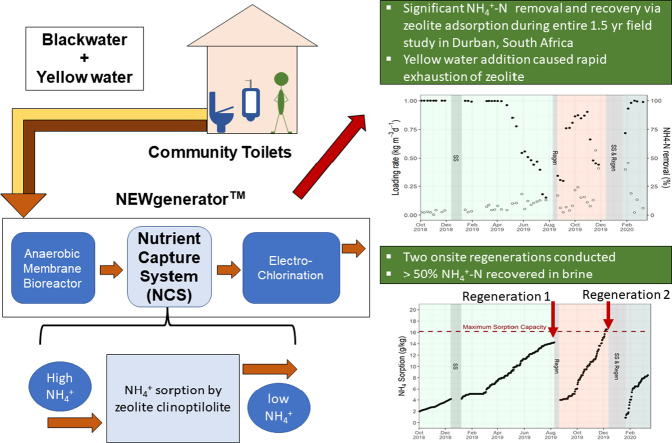
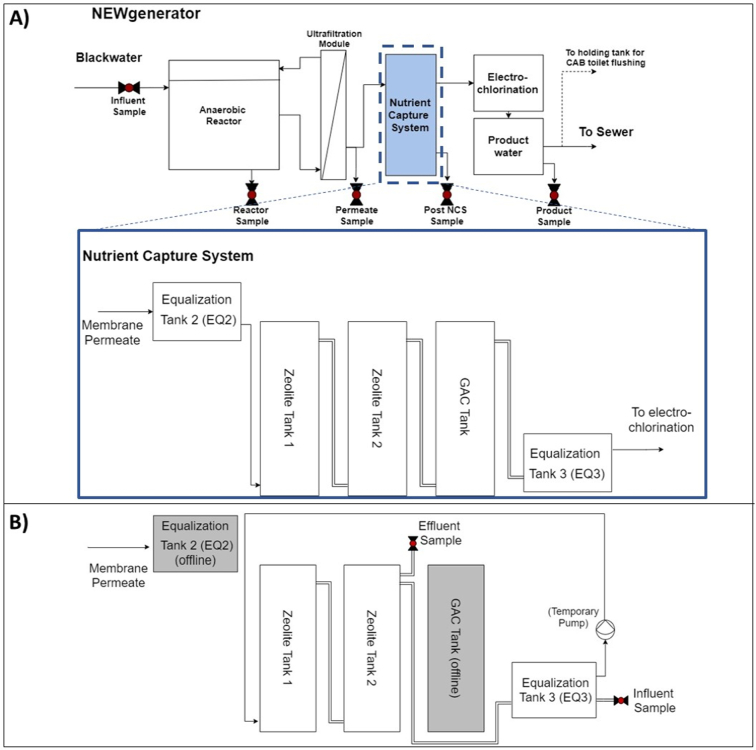
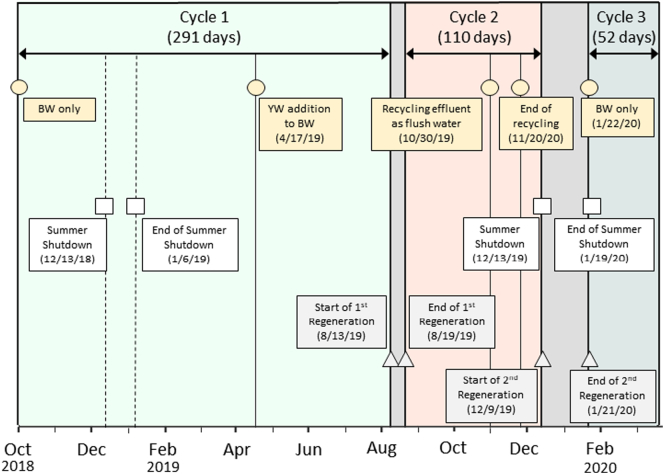
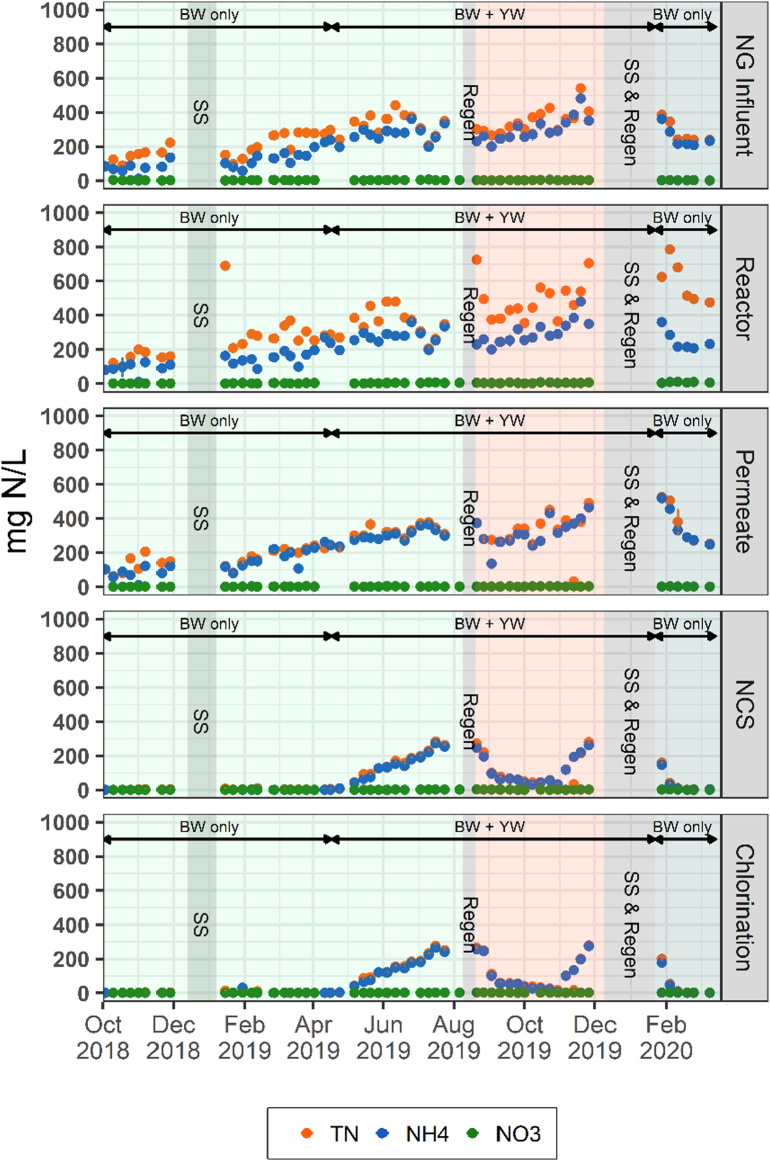
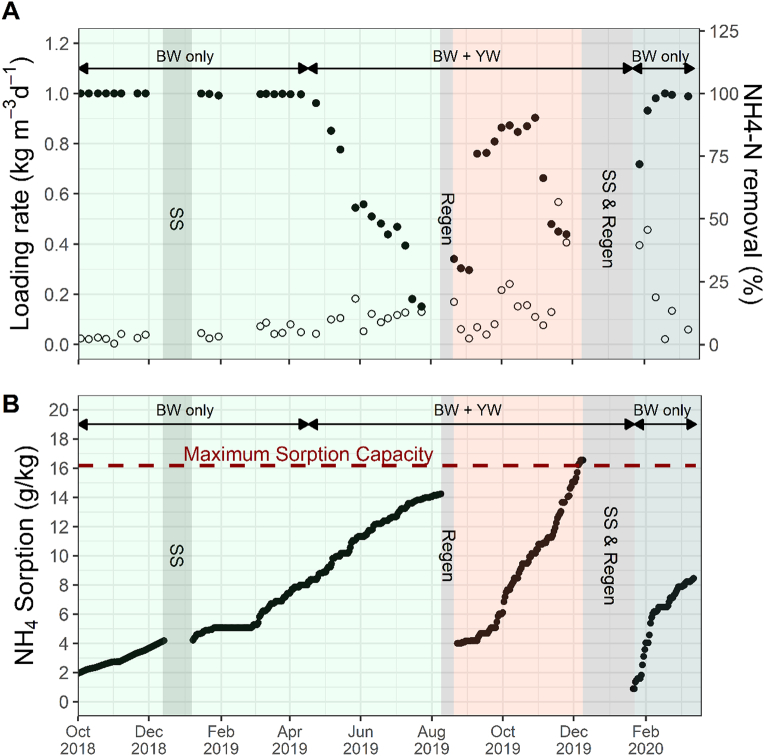
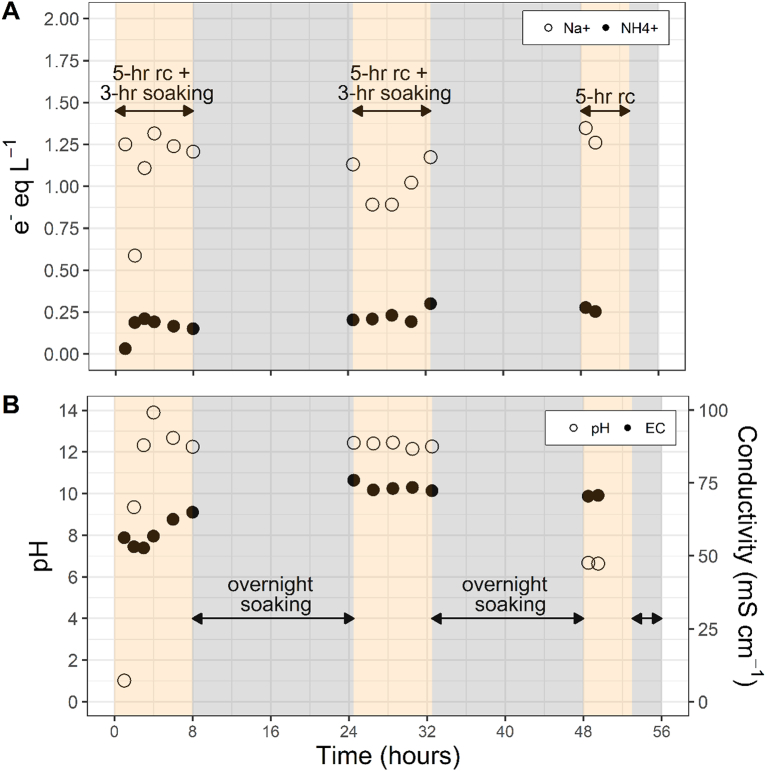
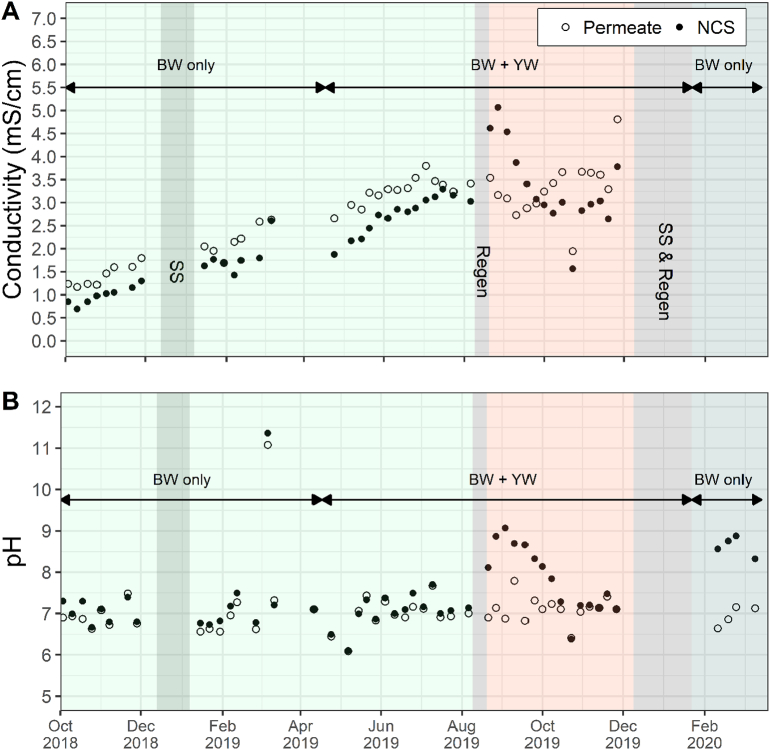
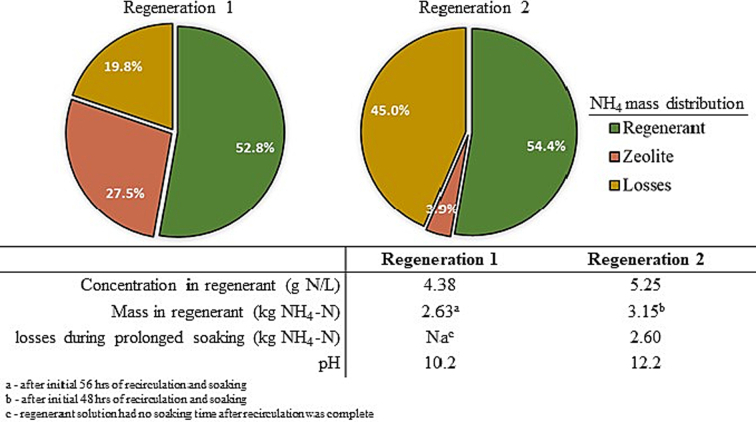
Natural zeolite clinoptilolite was used as the primary ammonium removal method from the permeate of an anaerobic membrane bioreactor (AnMBR) treating high-strength blackwater generated from a community toilet facility. This zeolite-based nutrient capture system (NCS) was a sub-component of a non-sewered sanitation system (NSSS) called the NEWgenerator and was field tested for 1.5 years at an informal settlement in South Africa. The NCS was operated for three consecutive loading cycles, each lasting 291, 110, and 52 days, respectively. Both blackwater (from toilets) and blackwater with yellow water (from toilets and urinals) were treated during the field trial. Over the three cycles, the NCS was able to remove 80 ± 28%, 64 ± 23%, and 94 ± 11%, respectively, of the influent ammonium. The addition of yellow water caused the rapid exhaustion of zeolite and the observed decrease of ammonium removal during Cycle 2. After Cycles 1 and 2, onsite regeneration was performed to recover the sorption capacity of the spent zeolite. The regenerant was comprised of NaCl under alkaline conditions and was operated as a recycle-batch to reduce the generation of regenerant waste. Modifications to the second regeneration process, including an increase in regenerant contact time from 15 to 30 h, improved the zeolite regeneration efficiency from 76 ± 0.7% to 96 ± 1.0%. The mass of recoverable ammonium in the regenerant was 2.63 kg NH4-N and 3.15 kg NH4-N after Regeneration 1 and 2, respectively. However, the mass of ammonium in the regenerant accounted for only 52.8% and 54.4% of the estimated NH4-N originally sorbed onto the zeolite beds after Cycles 1 and 2, respectively. The use of zeolite clinoptilolite is a feasible method for ammonium removal by NSSS that observe variable nitrogen loading rates, but further research is still needed to recover the nitrogen from the regenerant waste.
Keywords: Ammonium; Non-sewered sanitation; Resource recovery; Sorption; Wastewater; Zeolite.
Copyright © 2021 The Authors. Published by Elsevier B.V. All rights reserved.
Conflict of interest statement
Declaration of competing interest The authors declare the following financial interests/personal relationships which may be considered as potential competing interests: Daniel Yeh and Robert Bair are named inventors on patent applications for technologies related to the NEWgenerator. USF is the assignee on the patents, and has licensed technologies related to the NEWgenerator to companies in India and South Africa. Daniel Yeh and Robert Bair are co-founders of BioReNEW, Inc.
Figures
References
-
- Alshameri A., Yan C., Al-Ani Y., Dawood A.S., Ibrahim A., Zhou C., Wang H. An investigation into the adsorption removal of ammonium by salt activated Chinese (Hulaodu) natural zeolite: kinetics, isotherms, and thermodynamics. J. Taiwan Inst. Chem. Eng. 2014;45:554–564. doi: 10.1016/j.jtice.2013.05.008. - DOI
-
- Ames L.L. The cation sieve properties of clinoptilolite. Am. Mineral. 1960;45:689–701.
-
- Bair R.A. University of South Florida; Doctoral Dissertation: 2016. Development of a Decentralized and off-Grid Anaerobic Membrane Bioreactor (AnMBR) for Urban Sanitation in Developing Countries.
-
- Brandes M. Characteristics of effluents from gray and black water septic tanks. J. Water Pollut. Control Fed. 1978;50:2547–2559.
LinkOut - more resources
Full Text Sources
Other Literature Sources
