Review
. 2021 Feb 26;11(3):291.
doi: 10.3390/brainsci11030291.

Brain Activation Changes While Walking in Adults with and without Neurological Disease: Systematic Review and Meta-Analysis of Functional Near-Infrared Spectroscopy Studies

Affiliations
Review

Brain Activation Changes While Walking in Adults with and without Neurological Disease: Systematic Review and Meta-Analysis of Functional Near-Infrared Spectroscopy Studies

Alka Bishnoi et al. Brain Sci. .

Abstract

(1) Functional near-infrared spectroscopy (fNIRS) provides a useful tool for monitoring brain activation changes while walking in adults with neurological disorders. When combined with dual task walking paradigms, fNIRS allows for changes in brain activation to be monitored when individuals concurrently attend to multiple tasks. However, differences in dual task paradigms, baseline, and coverage of cortical areas, presents uncertainty in the interpretation of the overarching findings. (2) Methods: By conducting a systematic review of 35 studies and meta-analysis of 75 effect sizes from 17 studies on adults with or without neurological disorders, we show that the performance of obstacle walking, serial subtraction and letter generation tasks while walking result in significant increases in brain activation in the prefrontal cortex relative to standing or walking baselines. (3) Results: Overall, we find that letter generation tasks have the largest brain activation effect sizes relative to walking, and that significant differences between dual task and single task gait are seen in persons with multiple sclerosis and stroke. (4) Conclusions: Older adults with neurological disease generally showed increased brain activation suggesting use of more attentional resources during dual task walking, which could lead to increased fall risk and mobility impairments. PROSPERO ID: 235228.

Keywords: dual-task walking; neuroimaging; neurological disorders.


Conflict of interest statement

The authors declare no conflict of interest. The sponsors had no role in the design, execution, interpretation, or writing of the study.

Figures
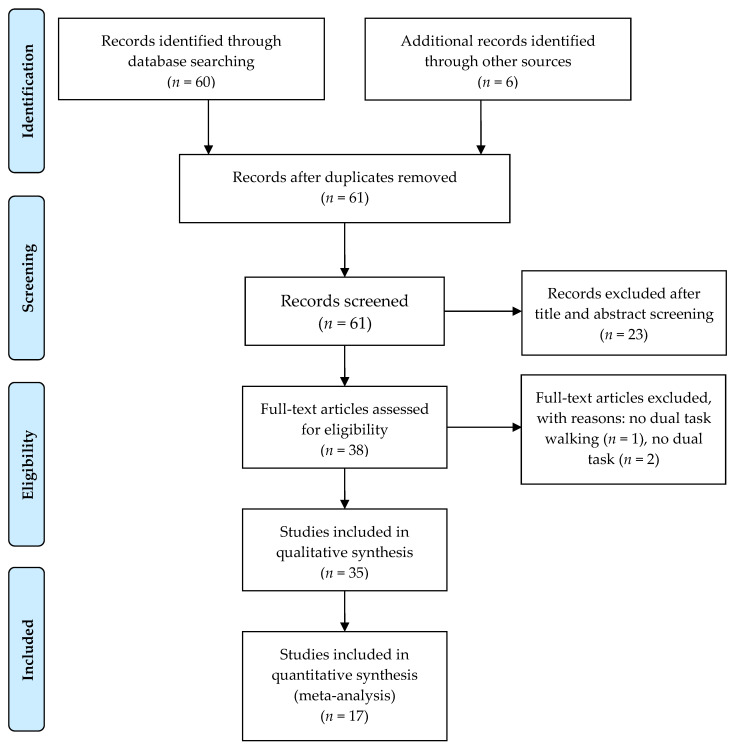
Figure 1
Figure 1
Systematic review PRISMA flow diagram.
Figure 2
Figure 2
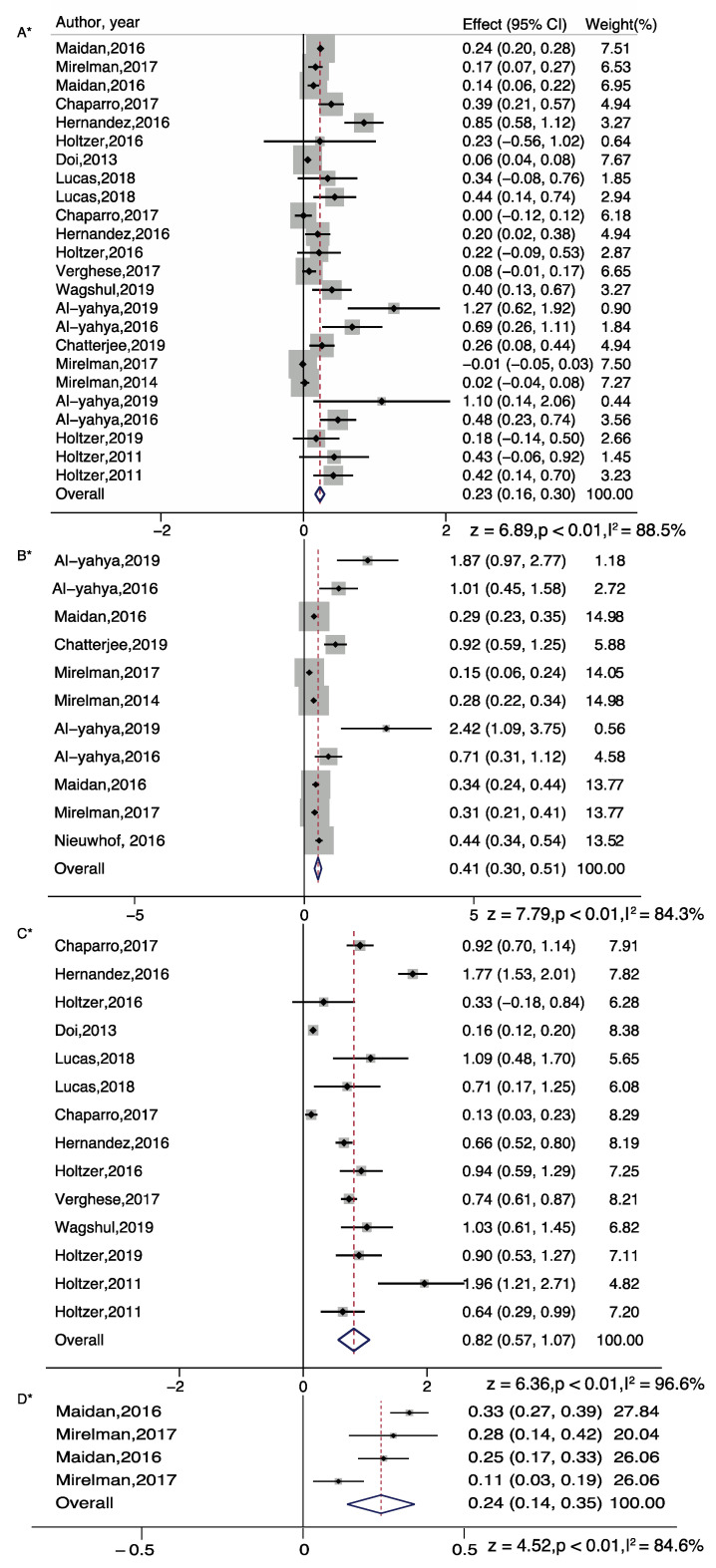
Brain activation differences while doing single task walking (A), serial subtraction task (B), letter generation task (C), or obstacle walking task (D). Note: * represents Random plot meta-analysis [29,30,31,35,36,37,42,44,47,48,50,52,55,56,58,62,63].
Figure 3
Figure 3
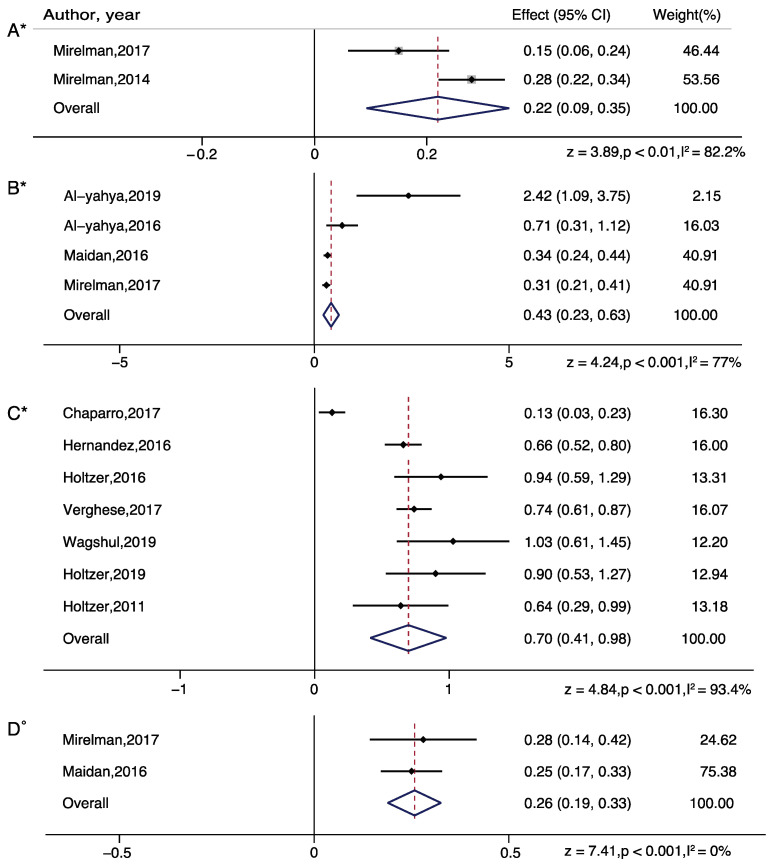
Brain activation differences while doing serial subtraction tasks in healthy young adults (A), and in serial subtraction tasks (B), letter generation tasks (C), or obstacle walking tasks (D) in healthy older adults. Note: ° represents Fixed plot meta-analysis, * represents Random plot meta-analysis [29,30,31,35,36,44,47,48,52,55,56,62].
Figure 4
Figure 4
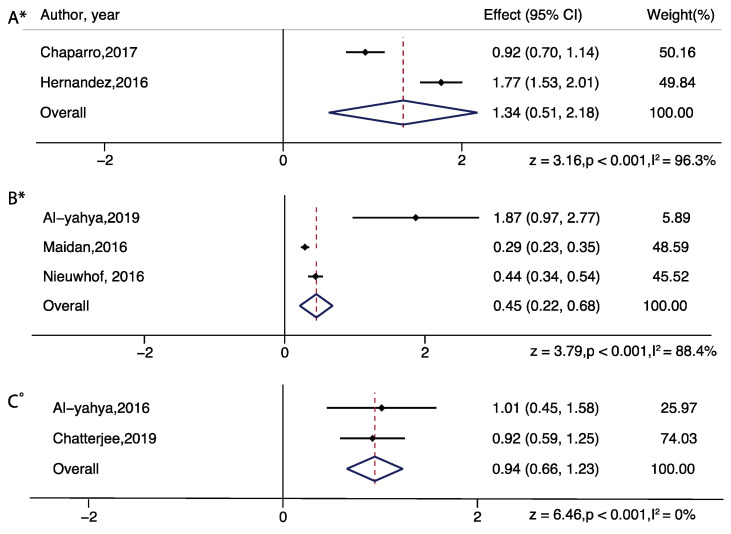
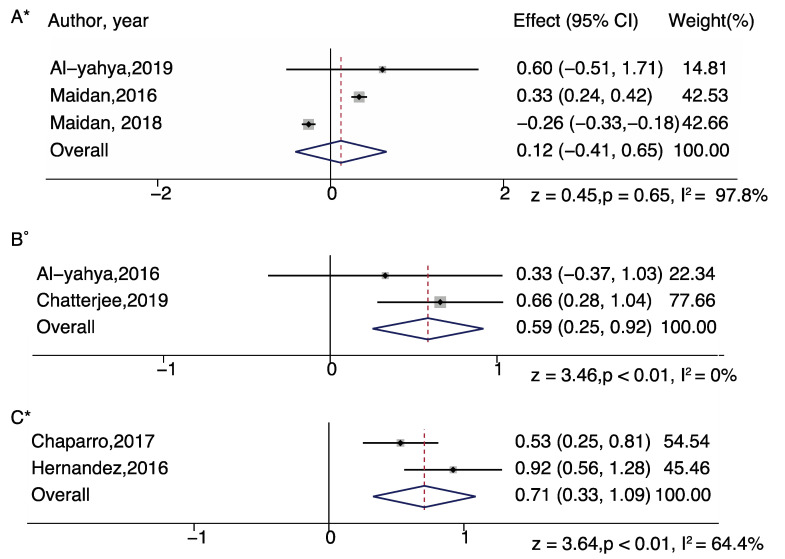
Brain activation differences while doing letter generation task (A) and serial subtraction task (B,C) in older adults with neurological diseases (multiple sclerosis-A, Parkinson’s disease-B, stroke-C). Note: ° represents Fixed plot meta-analysis, * represents Random plot meta-analysis [29,30,44,50,52,62,63].
Figure 5
Figure 5
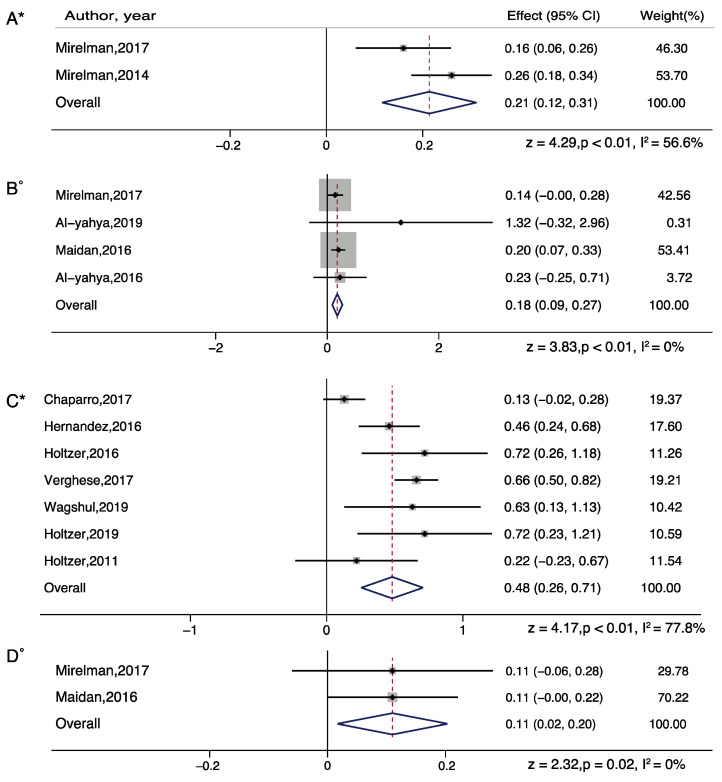
Dual task brain activation differences while doing serial subtraction tasks in healthy young adults (A), and in serial subtraction tasks (B), letter generation tasks (C), and obstacle walking tasks (D) in healthy older adults. Note: ° represents Fixed plot meta-analysis, * represents Random plot meta-analysis [29,30,31,35,36,44,47,48,52,62].
Figure 6
Figure 6
Dual task brain activation differences while doing serial subtraction (Parkinson’s disease—(A) and stroke—(B)), letter generation tasks (multiple sclerosis—(C)) in adults with neurological diseases. Note: ° represents Fixed plot meta-analysis, * represents Random plot meta-analysis [29,30,43,44,52,62,63].
Figure 7
Figure 7
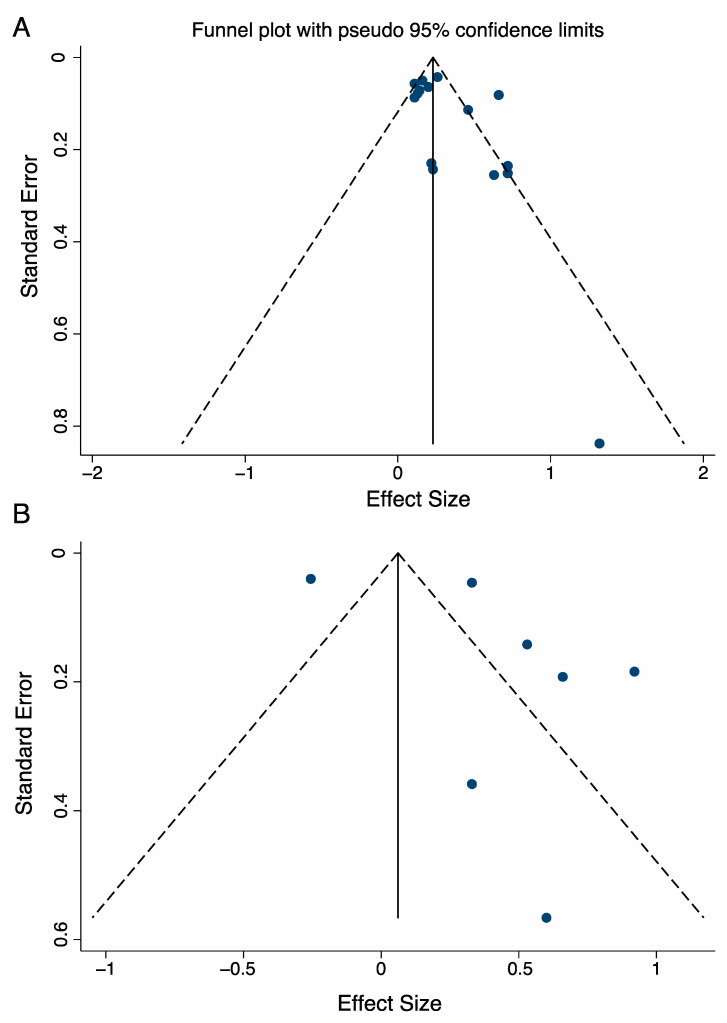
Funnel plots used to examine publication bias in dual task—single task differences in PFC activation in healthy adults (A) and in adults with neurological diseases (B).

References

    1. Hamacher D., Herold F., Wiegel P., Hamacher D., Schega L. Brain Activity during Walking: A Systematic Review. Neurosci. Biobehav. Rev. 2015;57:310–327. doi: 10.1016/j.neubiorev.2015.08.002. - DOI - PubMed
    1. Caetano M.J.D., Menant J.C., Schoene D., Pelicioni P.H.S., Sturnieks D.L., Lord S.R. Sensorimotor and Cognitive Predictors of Impaired Gait Adaptability in Older People. J. Gerontol. Ser. A Biol. Sci. Med. Sci. 2016;72:glw171. doi: 10.1093/gerona/glw171. - DOI - PubMed
    1. Montero-Odasso M., Verghese J., Beauchet O., Hausdorff J.M. Gait and Cognition: A Complementary Approach to Understanding Brain Function and the Risk of Falling. J. Am. Geriatr. Soc. 2012 doi: 10.1111/j.1532-5415.2012.04209.x. - DOI - PMC - PubMed
    1. Holtzer R., Epstein N., Mahoney J.R., Izzetoglu M., Blumen H.M. Neuroimaging of Mobility in Aging: A Targeted Review. J. Gerontol. Ser. A Biol. Sci. Med. Sci. 2014;69:1375–1388. doi: 10.1093/gerona/glu052. - DOI - PMC - PubMed
    1. Cutini S., Moro S.B., Bisconti S. Functional near Infrared Optical Imaging in Cognitive Neuroscience: An Introductory Review. J. Near Infrared Spectrosc. 2012;20:75–92. doi: 10.1255/jnirs.969. - DOI

LinkOut - more resources