Review
. 2021 Feb 26;7(1):24.
doi: 10.3390/gels7010024.

Recently Developed Carbohydrate Based Gelators and Their Applications

Affiliations
Review

Recently Developed Carbohydrate Based Gelators and Their Applications

Joedian Morris et al. Gels. .

Abstract

Carbohydrate based low molecular weight gelators have been an intense subject of study over the past decade. The self-assembling systems built from natural products have high significance as biocompatible materials and renewable resources. The versatile structures available from naturally existing monosaccharides have enriched the molecular libraries that can be used for the construction of gelators. The bottom-up strategy in designing low molecular weight gelators (LMWGs) for a variety of applications has been adopted by many researchers. Rational design, along with some serendipitous discoveries, has resulted in multiple classes of molecular gelators. This review covers the literature from 2017-2020 on monosaccharide based gelators, including common hexoses, pentoses, along with some disaccharides and their derivatives. The structure-based design and structure to gelation property relationships are reviewed first, followed by stimuli-responsive gelators. The last section focuses on the applications of the sugar based gelators, including their utilization in environmental remediation, ion sensing, catalysis, drug delivery and 3D-printing. We will also review the available LMWGs and their structure correlations to the desired properties for different applications. This review aims at elucidating the design principles and structural features that are pertinent to various applications and hope to provide certain guidelines for researchers that are working at the interface of chemistry, biochemistry, and materials science.

Keywords: carbohydrates; drug delivery; hydrogelators; hydrogels; metallogels; monosaccharides; organogelators; stimuli-responsive; supramolecular gels.


Conflict of interest statement

The authors declare no conflict of interest.

Figures
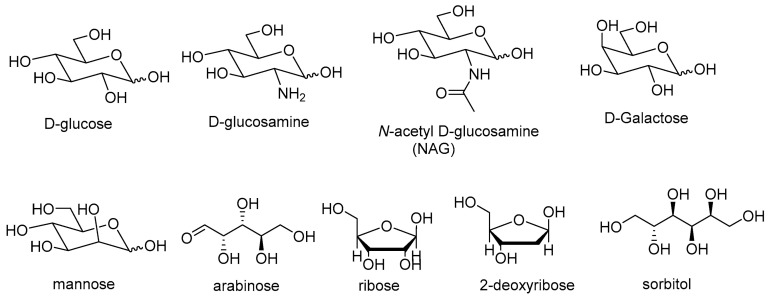
Figure 1
Figure 1
Structures of the sugar starting materials used often for designing low molecular weight gelators (LMWGs).
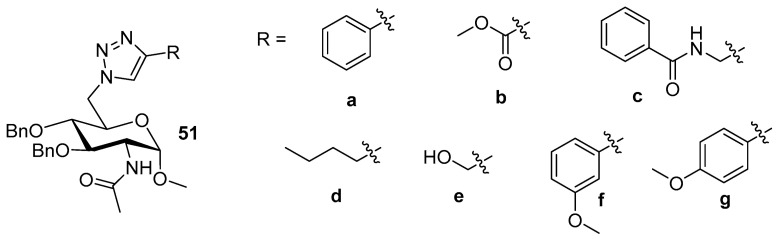
Figure 2
Figure 2
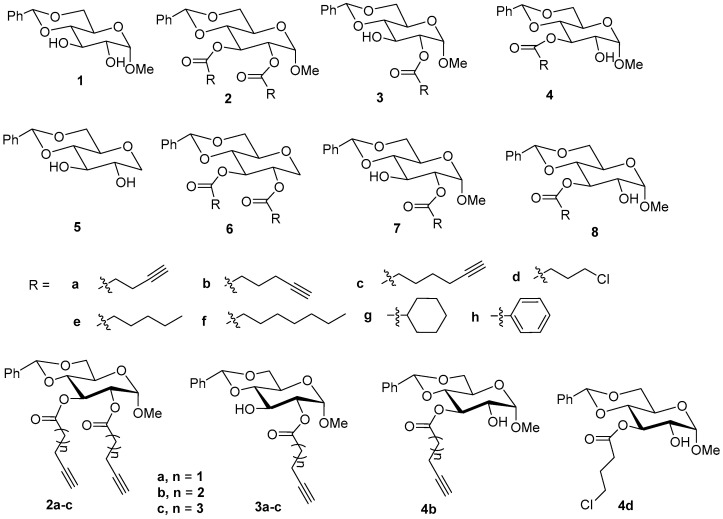
General structures of several classes of glucose ester derivatives as LMWGs [31,32], n represents the number of repeating CH2.
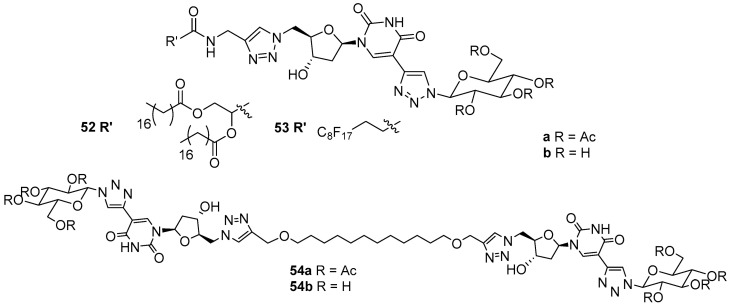
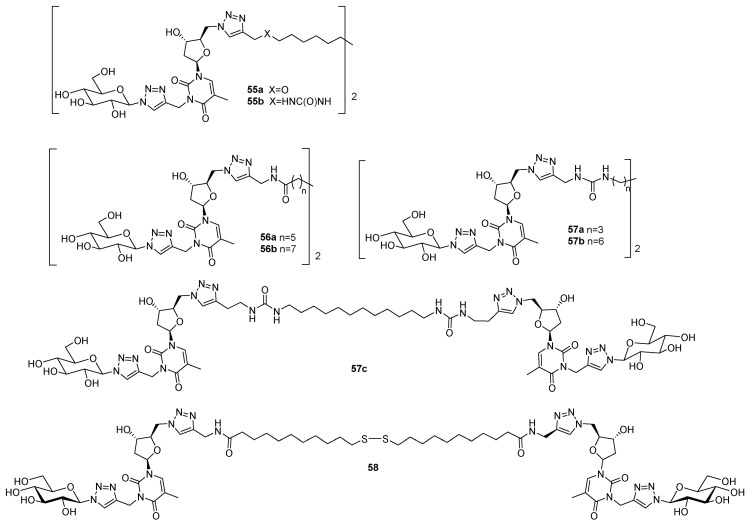
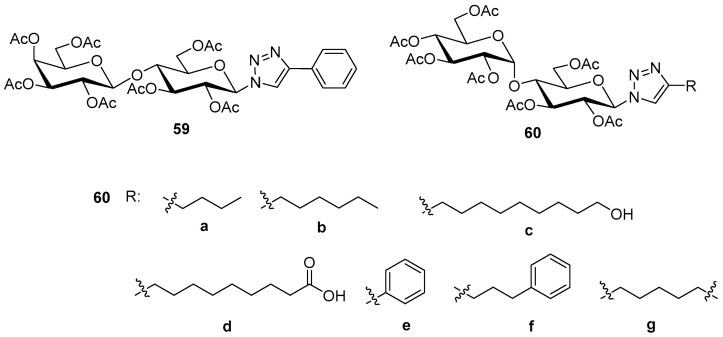
Figure 3
Figure 3
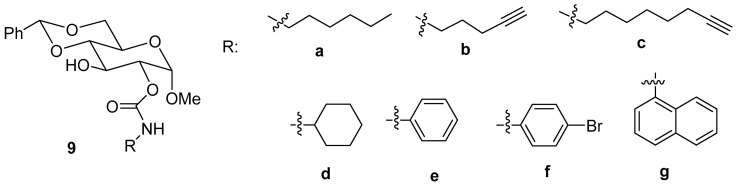
Oxygen linked carbamate derivatives of methyl-a-D-glucopyranoside [34].
Figure 4
Figure 4
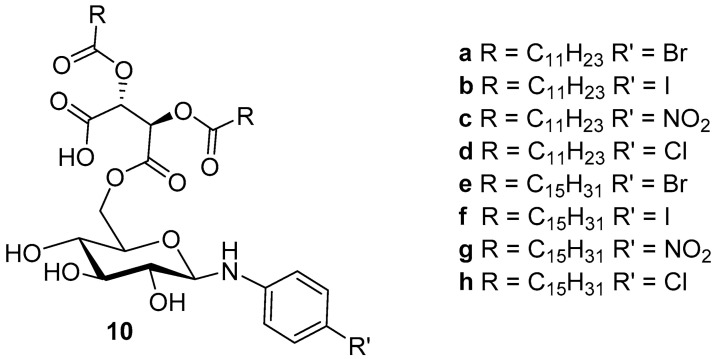
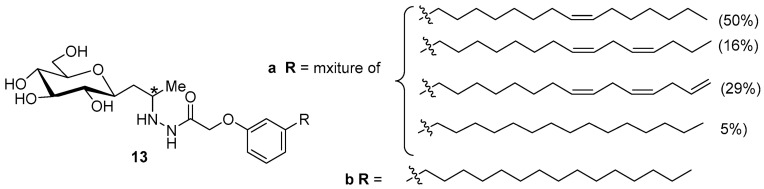
Structures for sugar based glycolipid derivative 10a–h [43].
Figure 5
Figure 5
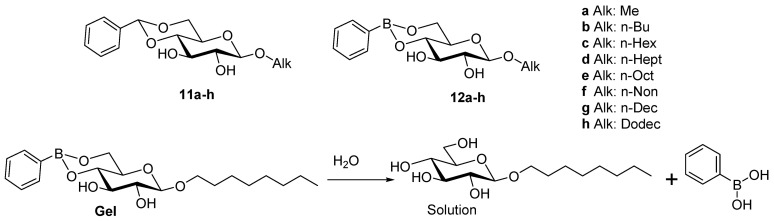
Structures of phenyl boronic ester protected alkyl glucoside derivatives [44].
Figure 6
Figure 6
Sophorolipid-based gelators [46].
Figure 7
Figure 7
Gelators from methyl alpha-D-glucopyranoside [47].
Figure 8
Figure 8
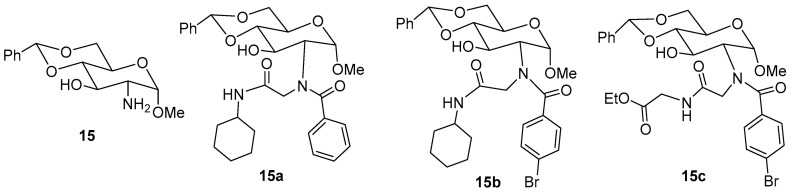
Structure of glucosamine derivative 15 and dipeptoids [37].
Figure 9
Figure 9
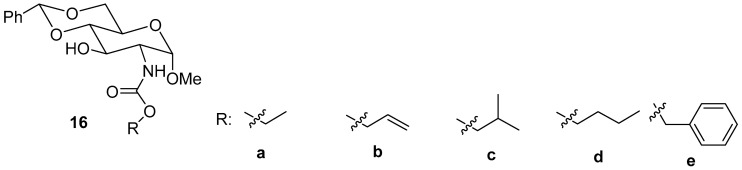
Structures of carbamate derivatives of 4,6-O-benzylidene-methyl-a-D-glucosamine [34].
Figure 10
Figure 10
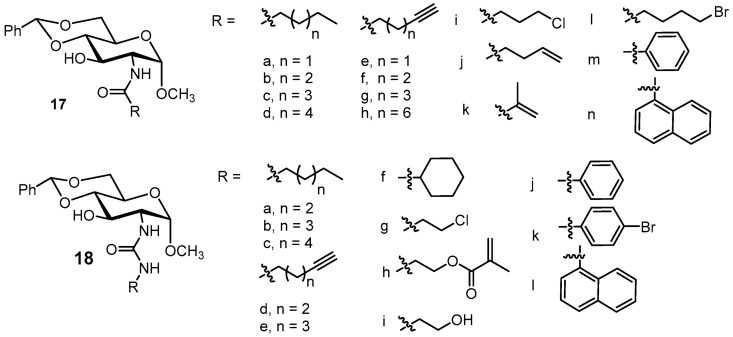
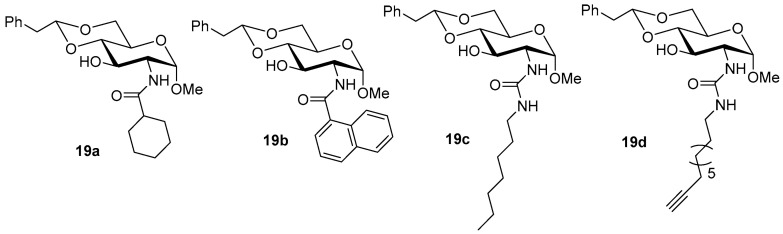
Sugar-based gelators containing amide and urea functions [33], n (in the formula) represents the number of repeating CH2.
Figure 11
Figure 11
Structures of amide derivatives as organogelators and hydrogelators [42].
Figure 12
Figure 12
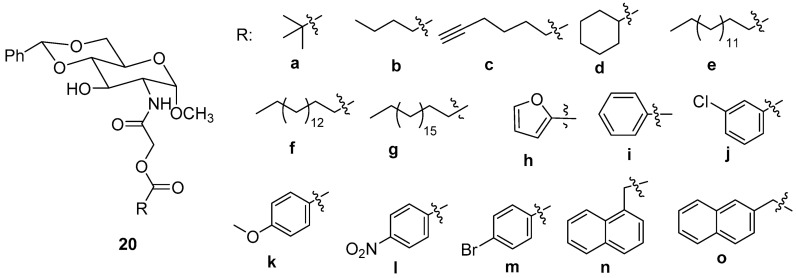
Structures of hybrid ester derivatives from N-acetyl-D-glucosamine [52].
Figure 13
Figure 13
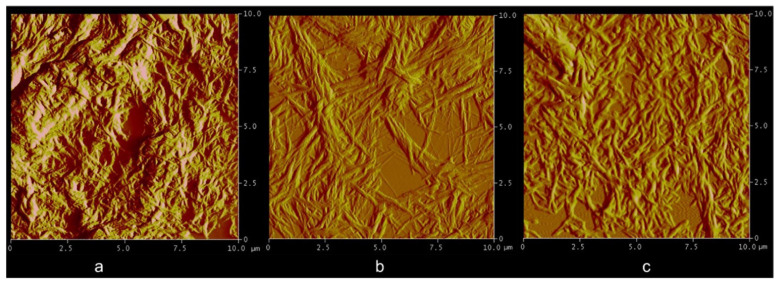
Atomic force microscopy (AFM) phase images of the gels formed by: (a) compound 20c in water at 2.9 mg/mL; (b) compound 20j in DMSO/H2O (v/v 1:2) at 1.4 mg/mL; (c) compound 20l in DMSO/H2O (v/v 1:8) at 2.25 mg/mL with toluidine blue dye (0.031 mg/mL) entrapped. Reprinted with permission from [52]. Copyright 2020 American Chemical Society.
Figure 14
Figure 14
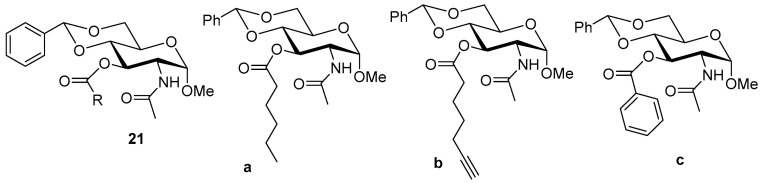
Structures of C-3 ester derivatives of the NAG headgroup [53].
Figure 15
Figure 15
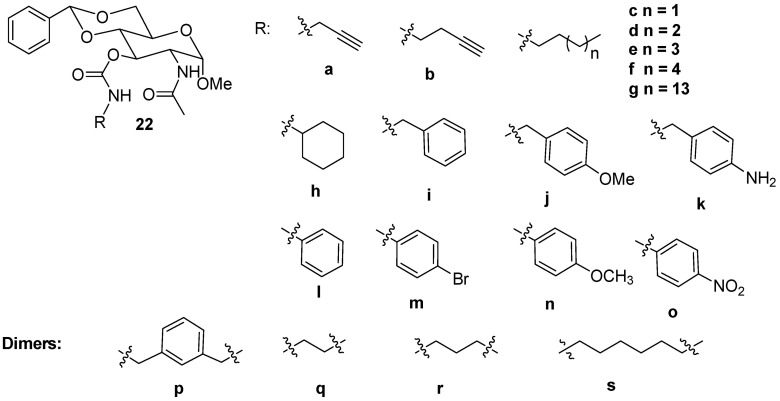
Structures of C-3 carbamates [54], n stands for the number of repeating CH2.
Figure 16
Figure 16
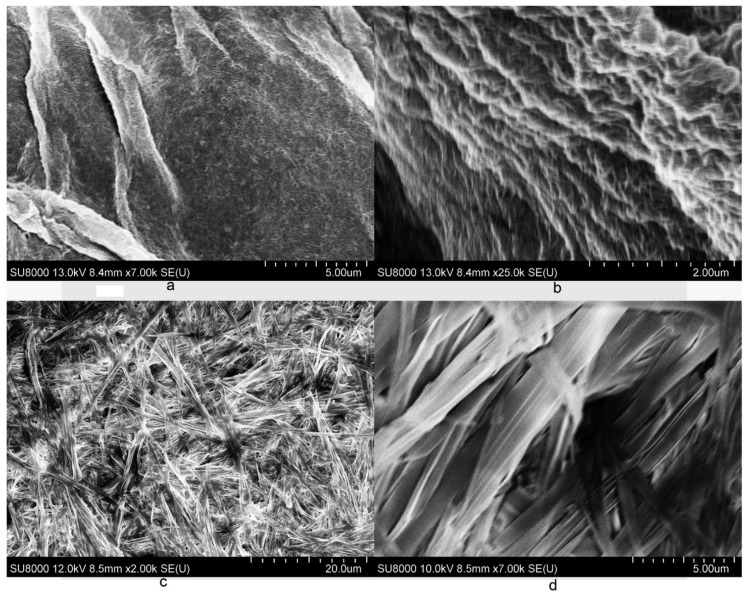
Scanning electron micrographs showing the morphology of two gels: (a and b) compound 22i in EtOH:H2O (v/v 1: 1) at 2.5 mg mL−1, (c and d) compound 22j in EtOH:H2O (v/v 1: 1) at 4.0 mg mL−1. Reprinted with permission from [54]. Copyright 2020 The Royal Society of Chemistry under the creative commons license.
Figure 17
Figure 17
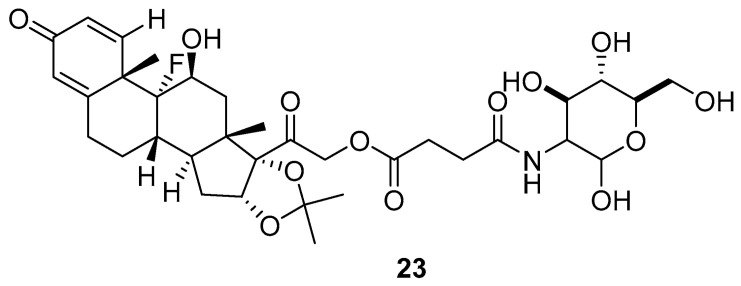
Triamcinolone acetonide-based gelators with a sugar moiety [55].
Figure 18
Figure 18
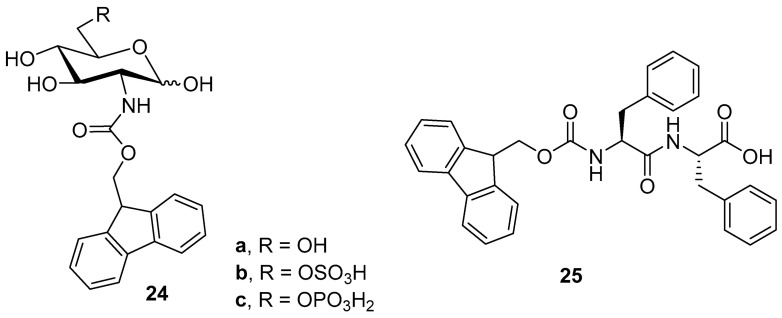
Structures of carbohydrate amphiphiles and a peptide amphiphilic molecule [59,60].
Figure 19
Figure 19
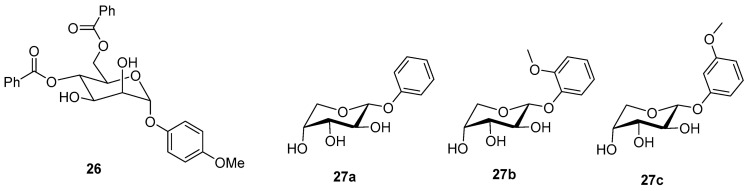
Structures of D-mannose derivative 26 and several arabinose derivatives 27 [61,62].
Figure 20
Figure 20
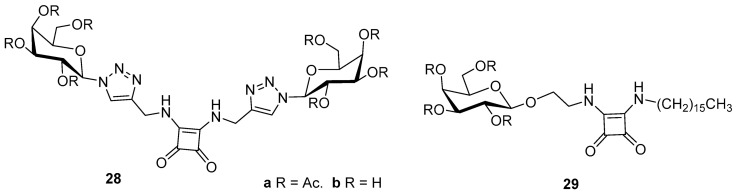
Structures of novel glycosyl squaramide supramolecular gelators [63].
Figure 21
Figure 21
Structure of poly aryl ether glucose cored dendron-based LMWGs [64].
Figure 22
Figure 22
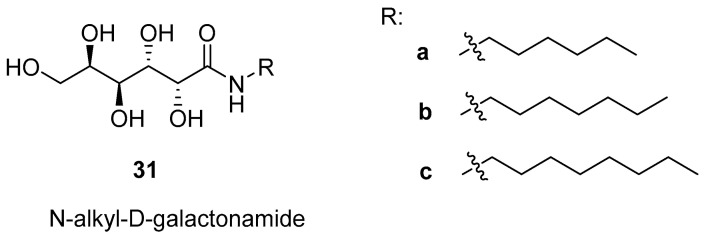
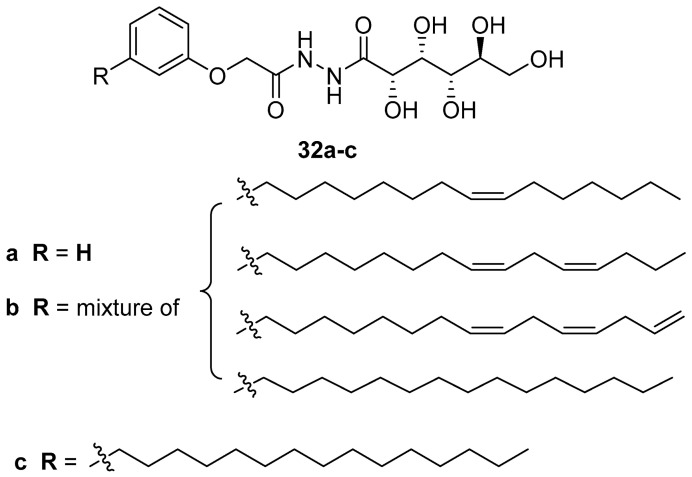
Galactonamide based gelators [65,66,67].
Figure 23
Figure 23
Gluconamide-based gelators [68].
Figure 24
Figure 24
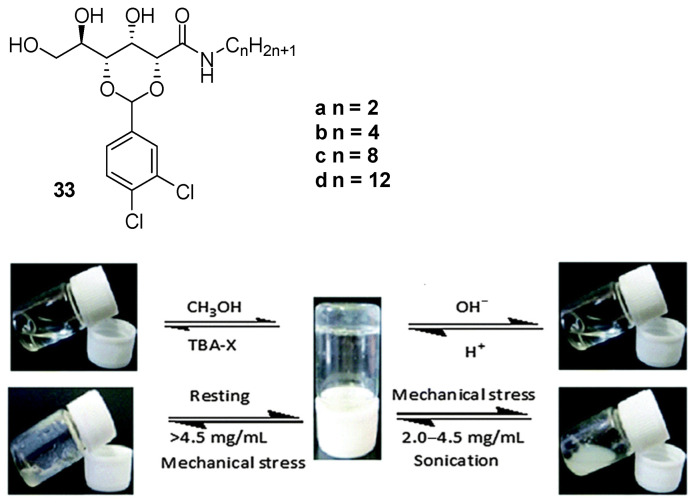
D-gluconic acetal-based gelators 33 and their response to different stimuli. Adapted with permission from [69]. Copyright 2016 The Royal Society of Chemistry.
Figure 25
Figure 25
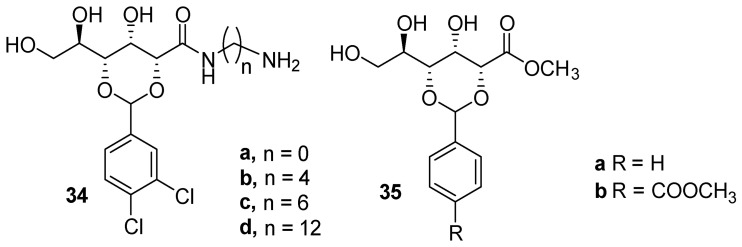
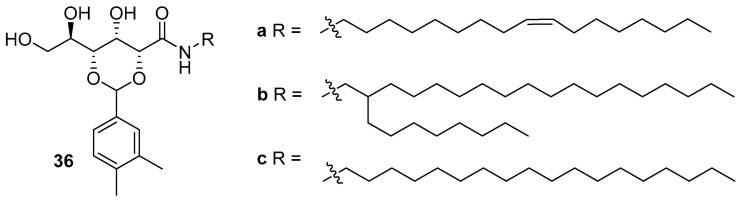
Structures of D-gluconic acetal-based gelators [71].
Figure 26
Figure 26
Chemical structures of other reported D-gluconic acetal based gelators [72].
Figure 27
Figure 27
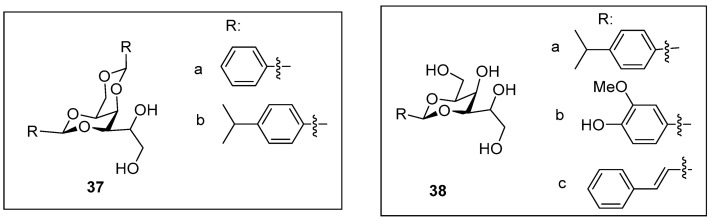
Structures of sorbitol diacetals 37 and monoacetals 38 [74].
Figure 28
Figure 28
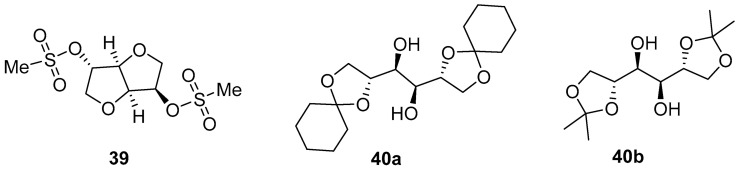
Structures of isosorbide derivative 39 and D-mannitol derivatives 40a–b [75].
Figure 29
Figure 29
Xylitol based organogelators [76].
Figure 30
Figure 30
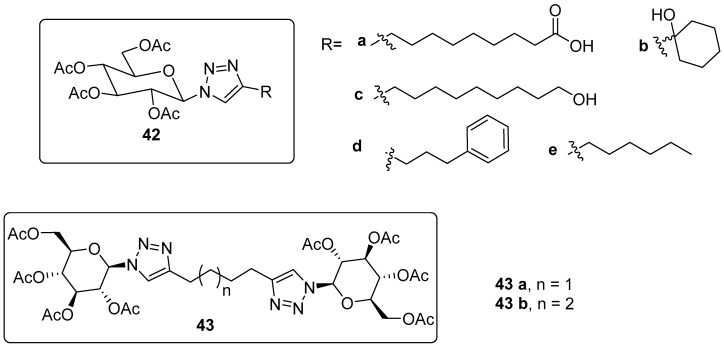
Structures of glucosyl triazole-based gelators [39].
Figure 31
Figure 31
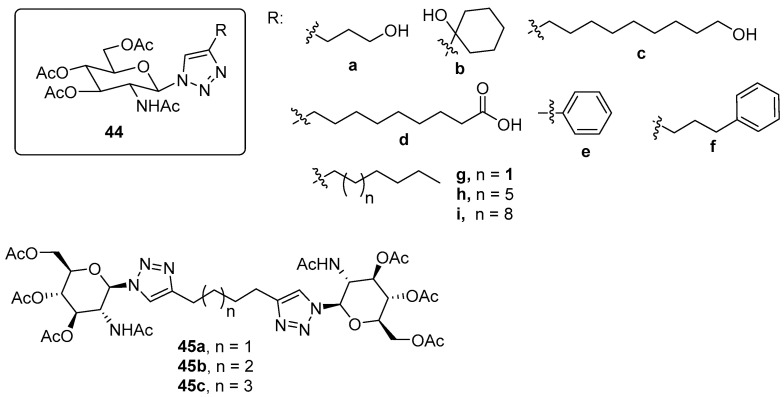
D-glucosamine triazole derivatives synthesized by the copper (I) catalyzed azide alkyne cycloaddition reaction [36], n represents the number of CH2 unit.
Figure 32
Figure 32
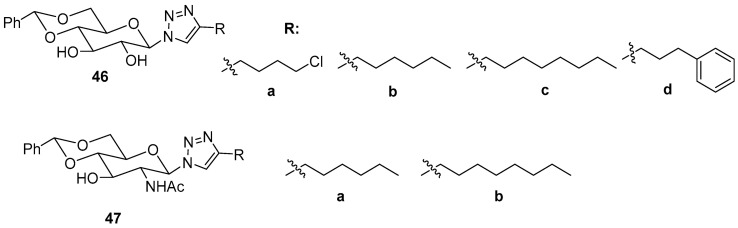
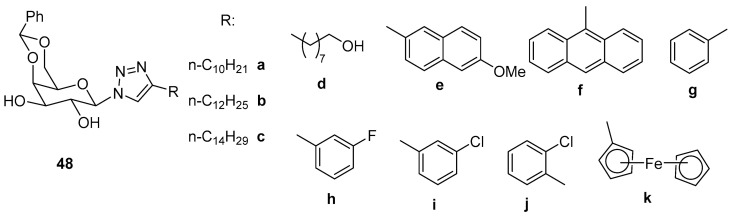
Structures of the benzylidene acetal protected β-triazolyl glucosides as gelators [79].
Figure 33
Figure 33
Structures of 4,6-O-benzylidene–galactopyranoside gelators [80].
Figure 34
Figure 34
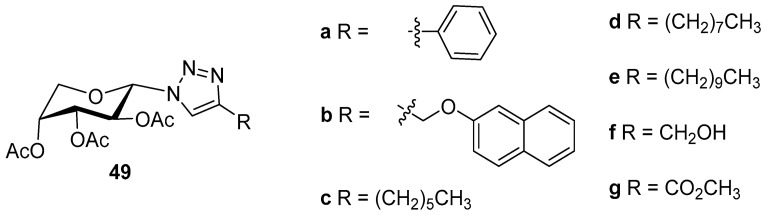
Structures of a series of triazolylarabinoside derivatives [81].
Figure 35
Figure 35
Other gelators with a triazole backbone [40], n stands for the number of repeating CH2.
Figure 36
Figure 36
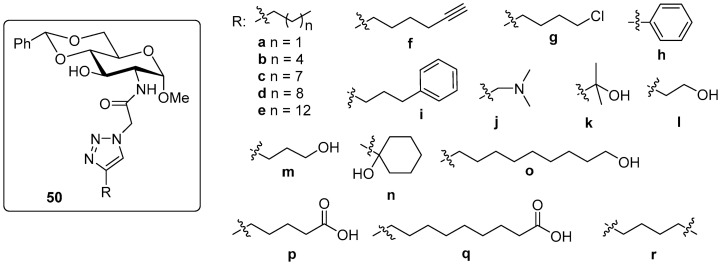
Triazole linked N-acetylglucosamine-based gelators [82].
Figure 37
Figure 37
Uracile based glycosyl-nucleoside-lipids amphiphiles and bolaamphiphiles [83].
Figure 38
Figure 38
Structures of amide and urea containing bolaamphiphiles [84,85].
Figure 39
Figure 39
Structures of peracetylated lactosyl and maltosyl triazole derivatives [41].
Figure 40
Figure 40
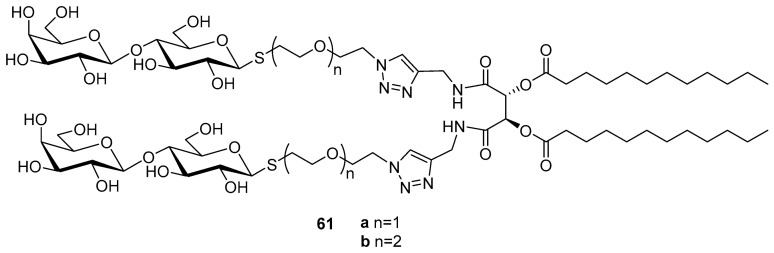
Structures of thiolactose-based amphiphilic gelators [86], n is the number of repeating unit.
Figure 41
Figure 41
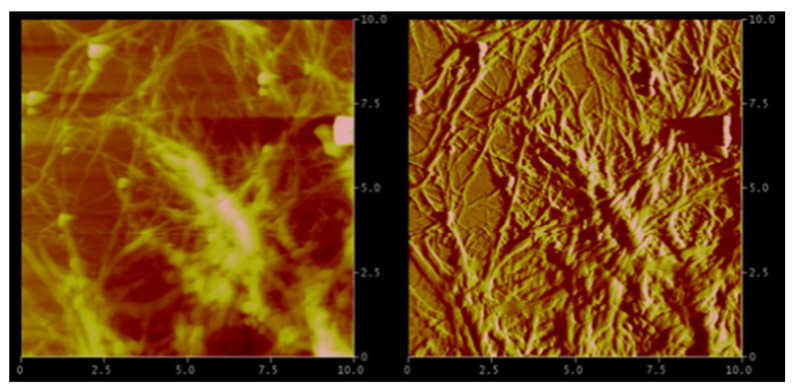
AFM images of a 10 mg/mL hydrogel from 62 (left, height image; right, phase image) [87].
Figure 42
Figure 42
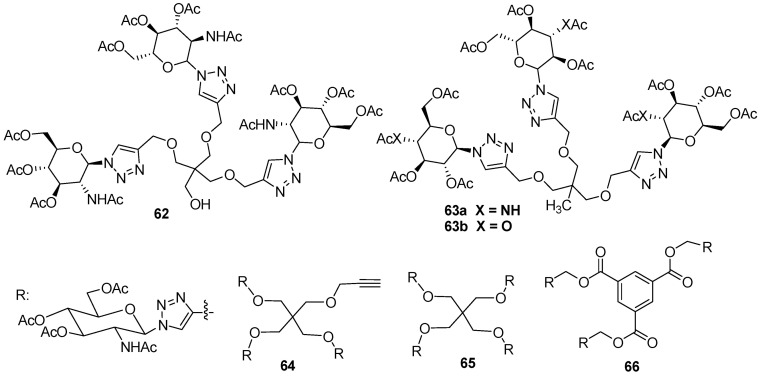
Structures of several glycoclusters that are effective LMWGs [87,88].
Figure 43
Figure 43
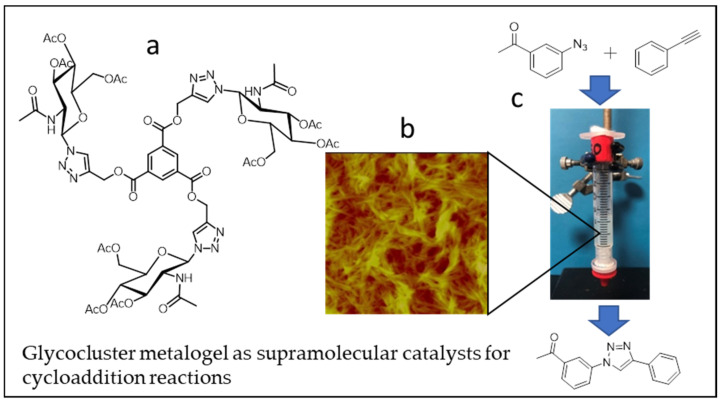
(a) Structure of the trimer glycocluster 66; (b) AFM image of the gel formed by 66 in 1:2 ethanol/water (v/v); (c) A copper metallogel column formed by 66 in 1:2 ethanol/water (v/v) was transferred to a syringe, which was used as a reaction vessel. This figure is adapted from [88] with modifications.
Figure 44
Figure 44
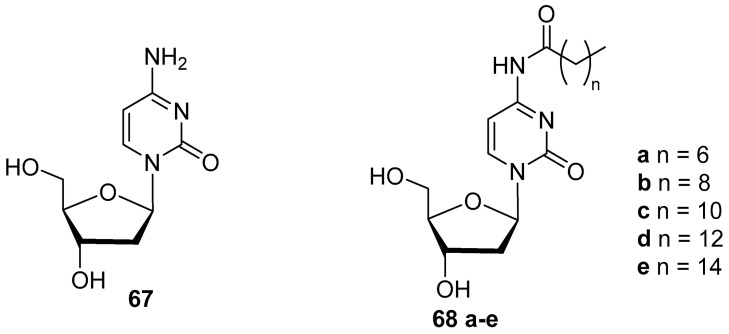
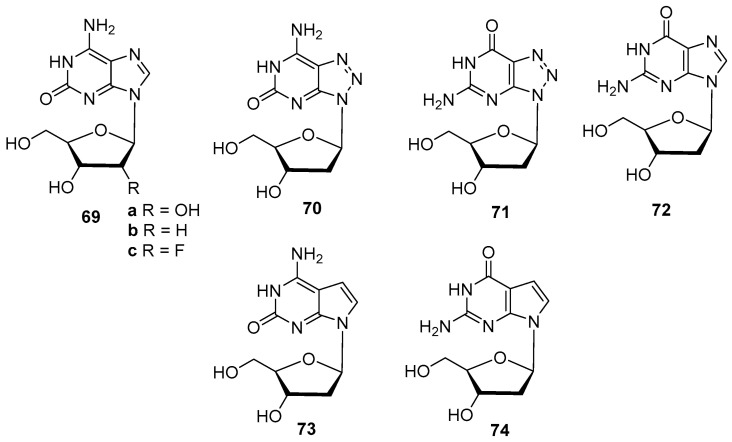
Cytosine and cytosine-based gelators [91,92].
Figure 45
Figure 45
Nucleoside derivatives based on guanosine analogs [93].
Figure 46
Figure 46
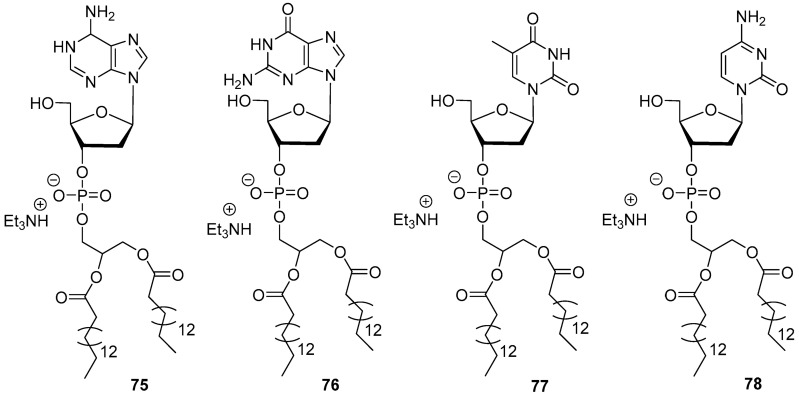
Cytidine- and guanosine-based nucleotide–lipids [94].
Figure 47
Figure 47
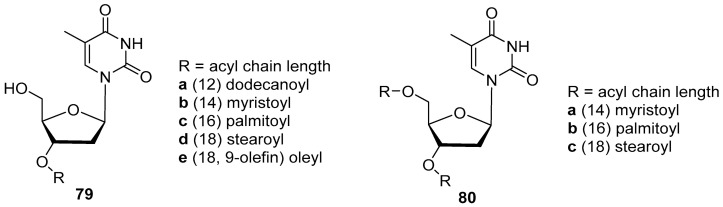
Structures of thymidine-based gelators [95].
Scheme 1
Scheme 1
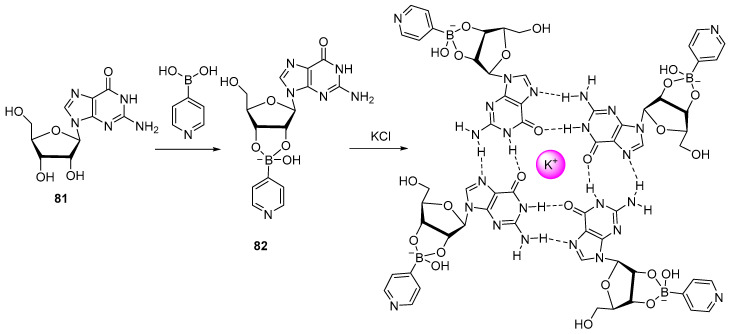
The synthesis and self-assembly of a nucleoside-based gelator with potassium ion [96].
Figure 48
Figure 48
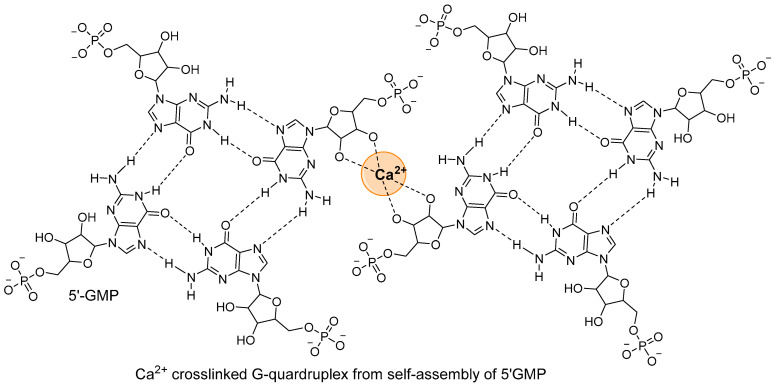
Guanosine monophosphate and the self-assembled G-quadruplex with Ca2+ [97].
Figure 49
Figure 49
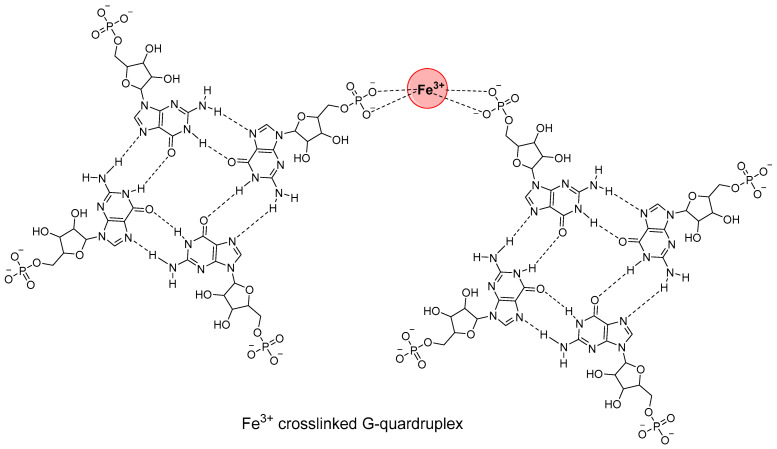
The self-assembled G-quadruplex with Fe3+ [97].
Figure 50
Figure 50
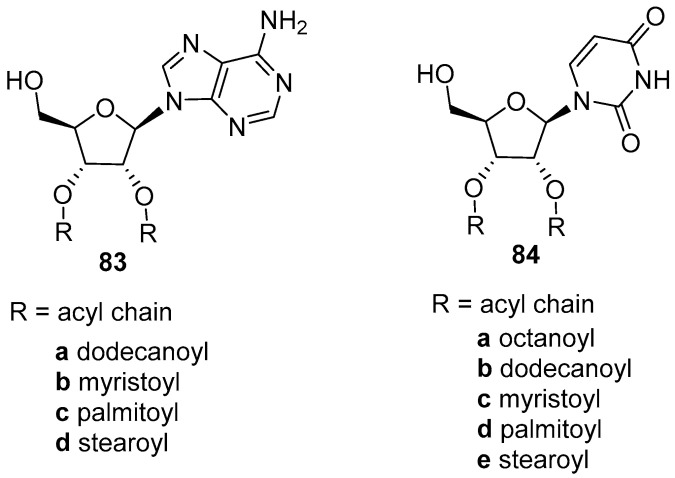
Adenosine nucleolipid derivatives 83a-d and uridine nucleolipid derivatives 84a–e [98].
Figure 51
Figure 51
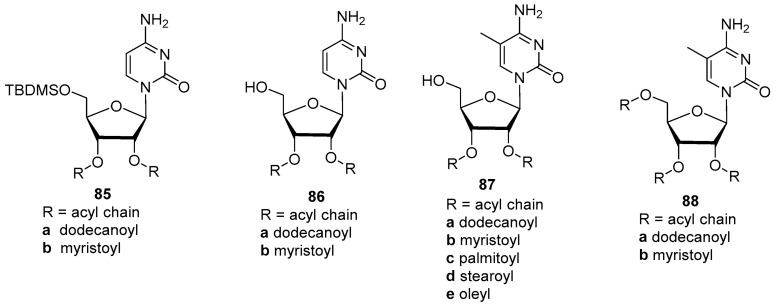
Conjugated cytidine and ribothymidine derivatives [99].
Figure 52
Figure 52
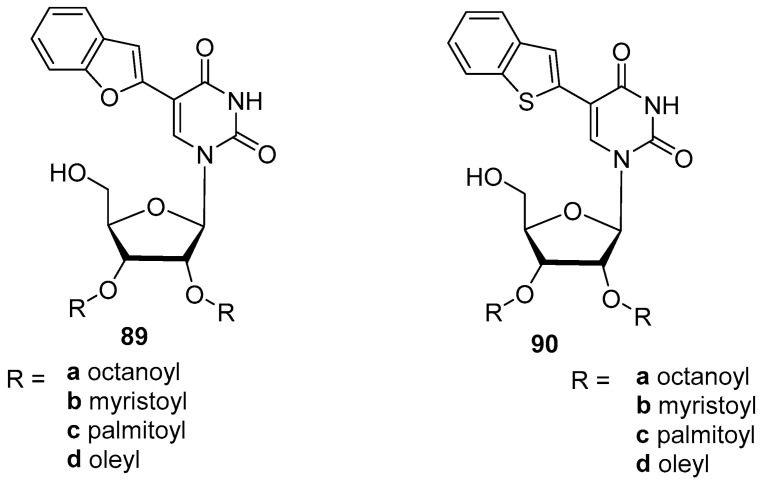
5-Benzofuran and 5-benzothiophene based nucleolipid gelators derived from uracil [100].
Figure 53
Figure 53
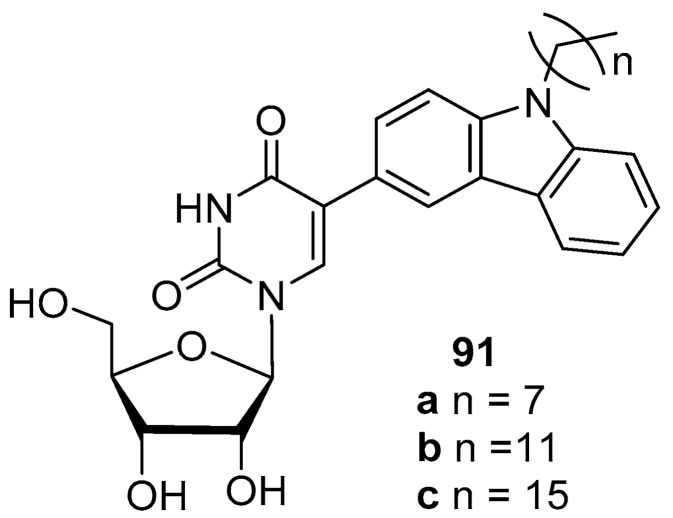
Nucleosides functionalized with carbazole [101].
Figure 54
Figure 54
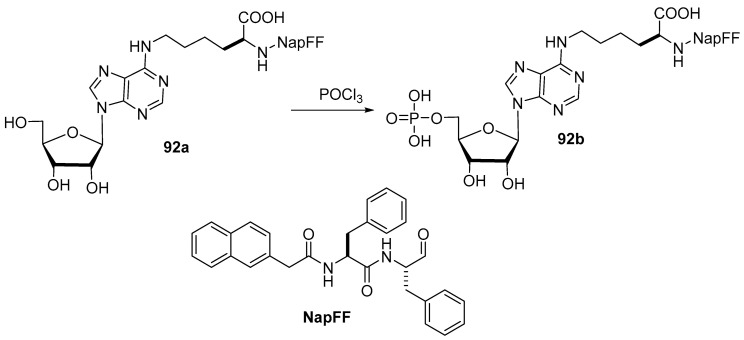
Synthetic route for the adenosine monophosphate-based gelator [102].
Figure 55
Figure 55
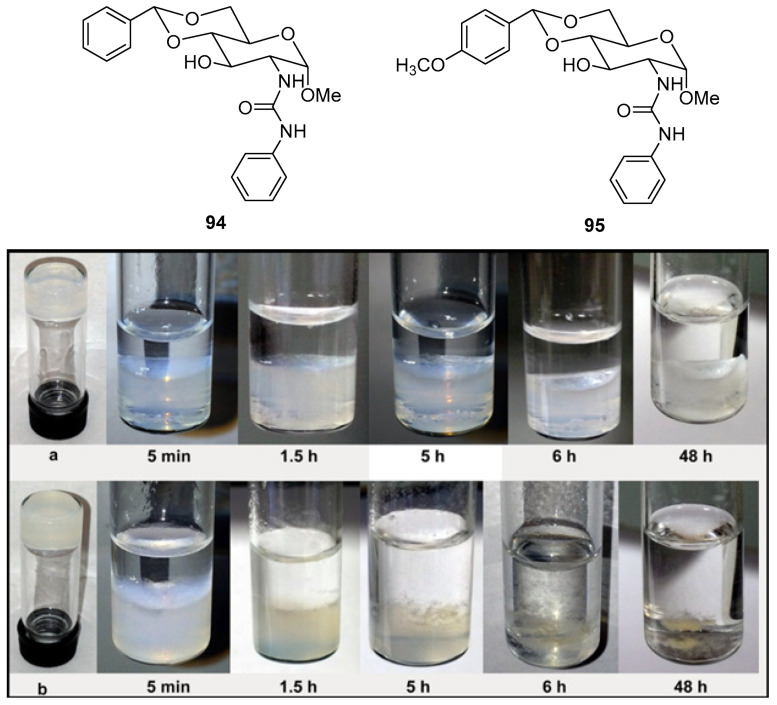
Photographs of respective gels in acidic conditions. (a) A gel formed by compound 94 in DMSO/H2O (1:2) at 5 mg/mL. (b) A gel formed by compound 95 in DMSO/H2O (1:2) at 5 mg/mL. Reprinted with permission from [35]. Copyright 2014 Beilstein-Institute.
Figure 56
Figure 56
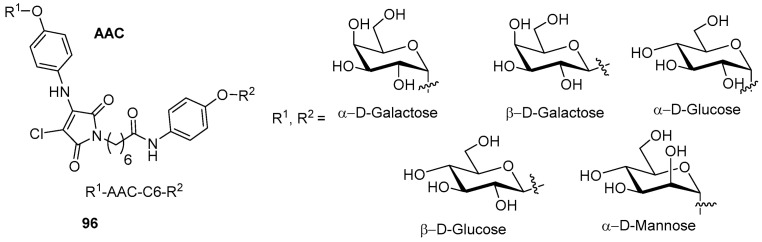
Structures of N-alkyl-2-anilino-3-chloromaleimide (AAC) containing bola-amphiphilic glycolipids with peripheral sugar units [111].
Figure 57
Figure 57
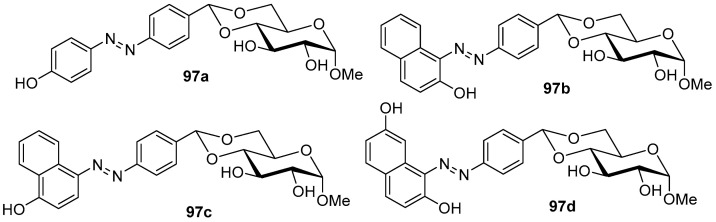
Structures of sugar azobenzene-derived LMWGs [112].
Figure 58
Figure 58
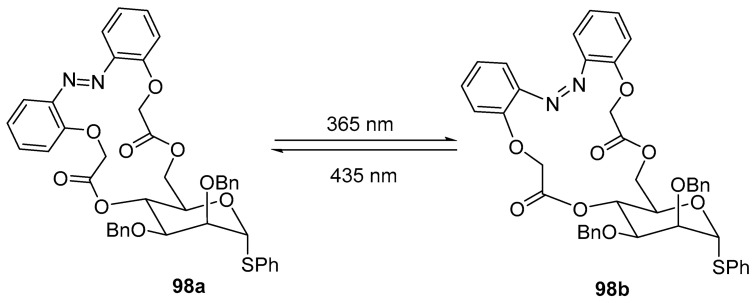
The cis-trans isomerization of the macrocyclic compound [113].
Figure 59
Figure 59
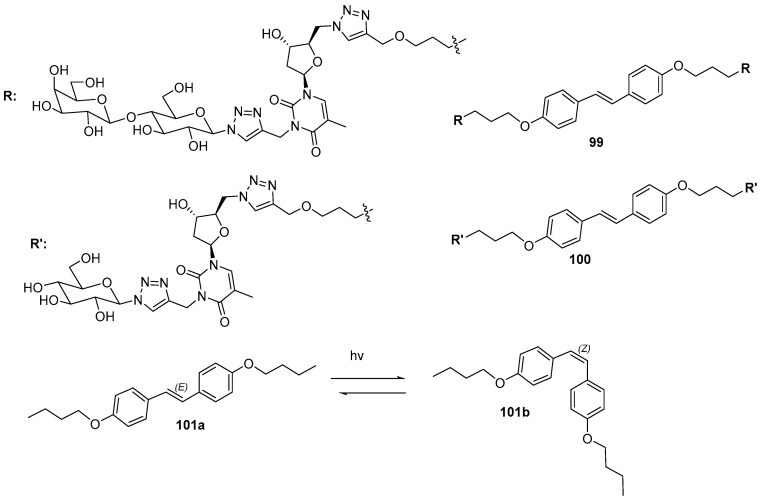
Structures of light-sensitive glycosylated nucleoside-based bolaamphiphiles (GNBAs) 99–100 [114].
Figure 60
Figure 60
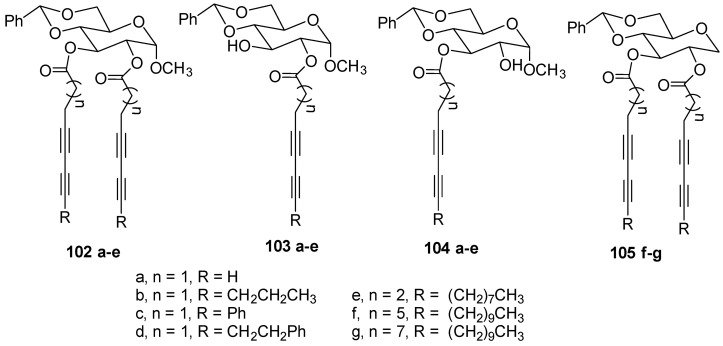
Structures of diacetylene containing glycolipids from D-glucose [30,31], n is the number of repeating CH2.
Figure 61
Figure 61
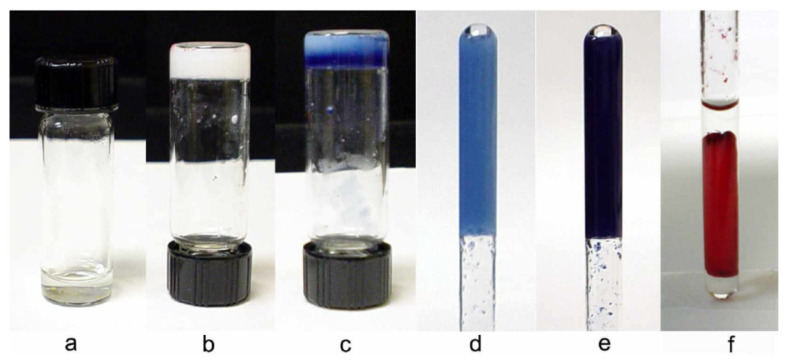
The gel formed by compound 105f in ethanol at below10 mg/mL. (a) a clear solution of the heated gelator, (b) a stable gel after cooling to room temperature, (c) the gel turned blue after irradiation of UV lamp from the top of the glass vial, (d) the gel was transferred to a quartz tube and irradiated for 1 min, (e) the same gel turned dark blue after UV treatment for 3 min, (f) the red gel was obtained by heating the gel in (e). Reprinted with permission from [31]. Copyright 2011 Beilstein-Institut.
Figure 62
Figure 62
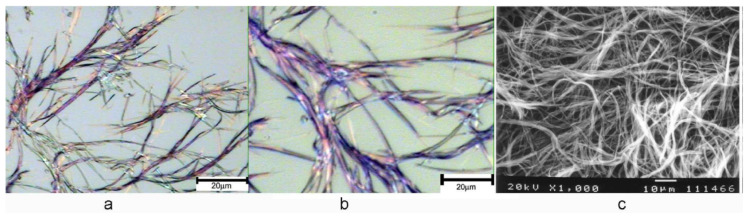
Optical micrographs of the ethanol gel in Figure 61 by compound 105f under bright field (a,b) and scanning electron micrograph (c). These gels were prepared by transferring the ethanol gel after UV treatment for 3 min. Reprinted with permission from [31]. Copyright 2011 Beilstein-Institut.
Figure 63
Figure 63
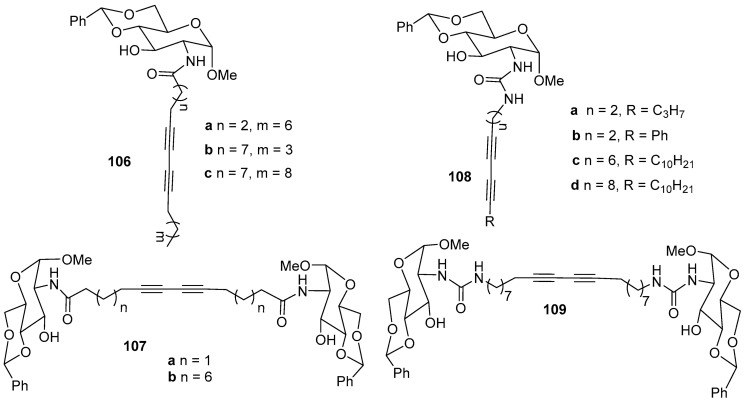
Structures of diacetylene containing amide and urea derivatives [38], n and m represent the number of repeating CH2 unit.
Figure 64
Figure 64
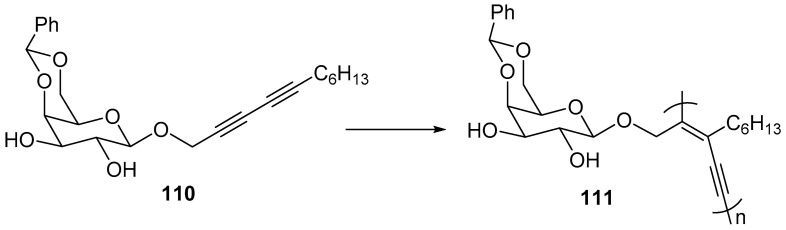
Diacetylene and glyco-polymer-based gelators [115], n represents the number of repeating units.
Figure 65
Figure 65
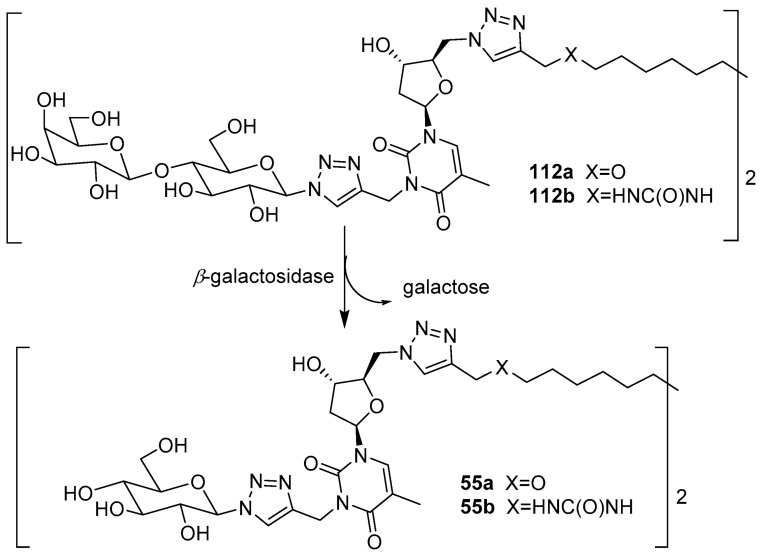
Structures of glyconucleo-bolaamphiphiles [118].
Figure 66
Figure 66
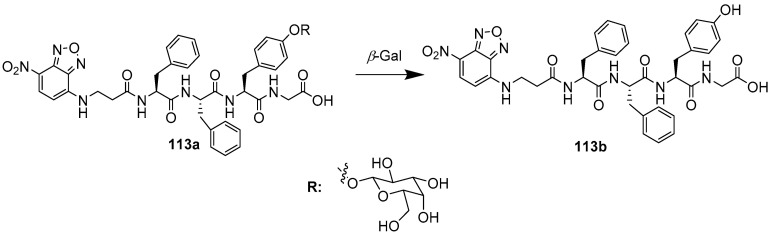
Gelator precursor for β-galactosidase [119].
Figure 67
Figure 67
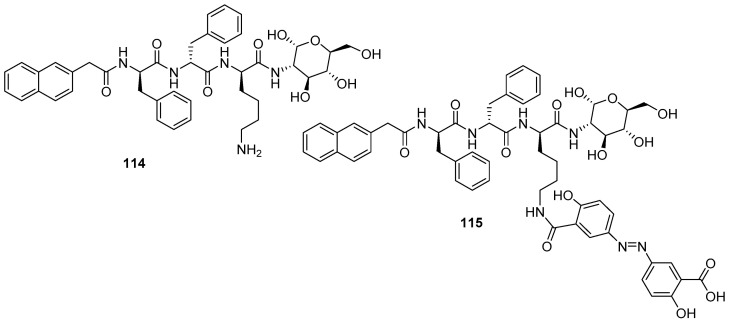
Structure of glycoconjugates 114 and 115.
Figure 68
Figure 68
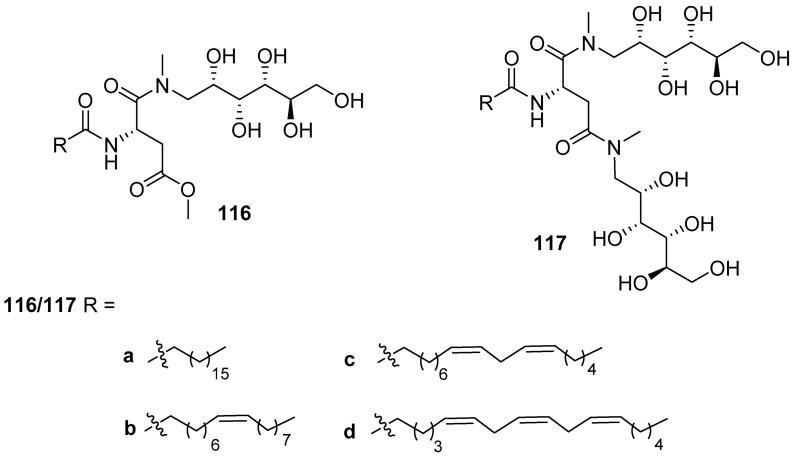
Structures of eight glycolipids containing aliphatic tails with increasing degree of unsaturation [123].
Figure 69
Figure 69
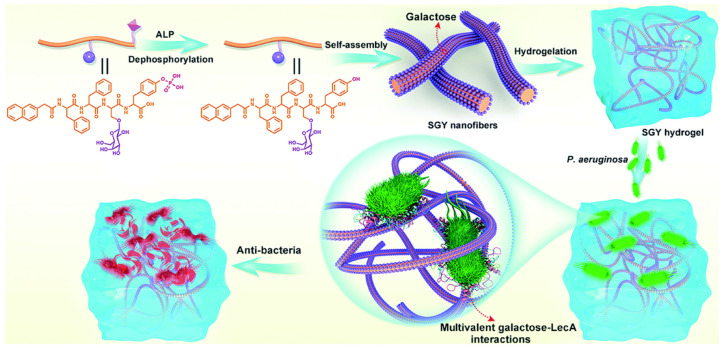
Enzyme instructed self-assembly and antibacterial properties of a galactose-based gelator. Reprinted with permission from [124]. Copyright 2020 Royal Society of Chemistry under the creative commons license.
Figure 70
Figure 70
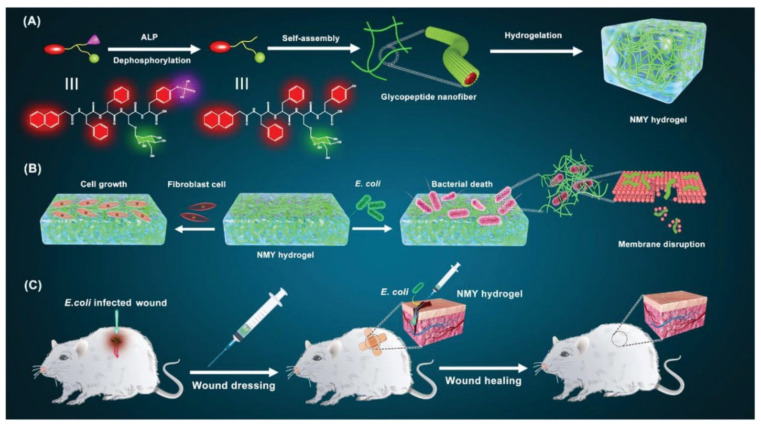
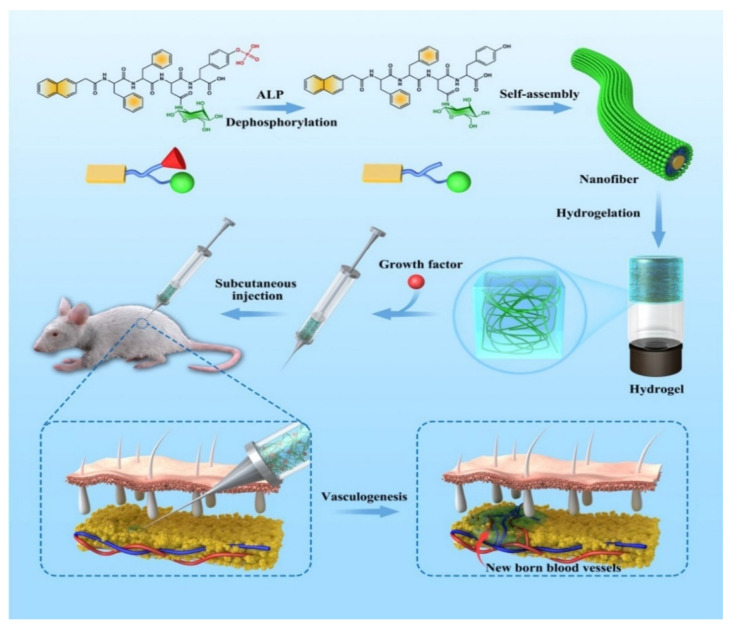
Enzyme instructed self-assembly of a hydrogelator and its applications. (a) Enzyme instructed self-assembly of the glycopeptide gelator forming a fibrous network within the hydrogel; (b) Impact of the hydrogel on the growth of fibroblast cells and E. coli; (c) Prospective usage of the hydrogel for wound healing applications in a mouse model. Reprinted with permission from [125]. Copyright 2019 Jon Wiley and Sons, Inc.
Figure 71
Figure 71
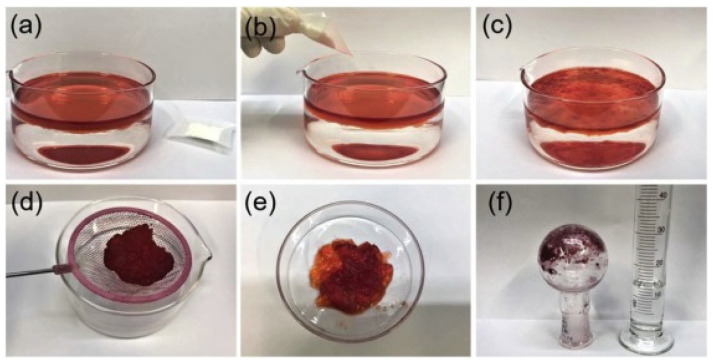
Process of solidifying and removing toluene from an oil-water mixture: (a) Aqueous biphasic mixture of toluene, dyed with Disperse Red 152; (b) Addition of the powdered gelator; (c) Instantaneous gelation of the toluene layer; (d) Removal of the solidified toluene layer; (e) Toluene gel after removal; (f) Graduated cylinder containing the recovered toluene and recovered gelator (separated by vacuum distillation). Reprinted with permission from [72]. Copyright (2020) Elsevier.
Figure 72
Figure 72
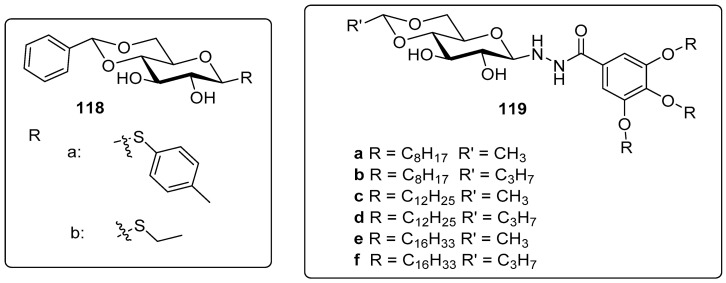
Structure of D-glucose acetal-based gelators 118 and 119 [129,130].
Figure 73
Figure 73
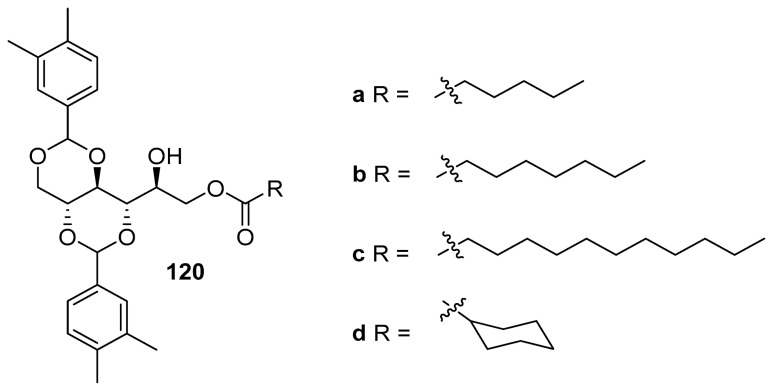
Sorbitol based supramolecular gelator [131].
Figure 74
Figure 74
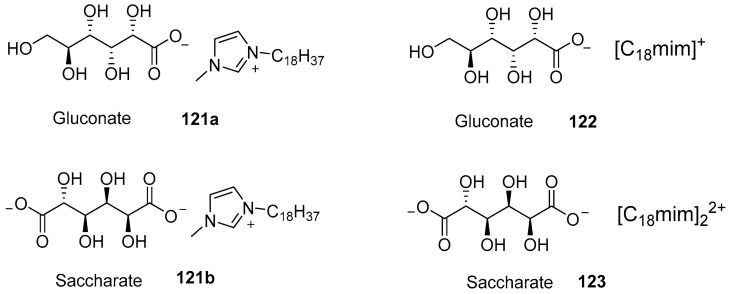
Carbohydrate salt-based derivatives [132].
Figure 75
Figure 75
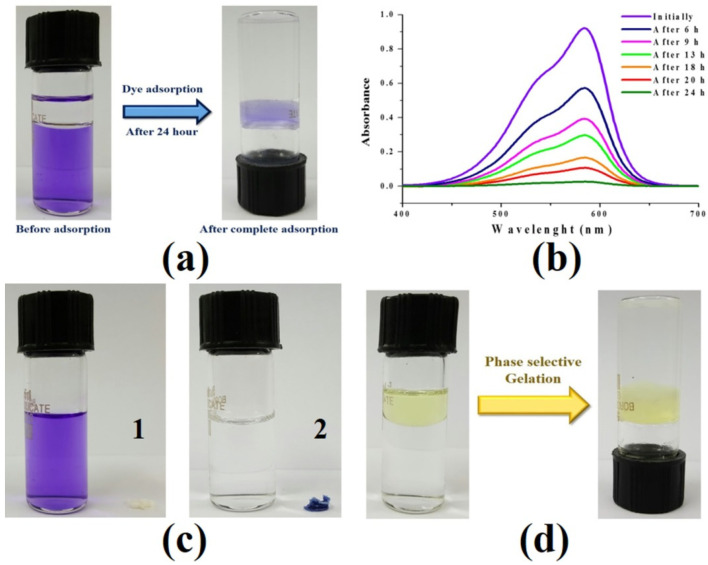
(a) Phase selective gelation (toluene/water) followed by absorption of dye from the aqueous layer; (b) UV-vis spectra of dye absorption over time; (c) Aqueous methyl violate solution (0.02 mM) (left) and the solution after the addition of a xerogel made in toluene (right); (d) Phase selective gelation of a diesel-water mixture. Reprinted with permission from [61]. Copyright 2017 John Wiley & Sons, Inc. (Hoboken, NJ, USA).
Scheme 2
Scheme 2
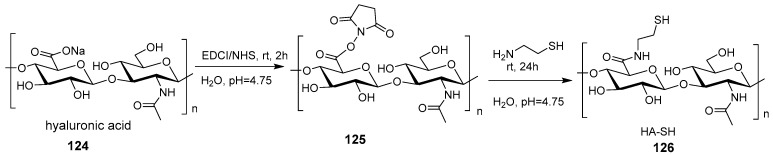
Synthesis of a thiolated hyaluronic acid copolymer for drug delivery, EDCI: 1-ethyl-3-(3-dimethyllaminopropyl)carbodiimide hydrochloride, NHS: N-hydroxysuccinimide [137], n represents the number of repeating units.
Figure 76
Figure 76
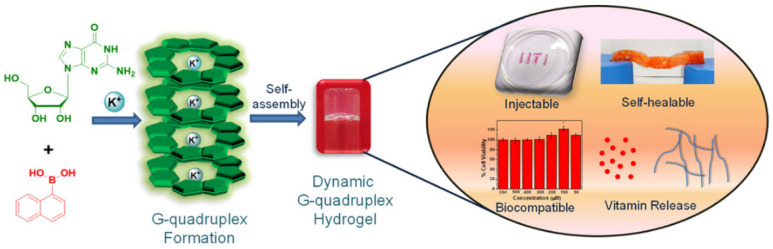
G-Quadruplex formation of a cytidine-based gelator and its features. Reprinted with permission from [138]. Copyright 2020 American Chemical Society.
Figure 77
Figure 77
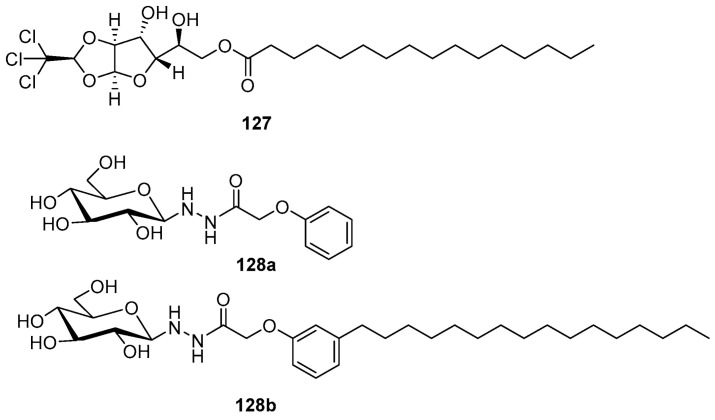
Gelators for antibacterial and wound healing applications [139,140,141].
Figure 78
Figure 78
Schematic illustration of the glycopeptide self-assembly and its utilization as a cell growth medium. Reprinted with permission from [152]. Copyright 2020 American Chemical Society.
Figure 79
Figure 79
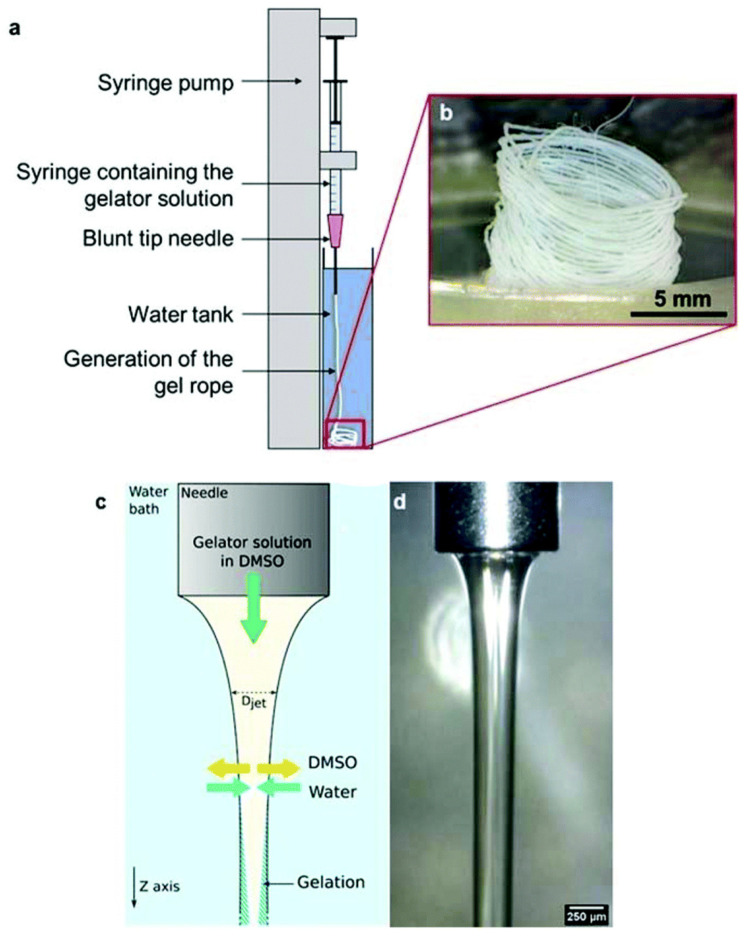
(a) Apparatus setup for wet spinning gel. (b) Magnification of the coiled gel filament after extrusion, gelator solution: 4 wt % 31b solution in DMSO (50 μL min−1, 20 G needle, ID 600 μm. (c) Schematic explanation of the wet spinning method. (d) Image of the DMSO jet after escaping the needle at a speed of 30 μL min−1. Reprinted with permission from [66]. Copyright 2019 Royal Society of Chemistry under the creative commons license.
Figure 80
Figure 80
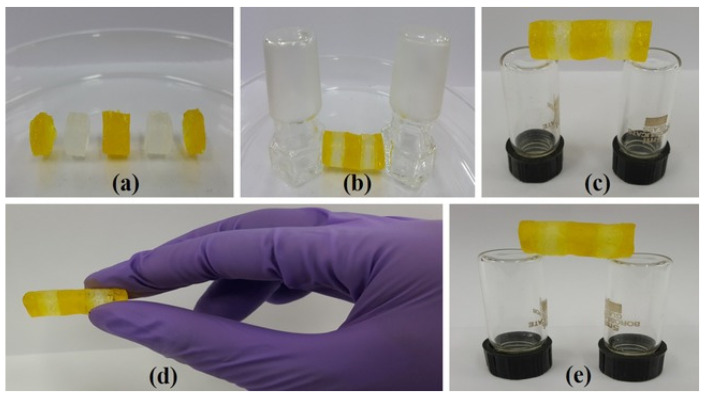
Mesitylene gels at 0.3% w/v. (a) Pieces of doped and undoped gel in alternating order; (b) Compressing the pieces to promote self-healing; (c) Rod of gel after self-healing; (d) Handheld gel rod; (e) Image showing the diffusion of the azo dye into the undoped segments of the gel rod. Reprinted with permission from [61]. Copyright 2017 John Wiley & Sons, Inc.

References

    1. Zhou J., Li J., Du X., Xu B. Supramolecular biofunctional materials. Biomaterials. 2017;129:1–27. doi: 10.1016/j.biomaterials.2017.03.014. - DOI - PMC - PubMed
    1. Shigemitsu H., Hamachi I. Design Strategies of Stimuli-Responsive Supramolecular Hydrogels Relying on Structural Analyses and Cell-Mimicking Approaches. Accounts Chem. Res. 2017;50:740–750. doi: 10.1021/acs.accounts.7b00070. - DOI - PubMed
    1. Bibian M., Mangelschots J., Gardiner J., Waddington L., Acevedo M.M.D., De Geest B.G., Van Mele B., Madder A., Hoogenboom R., Ballet S. Rational design of a hexapeptide hydrogelator for controlled-release drug delivery. J. Mater. Chem. B. 2014;3:759–765. doi: 10.1039/C4TB01294A. - DOI - PubMed
    1. Skilling K.J., Citossi F., Bradshaw T.D., Ashford M., Kellama B., Marlow M. Insights into low molecular mass organic gelators: A focus on drug delivery and tissue engineering applications. Soft Matter. 2014;10:237–256. doi: 10.1039/C3SM52244J. - DOI - PubMed
    1. Wang J., Miao X., Fengzhao Q., Ren C., Yang Z., Wang L. Using a mild hydrogelation process to confer stable hybrid hydrogels for enzyme immobilization. RSC Adv. 2013;3:16739–16746. doi: 10.1039/c3ra42032a. - DOI

LinkOut - more resources