


Improving the measurement of alexithymia in autistic adults: a psychometric investigation and refinement of the twenty-item Toronto Alexithymia Scale
- PMID: 33653400
- PMCID: PMC7971146
- DOI: 10.1186/s13229-021-00427-9
Improving the measurement of alexithymia in autistic adults: a psychometric investigation and refinement of the twenty-item Toronto Alexithymia Scale
Retraction in
-
Retraction Note to: Improving the measurement of alexithymia in autistic adults: a psychometric investigation and refinement of the twenty-item Toronto Alexithymia Scale.Mol Autism. 2021 May 30;12(1):40. doi: 10.1186/s13229-021-00446-6. Mol Autism. 2021. PMID: 34053463 Free PMC article. No abstract available.
Abstract
Background: Alexithymia, a personality trait characterized by difficulties interpreting one's own emotional states, is commonly elevated in autistic adults, and a growing body of literature suggests that this trait underlies a number of cognitive and emotional differences previously attributed to autism, such as difficulties in facial emotion recognition and reduced empathy. Although questionnaires such as the twenty-item Toronto Alexithymia Scale (TAS-20) are frequently used to measure alexithymia in the autistic population, few studies have attempted to determine the psychometric properties of these questionnaires in autistic adults, including whether differential item functioning (I-DIF) exists between autistic and general population adults.
Methods: We conducted an in-depth psychometric analysis of the TAS-20 in a large sample of 743 verbal autistic adults recruited from the Simons Foundation SPARK participant pool and 721 general population controls enrolled in a large international psychological study (the Human Penguin Project). The factor structure of the TAS-20 was examined using confirmatory factor analysis, and item response theory was used to further refine the scale based on local model misfit and I-DIF between the groups. Correlations between alexithymia and other clinical outcomes such as autistic traits, anxiety, and quality-of-life were used to assess the nomological validity of the revised alexithymia scale in the SPARK sample.
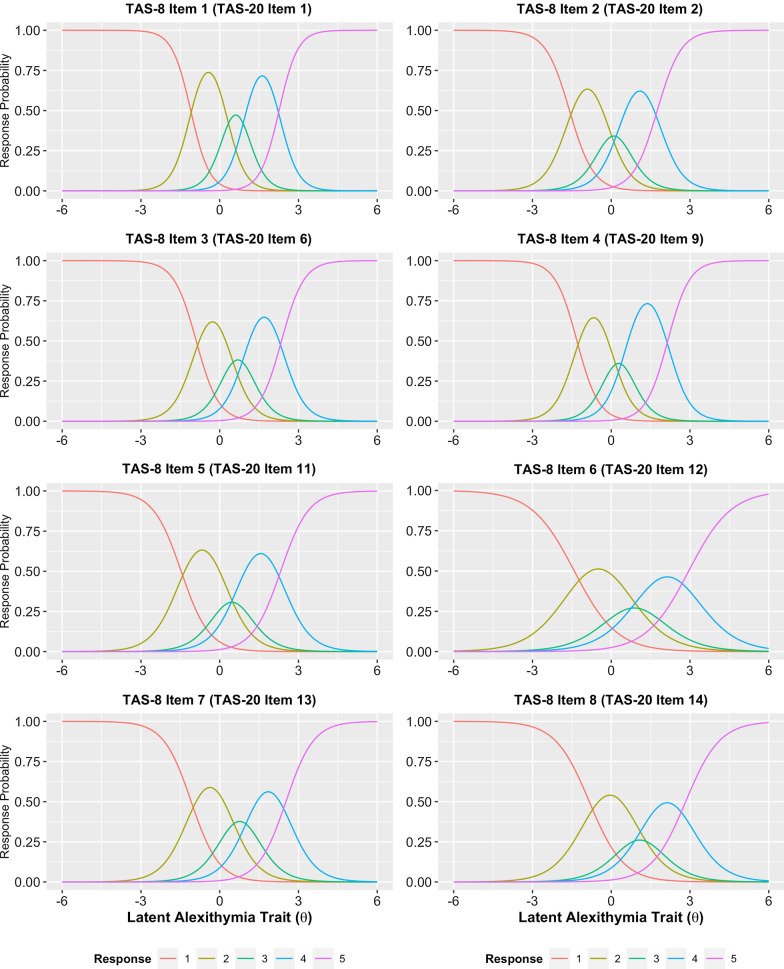
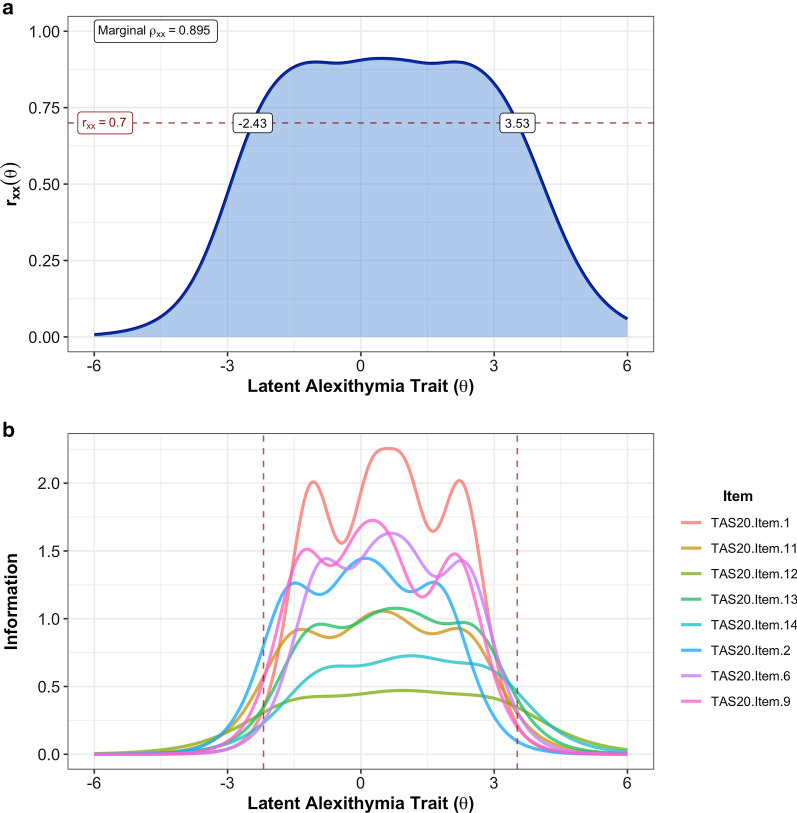
Results: The TAS-20 did not exhibit adequate global model fit in either the autistic or general population samples. Empirically driven item reduction was undertaken, resulting in an eight-item unidimensional scale (TAS-8) with sound psychometric properties and practically ignorable I-DIF between diagnostic groups. Correlational analyses indicated that TAS-8 scores meaningfully predict autistic trait levels, anxiety and depression symptoms, and quality of life, even after controlling for trait neuroticism.
Limitations: Limitations of the current study include a sample of autistic adults that was overwhelmingly female, later-diagnosed, and well-educated; clinical and control groups drawn from different studies with variable measures; and an inability to test several other important psychometric characteristics of the TAS-8, including sensitivity to change and I-DIF across multiple administrations.
Conclusions: These results indicate the potential of the TAS-8 as a psychometrically robust tool to measure alexithymia in both autistic and non-autistic adults. A free online score calculator has been created to facilitate the use of norm-referenced TAS-8 latent trait scores in research applications (available at http://asdmeasures.shinyapps.io/TAS8_Score ).
Keywords: Alexithymia; Autism; Bayesian statistics; Differential item functioning; Emotion; Factor analysis; Item response theory; Measurement; Psychometric; Reliability; Validity.
Conflict of interest statement
ZJW serves on the family advisory committee of the Autism Speaks Autism Treatment Network Vanderbilt site and the autistic researcher review board of the Autism Intervention Network for Physical Health (AIR-P). ZJW also serves as a consultant to Roche. KOG has no competing interests.
Figures
References
-
- Nemiah JC, Freyburger H, Sifneos PE. Alexithymia: A view of the psychosomatic process. In: Hill OW, editor. Modern trends in psychosomatic medicine. London: Butterworths; 1976. pp. 430–439.
Publication types
MeSH terms
Grants and funding
LinkOut - more resources
Full Text Sources
Other Literature Sources
