


Predictive biomarkers of anti-PD-1/PD-L1 therapy in NSCLC
- PMID: 33653420
- PMCID: PMC7923338
- DOI: 10.1186/s40164-021-00211-8
Predictive biomarkers of anti-PD-1/PD-L1 therapy in NSCLC
Abstract
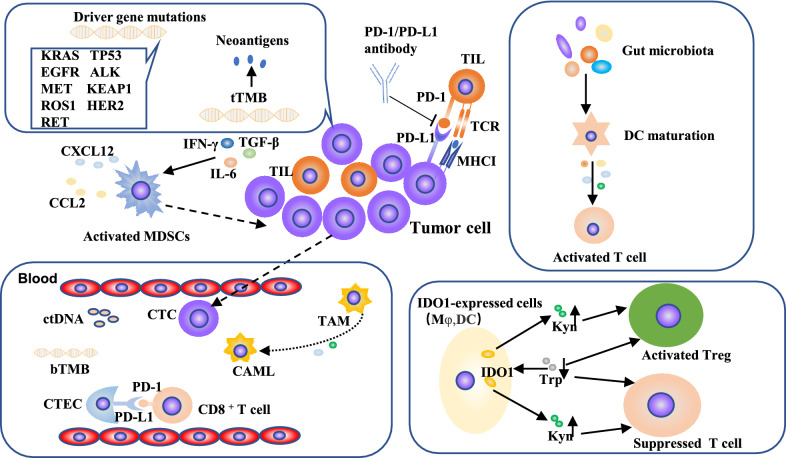
Immunotherapy, especially anti-programmed cell death protein 1/programmed cell death ligand 1 (PD-1/PD-L1) treatment has significantly improved the survival of non-small cell lung cancer (NSCLC) patients. However, the overall response rate remains unsatisfactory. Many factors affect the outcome of anti-PD-1/PD-L1 treatment, such as PD-L1 expression level, tumor-infiltrating lymphocytes (TILs), tumor mutation burden (TMB), neoantigens, and driver gene mutations. Further exploration of biomarkers would be favorable for the best selection of patients and precisely predict the efficacy of anti-PD-1/PD-L1 treatment. In this review, we summarized the latest advances in this field, and discussed the potential applications of these laboratory findings in the clinic.
Keywords: Anti-PD-1/PD-L1 therapy; Biomarkers; Efficacy prediction; Immunotherapy; NSCLC.
Conflict of interest statement
The authors declare that they have no competing interests.
Figures
References
-
- Hanna NH, Schneider BJ, Temin S, Baker S, Brahmer J, Ellis PM, Gaspar LE, Haddad RY, Hesketh PJ, Jain D, et al. Therapy for stage IV non-small-cell lung cancer without driver alterations: ASCO and OH (CCO) joint guideline update. J Clin Oncol. 2020;38:1608–1632. doi: 10.1200/JCO.19.03022. - DOI - PubMed
Publication types
Grants and funding
LinkOut - more resources
Full Text Sources
Other Literature Sources
Research Materials
