


Associations of subclinical autistic-like traits with brain structural variation using diffusion tensor imaging and voxel-based morphometry
- PMID: 33653433
- PMCID: PMC8080214
- DOI: 10.1192/j.eurpsy.2021.15
Associations of subclinical autistic-like traits with brain structural variation using diffusion tensor imaging and voxel-based morphometry
Abstract
Background: Previous case-control studies of autistic spectrum disorder (ASD) have identified altered brain structure such as altered frontal and temporal cortex volumes, or decreased fractional anisotropy (FA) within the inferior fronto-occipital fasciculus in patients. It remains unclear whether subclinical autistic-like traits might also be related to variation in these brain structures.
Methods: In this study, we analyzed magnetic resonance imaging (MRI) data of 250 psychiatrically healthy subjects phenotyped for subclinical autistic-like traits using the Autism Spectrum Quotient (AQ). For data analysis, we used voxel-based morphometry of T1-MRIs (Computational Anatomy Toolbox) and tract-based spatial statistics for diffusion tensor imaging data.
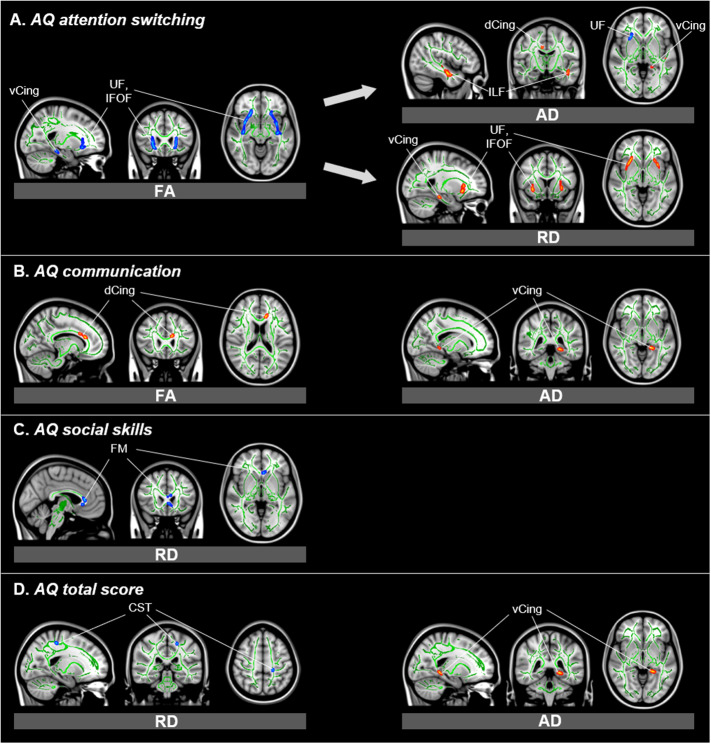
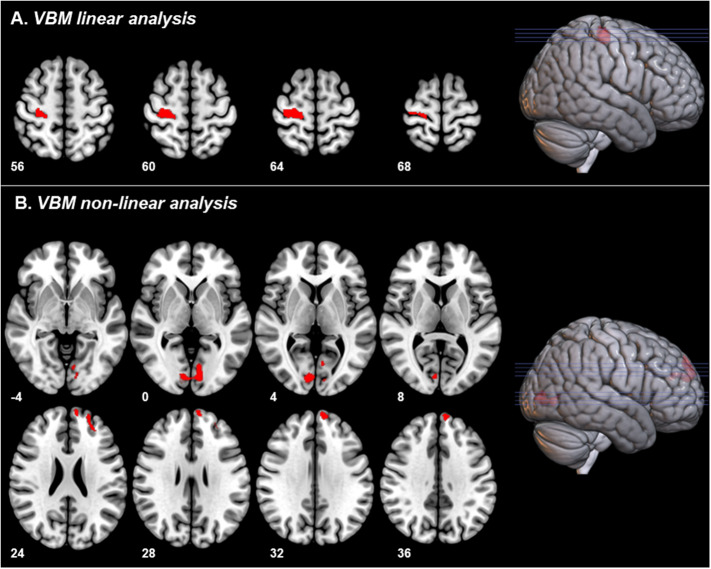
Results: AQ attention switching subscale correlated negatively with FA values in the bilateral uncinate fasciculus as well as the bilateral inferior fronto-occipital fasciculus. Higher AQ attention switching subscale scores were associated with increased mean diffusivity and radial diffusivity values in the uncinate fasciculus, while axial diffusivity values within this tract show a negative correlation. AQ attention to detail subscale correlated positively with gray matter volume in the right pre- and postcentral gyrus.
Conclusions: We demonstrate that individuals with higher levels of autism-spectrum-like features show decreased white matter integrity in tracts associated with higher-level visual processing and increased cortical volume in areas linked to movement sequencing and working memory. Our results resemble regional brain structure alterations found in individuals with ASD. This offers opportunities to further understand the etiology and pathogenesis of the disorder and shows a subclinical continuum perspective.
Keywords: Autism spectrum disorder; autism spectrum quotient; autistic traits; diffusion tensor imaging; voxel-based morphometry.
Conflict of interest statement
The authors have no conflicts of interest to declare.
Figures
References
-
- Baron-Cohen S, Wheelwright S, Skinner R, Martin J, Clubley E. The Autism-Spectrum Quotient (AQ): evidence from Asperger syndrome/high-functioning autism, males and females, scientists and mathematicians. J Autism Dev Disord. 2001;31(1):5–17. doi: 10.1023/a:1005653411471. PMID:11439754. - DOI - PubMed
Publication types
MeSH terms
LinkOut - more resources
Full Text Sources
Other Literature Sources
