


Does remote patient monitoring reduce acute care use? A systematic review
- PMID: 33653740
- PMCID: PMC7929874
- DOI: 10.1136/bmjopen-2020-040232
Does remote patient monitoring reduce acute care use? A systematic review
Abstract
Objective: Chronic diseases are associated with increased unplanned acute hospital use. Remote patient monitoring (RPM) can detect disease exacerbations and facilitate proactive management, possibly reducing expensive acute hospital usage. Current evidence examining RPM and acute care use mainly involves heart failure and omits automated invasive monitoring. This study aimed to determine if RPM reduces acute hospital use.
Methods: A systematic literature review of PubMed, Embase and CINAHL electronic databases was undertaken in July 2019 and updated in October 2020 for studies published from January 2015 to October 2020 reporting RPM and effect on hospitalisations, length of stay or emergency department presentations. All populations and disease conditions were included. Two independent reviewers screened articles. Quality analysis was performed using the Joanna Briggs Institute checklist. Findings were stratified by outcome variable. Subgroup analysis was undertaken on disease condition and RPM technology.
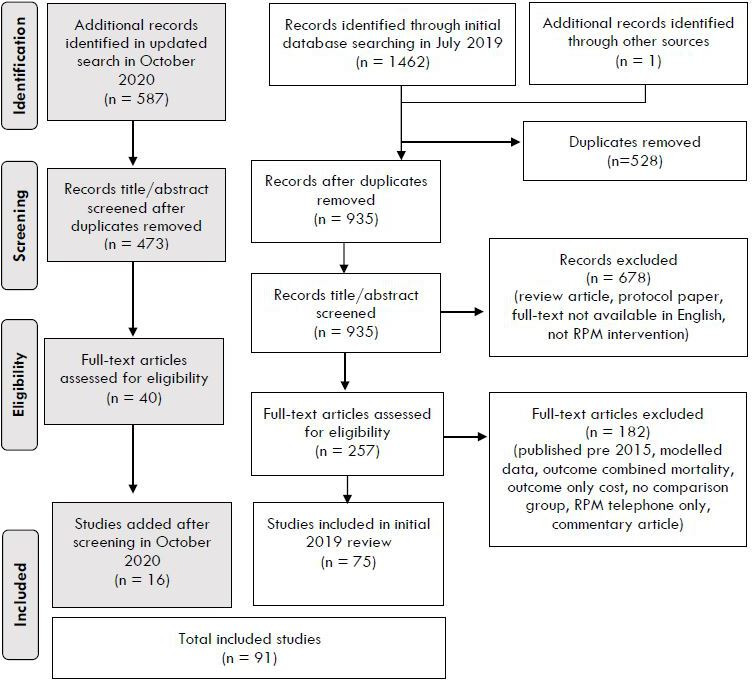
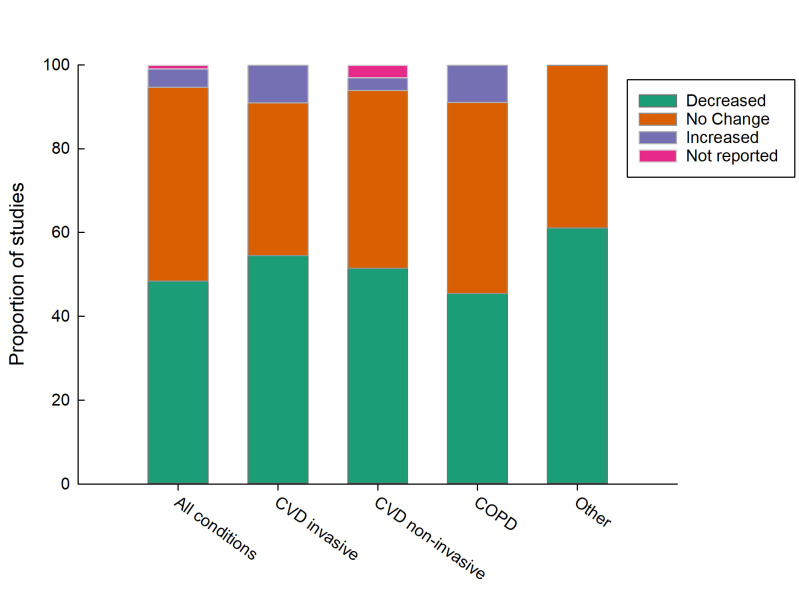
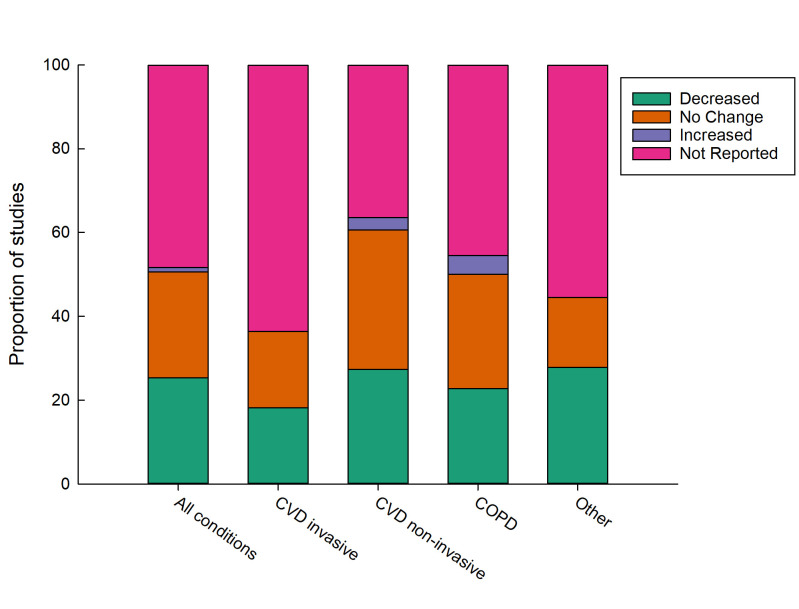
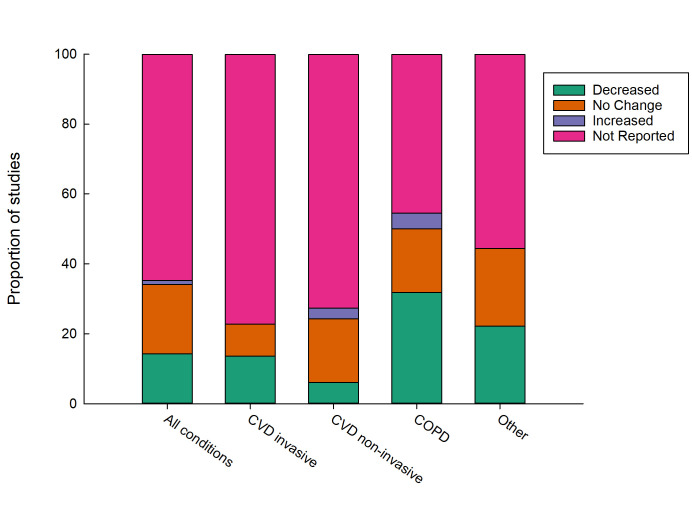
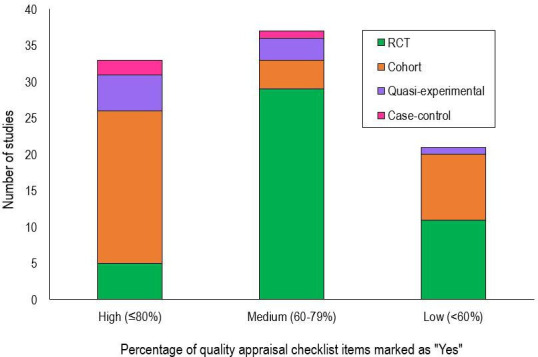
Results: From 2050 identified records, 91 studies were included. Studies were medium-to-high quality. RPM for all disease conditions was reported to reduce admissions, length of stay and emergency department presentations in 49% (n=44/90), 49% (n=23/47) and 41% (n=13/32) of studies reporting each measure, respectively. Remaining studies largely reported no change. Four studies reported RPM increased acute care use. RPM of chronic obstructive pulmonary disease (COPD) was more effective at reducing emergency presentation than RPM of other disease conditions. Similarly, invasive monitoring of cardiovascular disease was more effective at reducing hospital admissions versus other disease conditions and non-invasive monitoring.
Conclusion: RPM can reduce acute care use for patients with cardiovascular disease and COPD. However, effectiveness varies within and between populations. RPM's effect on other conditions is inconclusive due to limited studies. Further analysis is required to understand underlying mechanisms causing variation in RPM interventions. These findings should be considered alongside other benefits of RPM, including increased quality of life for patients.
Prospero registration number: CRD42020142523.
Keywords: health services administration & management; international health services; telemedicine.
© Author(s) (or their employer(s)) 2021. Re-use permitted under CC BY-NC. No commercial re-use. See rights and permissions. Published by BMJ.
Conflict of interest statement
Competing interests: None declared.
Figures
References
-
- The American Telemedicine Association . Telemedicine, telehealth, and health information technology, 2006. Available: https://www.who.int/goe/policies/countries/usa_support_tele.pdf?ua=1 [Accessed 3 Dec 2020].
-
- Malasinghe LP, Ramzan N, Dahal K. Remote patient monitoring: a comprehensive study. J Ambient Intell Humaniz Comput 2019;10:57–76. 10.1007/s12652-017-0598-x - DOI
-
- Inglis SC, Clark RA, McAlister FA, et al. Which components of heart failure programmes are effective? A systematic review and meta-analysis of the outcomes of structured telephone support or telemonitoring as the primary component of chronic heart failure management in 8323 patients: abridged cochrane review. Eur J Heart Fail 2011;13:1028–40. 10.1093/eurjhf/hfr039 - DOI - PubMed
Publication types
MeSH terms
LinkOut - more resources
Full Text Sources
Other Literature Sources
Medical
