


Multicentre stepped-wedge cluster randomised controlled trial of an antimicrobial stewardship programme in residential aged care: protocol for the START trial
- PMID: 33653766
- PMCID: PMC7929827
- DOI: 10.1136/bmjopen-2020-046142
Multicentre stepped-wedge cluster randomised controlled trial of an antimicrobial stewardship programme in residential aged care: protocol for the START trial
Abstract
Introduction: Antimicrobial resistance is a growing global health threat, driven by increasing inappropriate use of antimicrobials. High prevalence of unnecessary use of antimicrobials in residential aged care facilities (RACFs) has driven demand for the development and implementation of antimicrobial stewardship (AMS) programmes. The Stepped-wedge Trial to increase antibiotic Appropriateness in Residential aged care facilities and model Transmission of antimicrobial resistance (START) will implement and evaluate the impact of a nurse-led AMS programme on antimicrobial use in 12 RACFs.
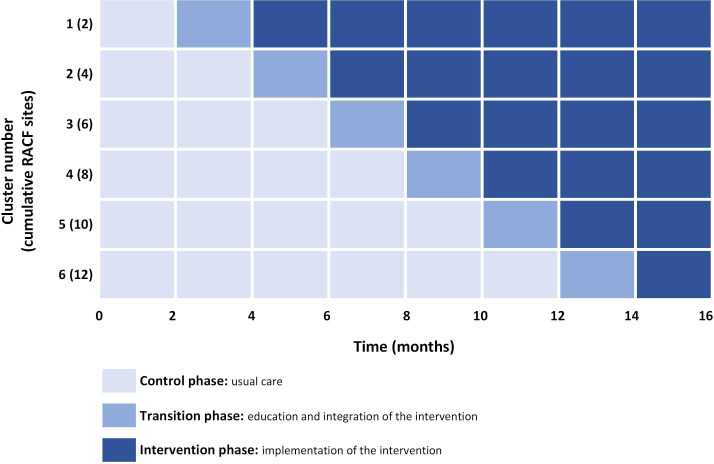
Methods and analysis: The START trial will implement and evaluate a nurse-led AMS programme via a stepped-wedge cluster randomised controlled trial design in 12 RACFs over 16 months. The AMS programme will incorporate education, aged care-specific treatment guidelines, documentation forms, and audit and feedback strategies that will target aged care staff, general practitioners, pharmacists, and residents and their families. The intervention will primarily focus on urinary tract infections, lower respiratory tract infections, and skin and soft tissue infections. RACFs will transition from control to intervention phases in random order, two at a time, every 2 months, with a 2-month transition, wash-in period. The primary outcome is the cumulative proportion of residents within each facility prescribed an antibiotic during each month and total days of antibiotic use per 1000 occupied bed days. Secondary outcomes include the number of courses of systemic antimicrobial therapy, antimicrobial appropriateness, antimicrobial resistant organisms, Clostridioides difficile infection, change in antimicrobial susceptibility profiles, hospitalisations and all-cause mortality. Analyses will be conducted according to the intention-to-treat principle.
Ethics and dissemination: Ethics approval has been granted by the Alfred Hospital Human Research Ethics Committee (HREC/18/Alfred/591). Research findings will be disseminated through peer-reviewed publications, conferences and summarised reports provided to participating RACFs.
Trial registration number: NCT03941509.
Keywords: geriatric medicine; infectious diseases; public health.
© Author(s) (or their employer(s)) 2021. Re-use permitted under CC BY-NC. No commercial re-use. See rights and permissions. Published by BMJ.
Conflict of interest statement
Competing interests: None declared.
Figures
References
-
- Australian Commission on Safety and Quality in Heatlh Care . AURA 2019: third Australian report on antimicrobial use and resistance in human health. Sydney: ACSQHC, 2019.
-
- Department of Health . 2017-18 report on the operation of the aged care act 1997. Australian Government, 2018.
Publication types
MeSH terms
Substances
Associated data
LinkOut - more resources
Full Text Sources
Other Literature Sources
Medical
