


Therapeutic Effects of Benralizumab Assessed in Patients with Severe Eosinophilic Asthma: Real-Life Evaluation Correlated with Allergic and Non-Allergic Phenotype Expression
- PMID: 33654413
- PMCID: PMC7910091
- DOI: 10.2147/JAA.S297273
Therapeutic Effects of Benralizumab Assessed in Patients with Severe Eosinophilic Asthma: Real-Life Evaluation Correlated with Allergic and Non-Allergic Phenotype Expression
Abstract
Background: Benralizumab can be utilized as add-on biological treatment of severe eosinophilic asthma. However, so far only a few real-life studies have been published with regard to the use of this anti-IL-5 receptor humanized monoclonal antibody.
Objective: The primary aim of this multicenter observational investigation has been to assess the therapeutic effects of benralizumab in patients with severe uncontrolled, corticosteroid refractory eosinophilic asthma. The secondary objective was to evaluate the efficacy of benralizumab with regard to positive or negative skin prick test (SPT).
Methods: Clinical, functional, and laboratory parameters were evaluated in order to verify the therapeutic actions of benralizumab in atopic and non atopic subjects with difficult-to-treat eosinophilic asthma. Moreover, a comparative evaluation was carried out in relation to the presence or absence of SPT positivity.
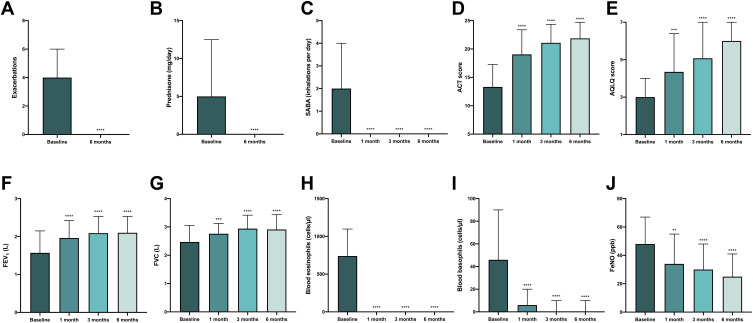
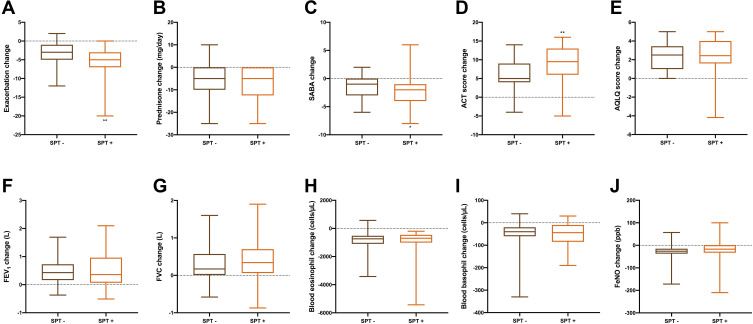
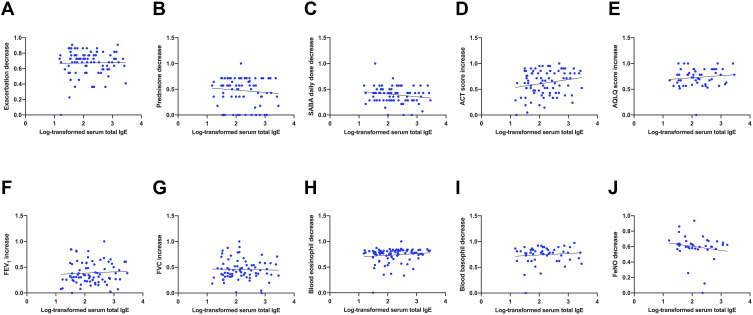
Results: After 6 months of add-on biological therapy with benralizumab, our 111 patients experienced a marked improvement of their severe eosinophilic asthma, expressed by significant changes in asthma exacerbation rate, prednisone intake, daily use of short-acting β2-adrenergic agonists (SABA), asthma control test (ACT) score, asthma quality of life questionnaire (AQLQ) score (56 patients), forced expiratory volume in one second (FEV1), forced vital capacity (FVC), blood eosinophil count, blood basophil count (59 patients), and fractional exhaled nitric oxide (FeNO) levels (39 patients). In addition, significantly more effective outcomes were detected in patients with positive SPT, when compared to subjects with negative SPT, only in regard to asthma exacerbation number, ACT score, and daily SABA utilization. No significant correlation was found between serum IgE concentrations and each of all measured parameters.
Conclusion and clinical relevance: Taken together, the results of this real-world study indicate that in both allergic and non-allergic subjects benralizumab can be used as a valuable pharmacotherapeutic option for add-on biological therapy of severe eosinophilic asthma, regardless of SPT positivity or negativity.
Keywords: IL-5 receptor; allergic and non-allergic phenotypes; asthma exacerbations; benralizumab; severe eosinophilic asthma.
© 2021 Pelaia et al.
Conflict of interest statement
The authors declare that there is no conflict of interest.
Figures
References
LinkOut - more resources
Full Text Sources
Other Literature Sources
