


Standardization of methods for sampling the distal airspace in mechanically ventilated patients using heat moisture exchange filter fluid
- PMID: 33655765
- PMCID: PMC8174823
- DOI: 10.1152/ajplung.00595.2020
Standardization of methods for sampling the distal airspace in mechanically ventilated patients using heat moisture exchange filter fluid
Abstract
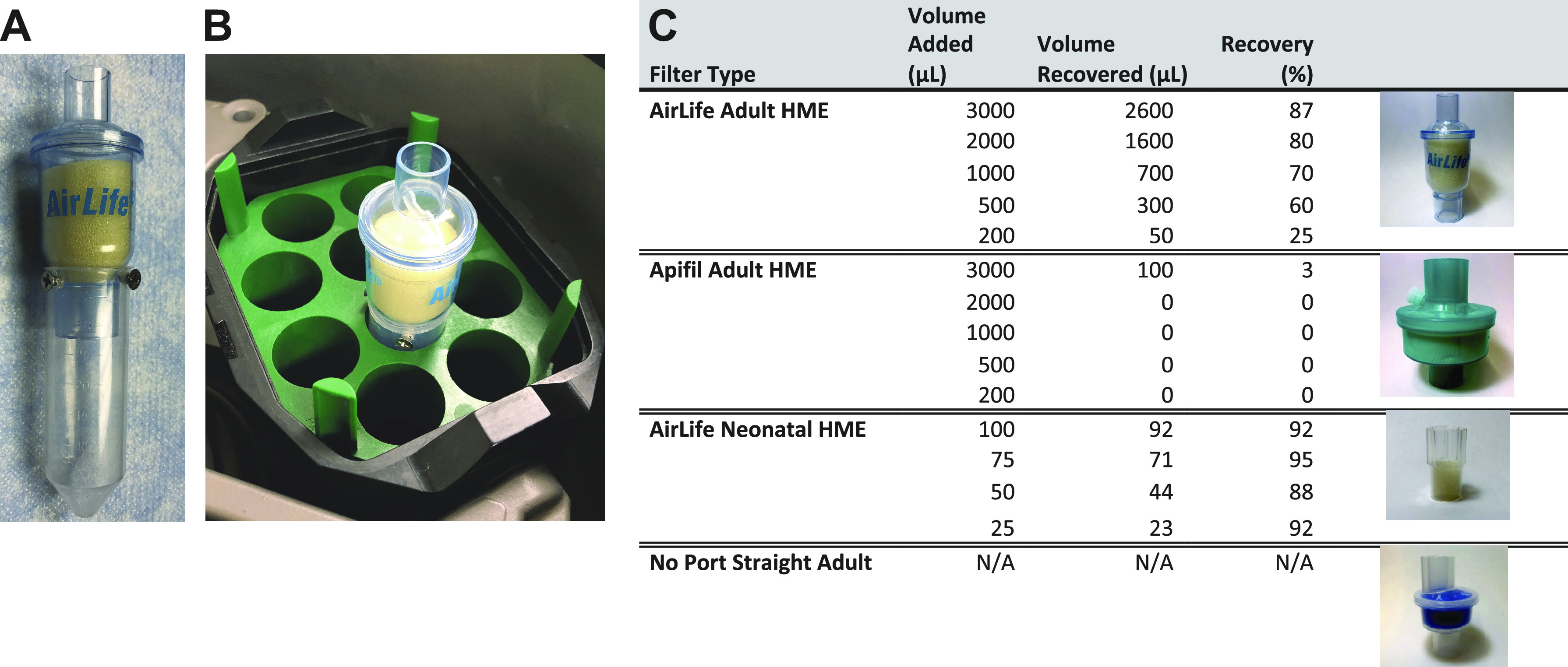
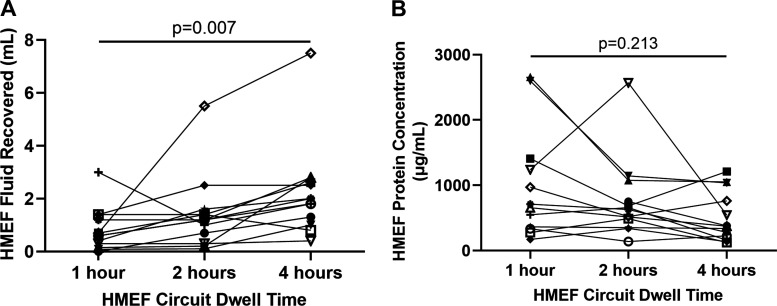
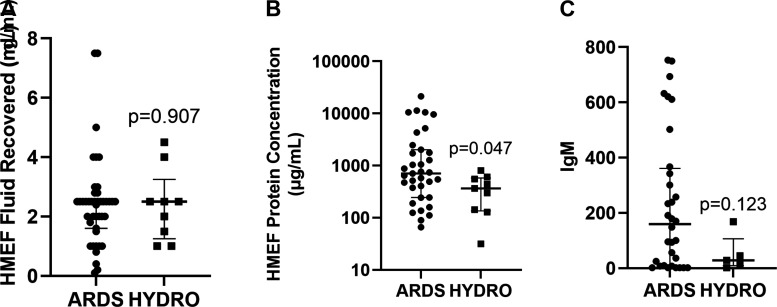
Noninvasive sampling of the distal airspace in patients with acute respiratory distress syndrome (ARDS) has long eluded clinical and translational researchers. We recently reported that fluid collected from heat moisture exchange (HME) filters closely mirrors fluid directly aspirated from the distal airspace. In the current study, we sought to determine fluid yield from different HME types, optimal HME circuit dwell time, and reliability of HME fluid in reflecting the distal airspace. We studied fluid yield from four different filter types by loading increasing volumes of saline and measuring volumes of fluid recovered. We collected filters after 1, 2, and 4 h of dwell time for measurement of fluid volume and total protein from 13 subjects. After identifying 4 h as the optimal dwell time, we measured total protein and IgM in HME fluid from 42 subjects with ARDS and nine with hydrostatic pulmonary edema (HYDRO). We found that the fluid yield varies greatly by filter type. With timed sample collection, fluid recovery increased with increasing circuit dwell time with a median volume of 2.0 mL [interquartile range (IQR) 1.2-2.7] after 4 h. Total protein was higher in the 42 subjects with ARDS compared with nine with HYDRO [median 708 µg/mL (IQR 244-2017) vs. 364 µg/mL (IQR 136-578), P = 0.047], confirming that total protein concentration in HME is higher in ARDS compared with hydrostatic edema. These studies establish a standardized HME fluid collection protocol and confirm that HME fluid analysis is a novel noninvasive tool for the study of the distal airspace in ARDS.
Keywords: ARDS; acute respiratory distress syndrome; biomarkers; exhaled breath; pulmonary edema.
Conflict of interest statement
J.A.B. receives support from Omniox for work unrelated to the current manuscript. None of the other authors has any conflicts of interest, financial or otherwise, to disclose.
Figures
References
-
- McNeil JB, Shaver CM, Kerchberger VE, Russell DW, Grove BS, Warren MA, Wickersham NE, Ware LB, McDonald WH, Bastarache JA. Novel method for non-invasive sampling of the distal airspace in acute respiratory distress syndrome. Am J Respir Crit Care Med 197: 1027–1035, 2018. doi: 10.1164/rccm.201707-1474OC. - DOI - PMC - PubMed
-
- Murphy LS, Wickersham N, McNeil JB, Shaver CM, May AK, Bastarache JA, Ware LB. Endothelial glycocalyx degradation is more severe in patients with non-pulmonary sepsis compared to pulmonary sepsis and associates with risk of ARDS and other organ dysfunction. Ann Intensive Care 7: 102, 2017. doi: 10.1186/s13613-017-0325-y. - DOI - PMC - PubMed
-
- Calfee CS, Eisner MD, Parsons PE, Thompson BT, Conner ER Jr, Matthay MA, Ware LB; NHLBI Acute Respiratory Distress Syndrome Clinical Trials Network. Soluble intercellular adhesion molecule-1 and clinical outcomes in patients with acute lung injury. Intensive Care Med 35: 248–257, 2009. doi: 10.1007/s00134-008-1235-0. - DOI - PMC - PubMed
Publication types
MeSH terms
Grants and funding
LinkOut - more resources
Full Text Sources
Other Literature Sources
