


The fermented soy beverage Q-CAN® plus induces beneficial changes in the oral and intestinal microbiome
- PMID: 33658080
- PMCID: PMC7931600
- DOI: 10.1186/s40795-021-00408-4
The fermented soy beverage Q-CAN® plus induces beneficial changes in the oral and intestinal microbiome
Abstract
Background: Soy products are associated with many beneficial health consequences, but their effects on the human intestinal microbiome are poorly characterized.
Objectives: To identify the changes in the oral and fecal microbiome in lean and obese participants due to consumption of Q-CAN®, and to assess the expected consequences of these changes based on the published literature.
Methods: Prospective study of lean (10) and obese (9) participants consuming Q-CAN® twice daily for 4 weeks with 8 weeks follow-up. Microbial DNA was extracted from saliva and stool samples, amplified against the V4 region of the 16S ribosomal RNA gene and data analyzed using QIIME 1.9.1 bioinformatics. Four hundred forty-four samples were collected in total, 424 of which were productive and yielded good quality data.
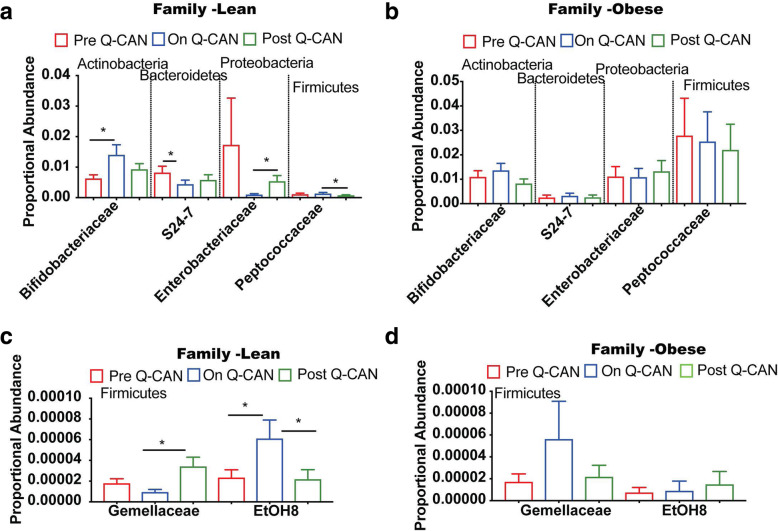
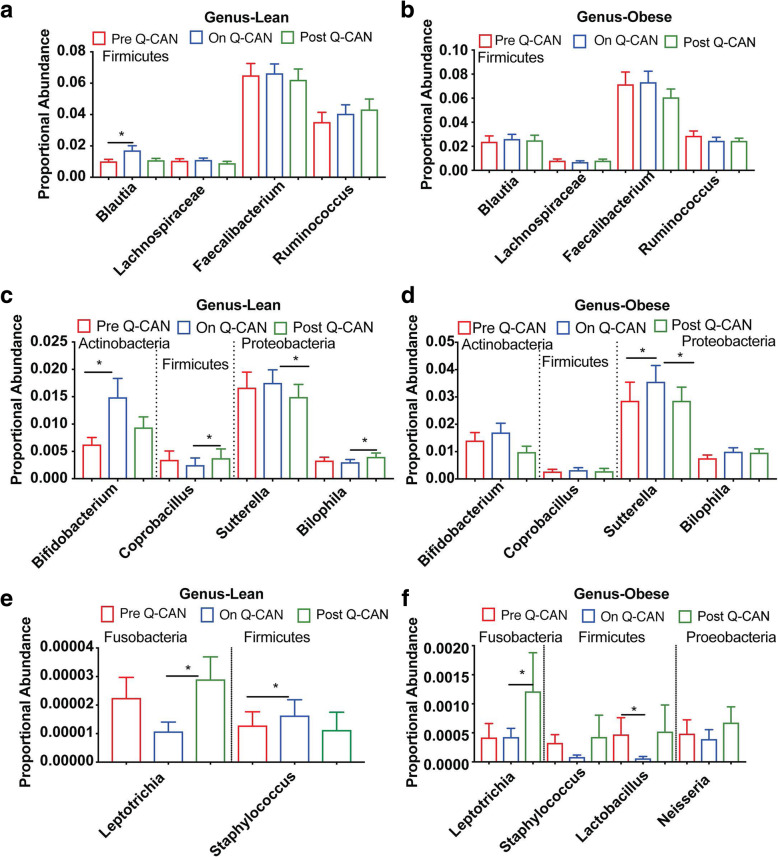
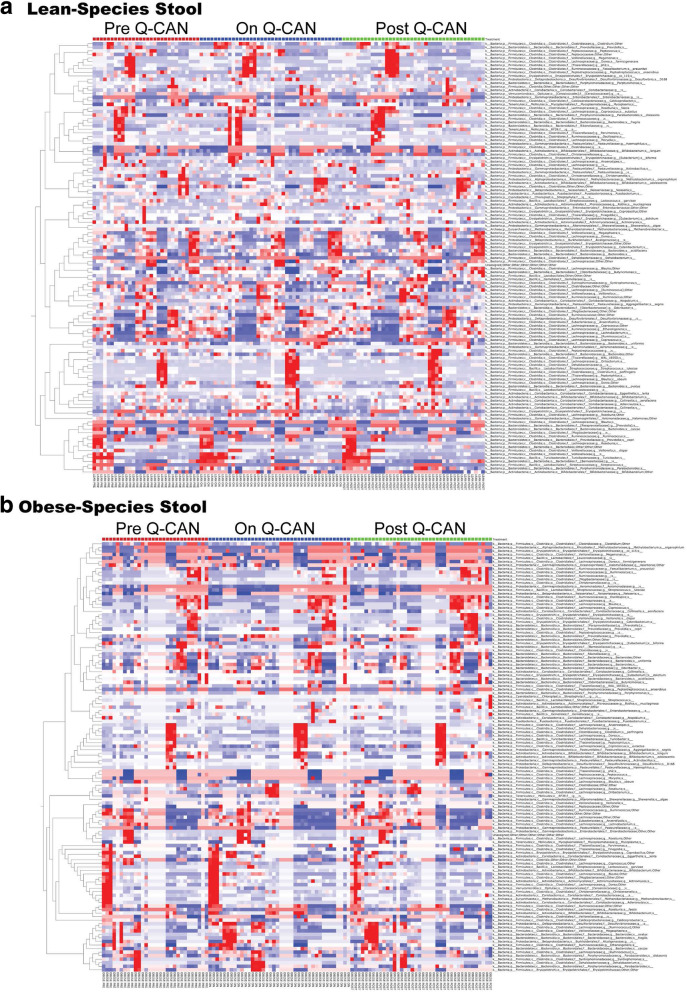
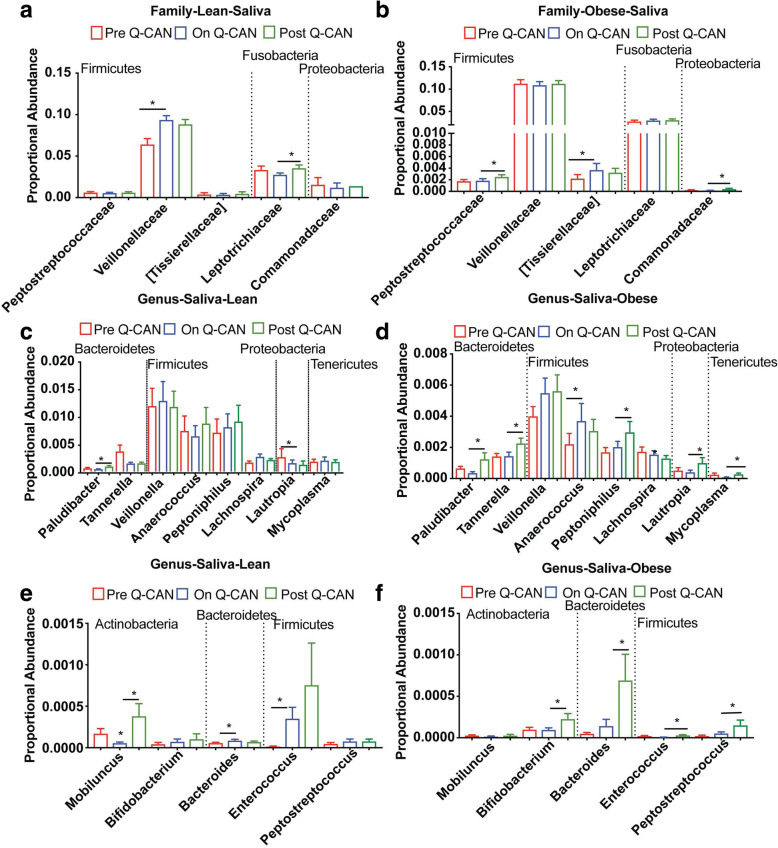
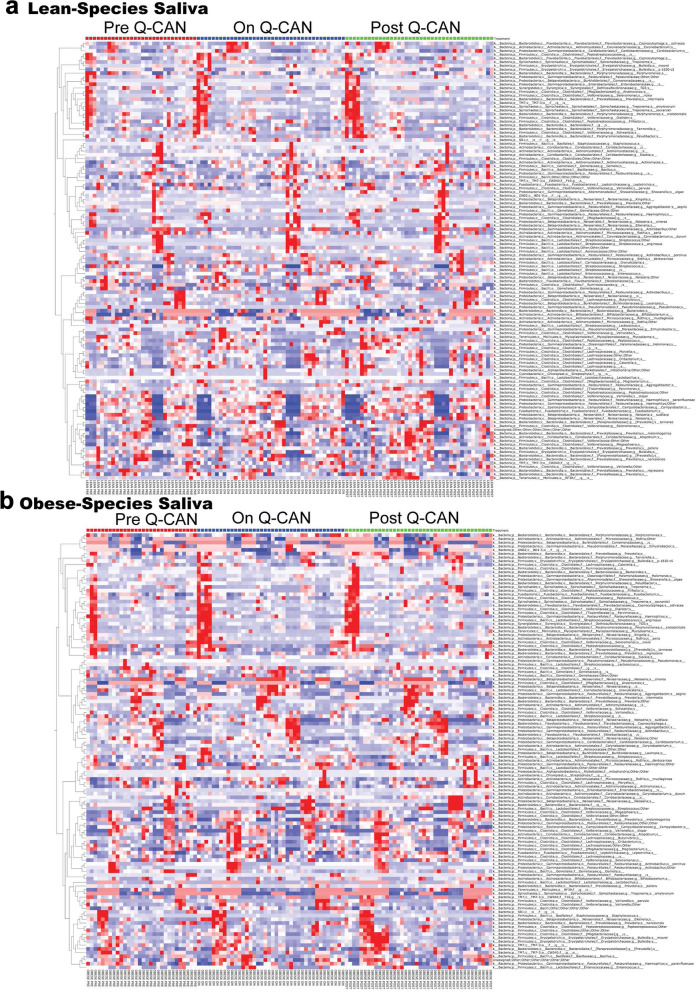
Results: STOOL. In the lean population Bifidobacteria and Blautia show a significant increase while taking Q-CAN®, and there was a trend for this in the obese population. ORAL. There were relatively fewer major changes in the oral microbiome with an increase in the family Veillonellaceae in the lean population while on Q-CAN®.
Conclusion: Q-CAN® consumption induced a number of significant changes in the fecal and oral microbiome. Most notably an increase in the stool microbiome of Bifidobacteria and Blautia, both of which are associated with positive health benefits, and in the saliva an increase in Veillonellaceae.
Trial registration: This trial was registered with Clinicaltrials.gov on January 14th 2016. ClinicalTrials.gov Identifier: NCT02656056.
Keywords: Commensals; Gut microbiome; Obesity; Oral microbiome; Soy.
Conflict of interest statement
There are no competing interests.
Figures
References
-
- Nozue M, et al. Fermented soy product intake is inversely associated with the development of high blood pressure: the Japan public health center-based prospective study. J Nutr. 2017;147(9):1749–1756. - PubMed
-
- Lee Y, et al. PPARgamma2 C1431T polymorphism interacts with the antiobesogenic effects of Kochujang, a Korean fermented, soybean-based red pepper paste, in overweight/obese subjects: a 12-week, double-blind randomized clinical trial. J Med Food. 2017;20(6):610–617. doi: 10.1089/jmf.2016.3911. - DOI - PubMed
Associated data
Grants and funding
LinkOut - more resources
Full Text Sources
Other Literature Sources
Medical