


'A silent epidemic of grief': a survey of bereavement care provision in the UK and Ireland during the COVID-19 pandemic
- PMID: 33658262
- PMCID: PMC7931210
- DOI: 10.1136/bmjopen-2020-046872
'A silent epidemic of grief': a survey of bereavement care provision in the UK and Ireland during the COVID-19 pandemic
Abstract
Objectives: To investigate the experiences and views of practitioners in the UK and Ireland concerning changes in bereavement care during the COVID-19 pandemic.
Design: Online survey using a snowball sampling approach.
Setting: Practitioners working in hospitals, hospices, care homes and community settings across the UK and Ireland.
Participants: Health and social care professionals involved in bereavement support.
Interventions: Brief online survey distributed widely across health and social care organisations.
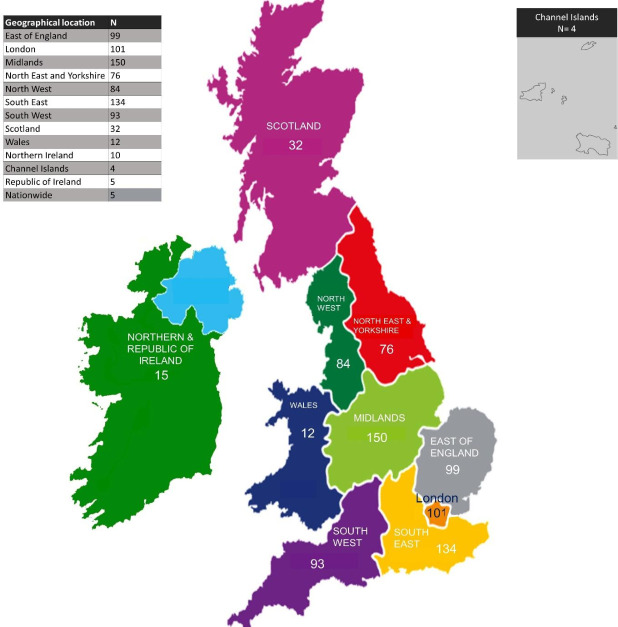
Results: 805 respondents working in hospice, community, and hospital settings across the UK and Ireland completed the survey between 3 August and 4 September 2020. Changes to bereavement care practice were reported in: the use of telephone, video and other forms of remote support (90%); supporting people bereaved from non-COVID conditions (76%), from COVID-19 (65%) and people bereaved before the pandemic (61%); funeral arrangements (61%); identifying bereaved people who might need support (56%); managing complex forms of grief (48%) and access to specialist services (41%). Free-text responses demonstrated the complexities and scale of the impact on health and social care services, practitioners and their relationships with bereaved families, and on bereaved people.
Conclusions: The pandemic has created major challenges for the support of bereaved people: increased needs for bereavement care, transition to remote forms of support and the stresses experienced by practitioners, among others. The extent to which services are able to adapt, meet the escalating level of need and help to prevent a 'tsunami of grief' remains to be seen. The pandemic has highlighted the need for bereavement care to be considered an integral part of health and social care provision.
Keywords: COVID-19; palliative care; primary care; qualitative research.
© Author(s) (or their employer(s)) 2021. Re-use permitted under CC BY-NC. No commercial re-use. See rights and permissions. Published by BMJ.
Conflict of interest statement
Competing interests: None declared.
References
Publication types
MeSH terms
LinkOut - more resources
Full Text Sources
Other Literature Sources
Medical
